

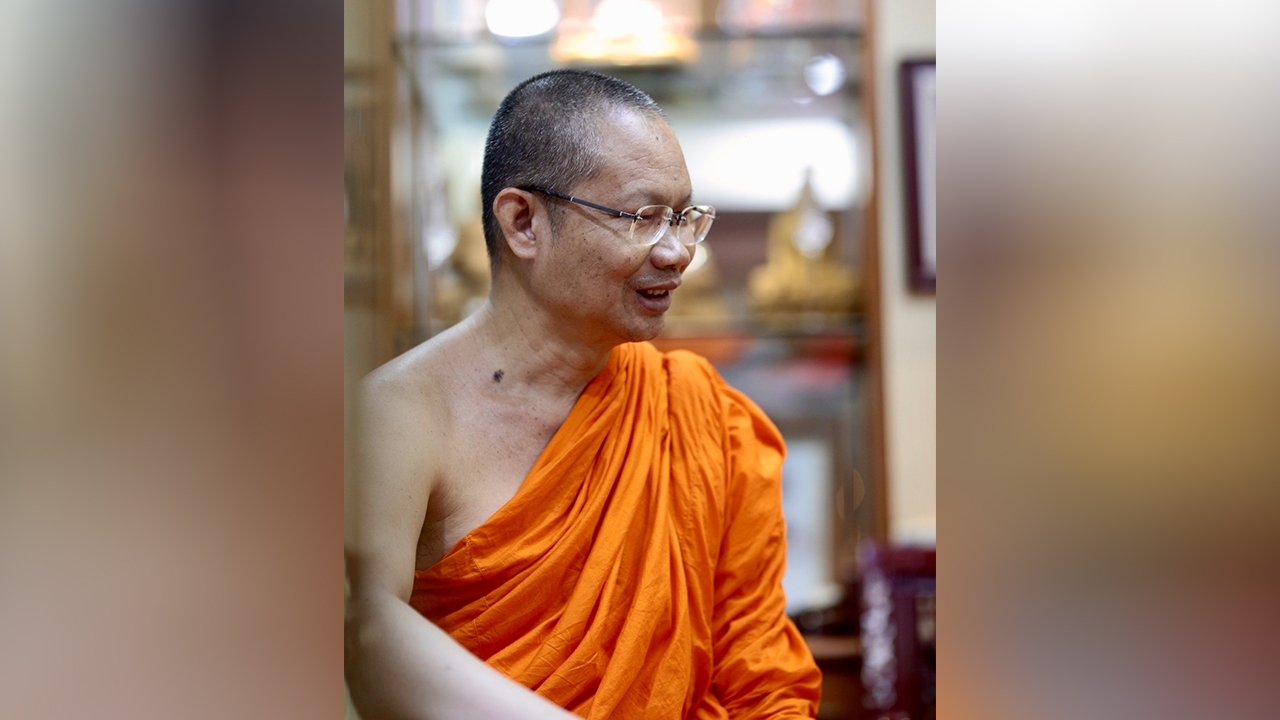
Wat Saket invites Buddhists to participate in restoring the Bodhi tree from King Rama II’s era to revive it as a "living great stupa" on Magha Puja Day, 3 Mar 2026 GMT+7, at the Bodhi Lanka courtyard of Wat Saket.
Phra Ratchakitjaporn, assistant abbot of Wat Saket Ratchaworamahawihan, said the temple will organize a restoration event for the Bodhi tree from King Rama II’s period on Magha Puja Day, 3 Mar 2026 GMT+7, at the Bodhi Lanka courtyard. The morning ceremony at 07:00 will include alms offering to 90 monks, with the courtyard open throughout the day for the public to chant, meditate, and perform candlelight procession around the Bodhi Lanka tree.
Additionally, there will be an exhibition on the history of the Bodhi Lanka tree, a variety of the Bodhi tree, to educate visitors about its distinct leaf characteristics compared to the local Pho Kinok or Pho tree. At 09:00, a morning chanting and Dharma sermon for Magha Puja will take place. At 19:00, a candlelight procession will honor the Buddha’s relics atop the Golden Mount stupa, followed at 20:00 by a special Dharma presentation with light and sound, narrating the thousand-year journey of the Bodhi tree before reaching Siam during King Rama II’s reign and flourishing on Thai soil for over 200 years.
Phra Ratchakitjaporn added that this activity arises from the temple’s observation that the Bodhi Lanka tree, a Bodhi variety, is deteriorating due to competition from the local Pho tree and fungal infections, causing it to weaken. The event aims to encourage Thai Buddhists to unite in restoring the Bodhi tree to become a “living great stupa” with flourishing branches, continuing the Buddhist legacy as a living symbol representing the Buddha.
The assistant abbot explained that the Bodhi tree is where the Buddha attained enlightenment, making it a “living stupa” symbolizing the Buddha. The Bodhi tree sprouted the same day the Bodhisattva was born, taking root and growing peacefully in the forest, awaiting the arrival of the great being. The Buddha left to seek enlightenment at age 29 and attained it under the Bodhi tree six years later at age 35, when the tree was also 35 years old. When the Buddha passed away at age 80, the tree was likewise 80 years old. Though the Buddha passed, the Bodhi tree remains alive, continuing the Buddhist lineage through centuries as if the Buddha still lives.
In 1813 CE, Emperor Ashoka ordered Bhikkhuni Sanghamitta to bring a branch of the Bodhi tree from Bodh Gaya to Sri Lanka by boat. King Devanampiyatissa of Sri Lanka personally received the branch at the shore. At that time, the Bodhi tree was 316 years old.
Then in 1814 CE, King Rama II appointed respected monks from Wat Saket, Phra Ajarn Dee and Phra Ajarn Thep, to lead a delegation of eight monks to Sri Lanka to study Buddhism. After three years, they returned with three Bodhi Lanka saplings from Anuradhapura, presenting them to King Rama II. In 1818 CE, one sapling was planted at Wat Saket’s courtyard in front of the ubosot, where it remains today. Since planting in 1818 CE, the Bodhi Lanka tree has grown on Thai soil for 208 years. Among the seven beings born the same day as the Buddha, this Bodhi tree is the only living one that witnessed the Buddha’s lifetime and survives to the present. Thai Buddhists should take pride in having the same Bodhi tree as the one under which the Buddha attained enlightenment, here in Thailand.