

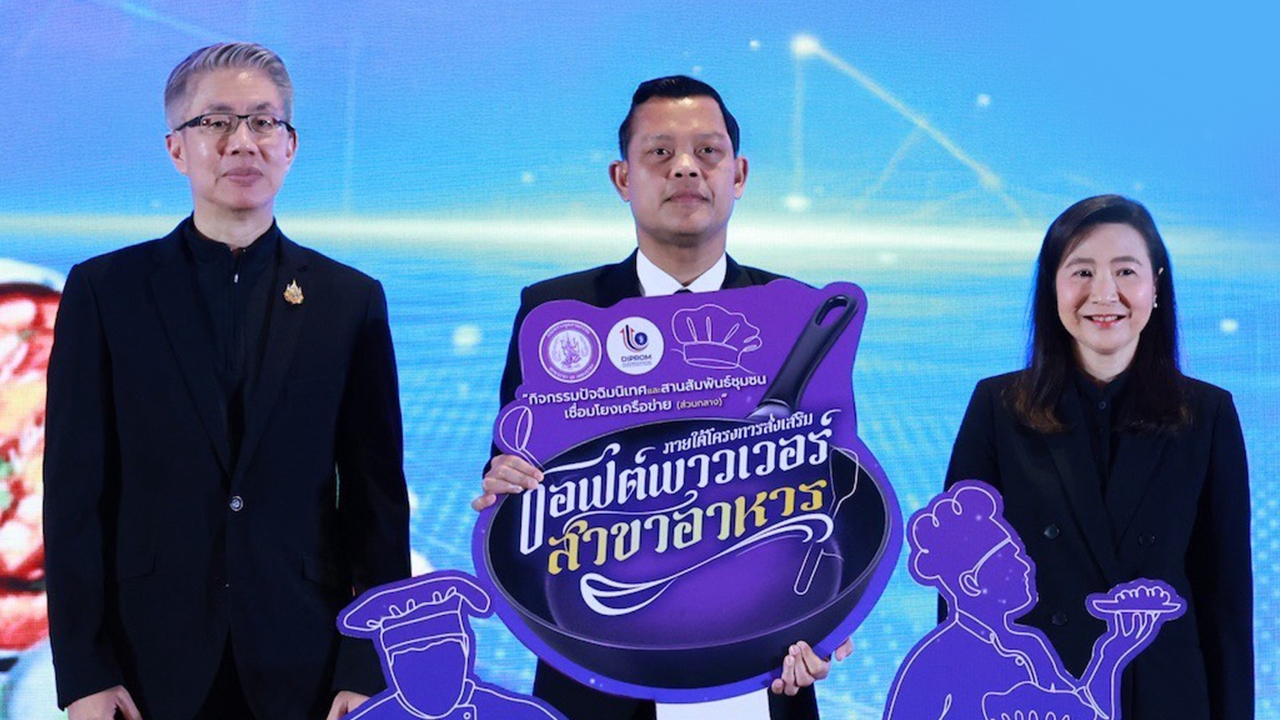
The Ministry of Industry is moving forward to support Thailand's food soft power by developing 20,000 professional chefs, revitalizing the creative and premium food market. It is confident that the food industry will continue to grow smoothly in 2026, with the Master Thai Chef Program helping to generate more than 3.3 billion baht.
On 4 Mar 2026 GMT+7, the Ministry of Industry, through the Department of Industrial Promotion (DIPROM), accelerated its Thai food soft power strategy. It announced success in significantly upgrading workforce skills via the 2025 fiscal year food soft power promotion project during the graduation and community networking event under the “Master Thai Chef Program.” The program aims to develop 20,000 highly skilled chefs to drive the elevation of Thai dishes into premium global products. It also fosters a sustainable trade ecosystem linking community ingredients from upstream to downstream businesses, stimulating over 3.3 billion baht in grassroots economic circulation. Additionally, it strengthens entrepreneurs' defenses with Made by Thai initiatives and Data Analytics technology to address new trade barriers and import tax policies from global markets.
Dr. Thanakorn Wangboonkongchana, Minister of Industry, revealed that the food industry remains a key driver generating substantial national income. Currently, Thailand ranks 12th globally and 2nd in Asia in food exports. However, facing challenges such as global economic slowdown, new import tax policies from major markets like the U.S., and stricter non-tariff barriers emphasizing environmental and sustainability standards, the Ministry aims in 2026 to elevate Thai entrepreneurs beyond previous limits. The goal is to proactively set global food standards and trends by enhancing efficiency and adding domestic value (Made by Thai). This involves strengthening Thailand’s supply chains and economy, focusing on Thai producers who blend local ingredients with creativity, labor, services, and resources—especially the over 400,000 small restaurants nationwide. These businesses must adopt Data Analytics to analyze consumer behavior and anticipate global market demands, enabling precise product development. They also need to improve environmentally friendly production processes to mitigate rising raw material and logistics costs.

“Training over 20,000 chefs under the 2025 fiscal year food soft power promotion project enhances the quality of Thai cuisine and builds trust in food safety and standards. These chefs will be key intermediaries in adding value to Thai dishes, transforming them into premium products that are undeniable, playing a crucial role in sustainably elevating Thai food on the global stage,” he said.
Dr. Natthapon Rangsitpol, Permanent Secretary of the Ministry of Industry, stated that Thailand's food industry significantly contributes to the national GDP by adding value to agricultural raw materials and linking to tourism. Promoting creative industries in Thai food leverages globally recognized cultural capital efficiently by applying creativity, skills, capabilities, and intellectual property to generate economic and social value. This blends knowledge, art, culture, and technology seamlessly.
The Ministry focuses on transforming Thai industry for the new economy by enhancing entrepreneurs' capabilities, developing business ecosystems, encouraging environmentally friendly practices, and supporting the use of local wisdom and cultural capital. This raises product standards and design to be modern, distinctive, and meet consumer needs. Simultaneously, it drives Soft Power by promoting and developing cultural and intellectual heritage to increase product value. The Department of Industrial Promotion (DIPROM) is tasked with widespread awareness through various creative industry sectors, such as the Thai Charm Expo and producing films reflecting the identity and appeal of Thai food, increasing the international creative economy's value. Additionally, it connects with upskilling and reskilling Thai personnel and products by rapidly building highly skilled Thai chefs through the “Master Thai Chef Program.” This enables Thai people to secure stable employment and income, transitioning from the “kitchen of the world” to a “global food economy hub.” Using creative industry power, community chefs are developed into professionals through upskilling and reskilling in design, universal flavors, and local brand building to add economic value and gain international recognition.

Ms. Natthiya Netayasupa, Director-General of the Department of Industrial Promotion, added that DIPROM has intensively implemented the “2025 fiscal year Food Soft Power Promotion Project” through comprehensive training covering the development of regional culinary identity, English for kitchen work, and practical learning to enhance key skills such as cooking and kitchen management to international standards. This has nurtured over 20,000 highly skilled chefs, surpassing targets and demonstrating strong demand for learning and development in the food sector workforce. Among them, 80% received professional certifications, including the Level 4 Thai Culinary Competency Certificate from the Thailand Professional Qualification Institute (Public Organization) and Level 1 National Skill Standard Certificate in Thai Cooking from the Department of Skill Development. The project is expected to generate at least 3.3 billion baht in economic circulation, with tangible income distribution back to local economies.
Today's event gathered over 1,500 community chef representatives and showcased over 100 exhibition booths representing a comprehensive food industry network. These ranged from upstream producers of quality local ingredients like jasmine rice and various herbs, midstream processing businesses and international standard certification bodies, to downstream food service, decoration, and delivery platform enterprises. This project not only creates careers for Thais but also positions these chefs as “cultural ambassadors of Thai cuisine,” conveying unique flavors and captivating stories to the world. This marks a significant step in enhancing Thai people's capabilities, establishing a strong foundation for community economies, and continuously expanding business opportunities in related industries.
“DIPROM is confident that the 2025 fiscal year Food Soft Power Promotion Project not only develops professional skills among Thais but also that the creative power from Thai food menus crafted by community chefs will communicate the value, stories, and charm of Thai cuisine internationally. Beyond that, these chefs serve as cultural ambassadors showcasing the unique tastes of Thai food to the world. This initiative is a first step in elevating the quality and standards of Thai culinary wisdom into creative culture, enhancing Thai people’s capabilities to create jobs, generate income, and build community economic foundations. This will lead to expanded business opportunities across various related industries, ultimately creating economic value for Thailand,” Ms. Natthiya said.