

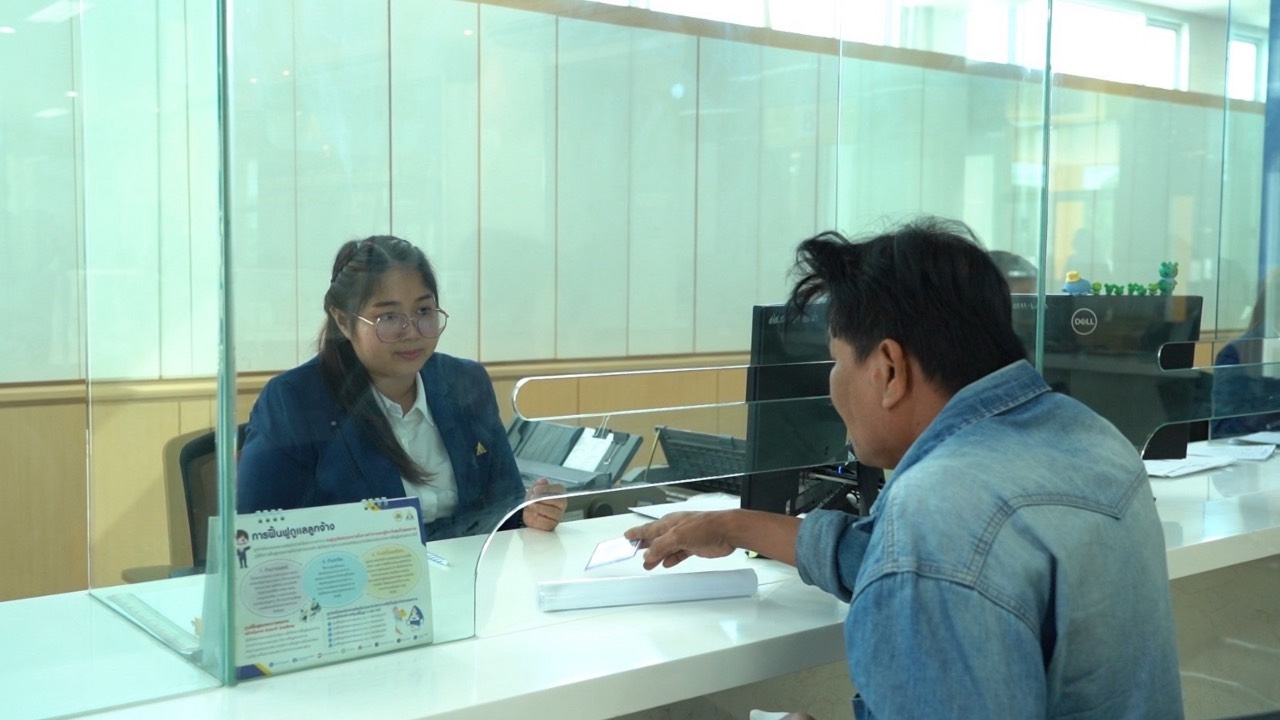
The Social Security Office explains and clarifies the Supreme Court ruling 3307/2024 regarding the payment of old-age pensions.
On 28 Apr 2026 GMT+7, reporters reported that the Social Security Office (SSO) provided clarification on Supreme Court ruling 3307/2024. The case involves an insured person who terminated coverage under Section 33 while eligible for old-age pension benefits (having reached 55 years old with 182 months of contributions). Two months later, the individual registered under Section 39, contributed for 60 months, then resigned and applied for old-age pension benefits.
In this case, the Social Security Office paid the old-age pension based on the average wage of the last 60 months using the Section 39 wage base, since the insured person had not previously claimed benefits during the period after leaving Section 33 coverage.
The Supreme Court's consideration found credible facts that the insured had already applied to receive the old-age pension and intended to claim benefits for the first time but was advised by officials to register under Section 39 and continue contributions to increase pension benefits. Consequently, the insured did not submit a benefit claim under Section 33 coverage, despite being eligible.
The Supreme Court ruling 3307/2024 directs the Social Security Office to pay old-age benefits covering the period from resignation under Section 33—when pension eligibility conditions were met for two months—until re-registration under Section 39. Payment should stop during Section 39 coverage. Upon resignation from Section 39, the pension should be recalculated using the original average wage base, with pension rates increasing by 1.5% for every 12 months of contributions, in accordance with the 2007 Ministerial Regulations on Old-Age Benefits.
Therefore, the Supreme Court's decision does not change the legal principles governing the Social Security Office's old-age pension calculations. It concerns the specific facts of this individual case, which arose from a communication misunderstanding between officials and the insured. Different facts may lead to different case outcomes, so this ruling cannot be used as a general guideline for the Social Security Office's decisions.
The Office has instructed and circulated guidelines to Social Security officials to communicate clearly and fully the correct rights and implications of registering under Section 39. Insured persons must understand the potential impact before deciding whether to register, which remains their personal choice based on individual circumstances.
For insured persons who register under Section 39 after leaving employment but before reaching 55 years old—thus not yet eligible for old-age pension—and later resign and apply for pension benefits, the Social Security Office will calculate the pension based on the average wage of the last 60 months before coverage ended, in line with laws and the Office’s benefit payment practices.