

Taopiphop He criticized the government for extracting excessive taxes, following the Excise Department’s announcement to raise retail taxes on alcoholic beverages, acknowledging that the "craft beer business" may not be sustainable. He broke down the costs explaining why prices are high and recommended reforming the alcohol tax system.
Published in the Royal Gazette Announcement of the Excise Department regarding the criteria and methods for surveying and collecting retail price data of goods, the consideration of typical base prices, and sales locations. For alcoholic beverages, tobacco, drinks, perfumes, to reflect the reported prices for the benefit of considering recommended retail prices by manufacturers and importers, and to ensure effective consideration of typical base prices, pursuant to Article 5 of the Ministry’s regulations on considering and announcing recommended retail prices, B.E. 2560 (2017), the Excise Director-General stipulates the criteria and methods for surveying and collecting retail price data, considering typical prices, and sales locations as follows.
Clause 1: Repeal the Excise Department’s announcement dated 27 December 2017 regarding criteria and methods for surveying, collecting, and analyzing product price data, considering typical base prices, and sales locations.
Clause 2: In this announcement, "retail price" means the unit price at which retail stores sell goods to general consumers in a normal market, including average unit prices for goods sold in multiple units, when manufacturers, importers, or their authorized agents package or process goods for sale in multiple units to consumers in a normal market.
"Excise Price Survey System" means the Excise Department’s electronic system for collecting retail price data by linking retail price information with the excise tax price standard system.
"Excise Tax Price Standard System" means the Excise Department’s electronic system for reporting recommended retail prices and analyzing product price data to consider and verify retail prices.
"Specialized retail stores" means retail stores focusing on selling a specific category of products.
Clause 3: Surveying, collecting, and verifying retail price data shall follow the criteria, methods, and sales locations as follows.
3.1 Survey and collect data from retail sales locations as follows.
(1) Retail type A: Department stores, supermarkets, hypermarkets, convenience stores, specialized retail stores—excluding type B stores which are large grocery or general stores registered for VAT. Supermarket-type stores located inside department stores or hypermarkets are considered supermarkets.
(2) Retail type B: Small grocery or general stores whose operators are not registered for VAT.
(3) Retail type C: Restaurants, hotels, service establishments or similar venues, regardless of VAT registration.
(4) Retail type D: Specialized retail stores such as car dealerships, motorcycle shops, or automotive battery sellers, regardless of VAT registration.
(5) Retail type E: Online sales channels, regardless of VAT registration.
3.2 Surveying and collecting retail price data shall be conducted by persons within specified timeframes as follows.
(1) Excise officers from local Excise offices and Excise Department units responsible for price standards shall survey and collect data according to the Excise Department’s specified timelines.
(2) Manufacturers or importers registered as data collectors according to Excise Department regulations shall survey and collect data within the specified timeframes.
. (3) Licensed sellers of alcohol or tobacco registered for VAT, as specified in the Excise Department’s announcement on retail price notification for alcohol and tobacco licensees.
3.3 Collection of retail price data shall be conducted through the Excise Price Survey System.
. (1) Retail price data reported by licensed alcohol or tobacco sellers registered for VAT according to the Excise Department’s notification.
(2) Retail price data collected by registered manufacturers or importers as per Excise Department regulations.
(3) Retail price data collected by excise officers.
Clause 4: Verification of retail price data shall proceed as follows.
(1) If the Excise Tax Price Standard System finds discrepancies between surveyed data and actual retail prices, relevant excise officers shall verify the actual retail prices at the concerned retail outlets.
. (2) If verification finds reported retail prices differ from actual prices, excise officers shall correct the retail price data or notify manufacturers, importers, or licensed sellers to correct the data accordingly, recording the verification results in the Excise Tax Price Standard System.
Clause 5: The typical base price shall be the most frequently found retail price (excluding VAT) of each product at the retail store type concerned.
To determine whether the recommended retail price reported by manufacturers or importers aligns with reality, the following criteria apply.
. (1) For alcoholic beverages, tobacco, drinks, powdered or concentrated drink products, perfumes or fragrance extracts, batteries, if sold at retail type A stores (supermarkets or convenience stores), regardless of sales at other retail types, and if the recommended price is below 95% of the typical base price at type A stores, it is considered inconsistent with reality.
. (2) For alcoholic beverages, tobacco, drinks, powdered or concentrated drink products not sold at retail type A supermarkets or convenience stores, if the recommended price is below 95% of the typical base price at type A specialized retail stores registered for VAT, large grocery stores registered for VAT, retail type B, or retail type C stores, it is considered inconsistent.
(3) For perfumes or fragrance extracts not sold at retail type A supermarkets or convenience stores, if the recommended price is below 95% of the typical base price at retail type A department stores, hypermarkets, specialized retail stores registered for VAT, large grocery stores registered for VAT, or retail type B stores in that order, it is considered inconsistent.
(4) For batteries or automotive/motorcycle batteries not sold at retail type A supermarkets or convenience stores, if the recommended price is below 95% of the typical base price at retail type A department stores, hypermarkets, specialized retail stores registered for VAT, large grocery stores registered for VAT, retail type D specialized battery stores (regardless of VAT registration), or retail type B stores, it is considered inconsistent.
(5) For automobiles or motorcycles, if the recommended price is below 95% of the typical base price at retail type D specialized car or motorcycle dealerships (regardless of VAT registration), it is considered inconsistent.
Clause 6: This announcement is effective from the day after its publication.
Announced on 16 March 2026 GMT+7, signed by Pornchai Theerawet, Director-General of the Excise Department.

Most recently, Mr. Taopiphop Limjittrakorn, Member of Parliament from the Prachachon Party, posted a message on Facebook, “Taopiphop Limjittrakorn - Taopiphop” expressing his opinion on the Excise Department’s announcement, stating that the government is "extracting blood from crabs". He asked what happens when the government has high expenses but cannot raise funds, resulting in tax increases. Yes.
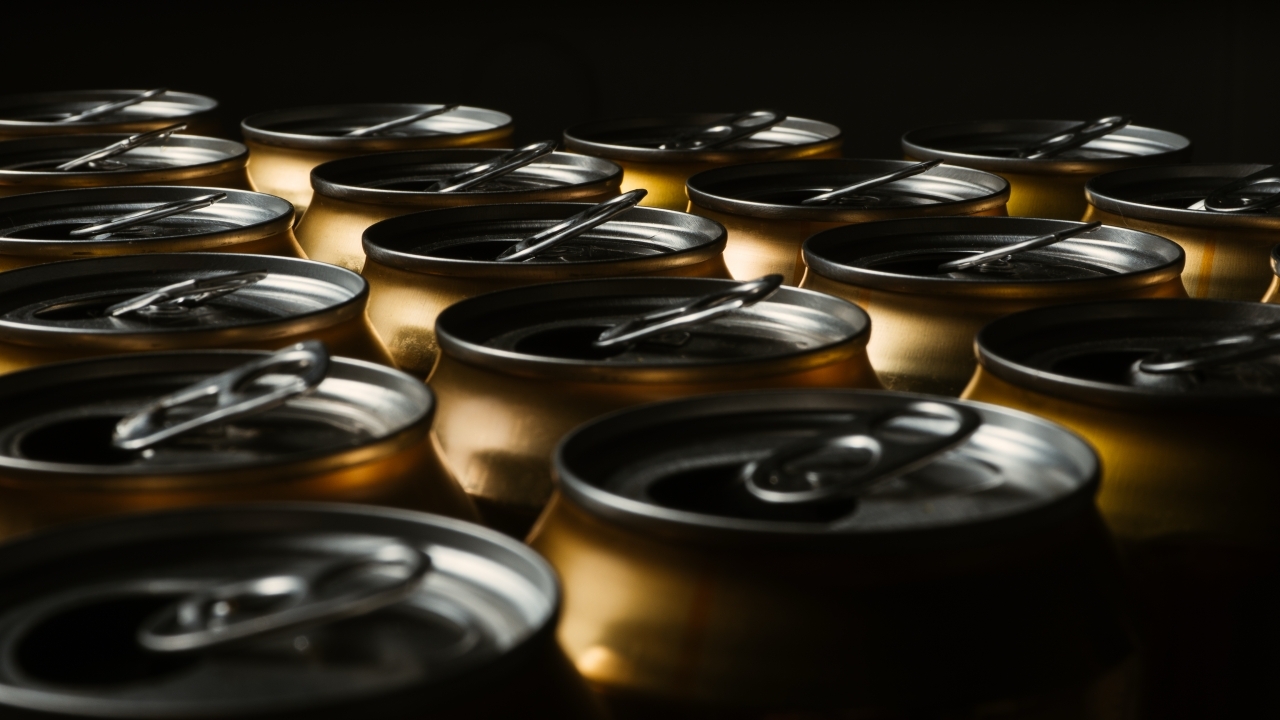
Those who have heard of craft beer may have tried it at various shops or restaurants, wanting to support small Thai producers, but likely noticed the prices are 2-3 times higher than regular market beers.
This is partly because small producers cannot achieve economies of scale like large producers, and partly due to the taxes they must pay. Generally, the tax is about 30 baht per can, including excise tax, local taxes, and contributions to various funds, excluding 7% VAT, which is calculated on the net selling price that already includes these prior tax costs.
These burdens weigh on producers and deter consumers from purchasing craft beer, leading many small producers to gradually go out of business.
Regarding Thailand’s excise tax structure on alcohol, it is calculated from two components: 1) value-based. Currently, beer is taxed at 22% of the recommended retail price. The higher the price, the higher the tax. and 2) volume-based. Calculated based on alcohol volume at 430 baht per liter of pure alcohol. The higher the alcohol content, the heavier the tax.
Focusing on the recommended retail price, which is the tax base used by the Excise Department. Previously, the department used the price reported by manufacturers or importers, but under the new regulation issued in mid-March, it will be based on the retail shelf price (excluding VAT).
He sees this as misplaced because taxes are collected from producers but based on the retail price charged to consumers. For example, if a factory sells to a store at 100 baht, and the store marks it up to 160 baht as profit and management costs, the factory ends up paying taxes on 160 baht, which is much higher than it should be.
Currently, small breweries pay about 30 baht tax per can to the government, but under the new regulation, small producers may have to pay up to 50 baht tax per can, which is unsustainable for them as they were already barely surviving. They were already in a survival mode, just managing to stay afloat.
He believes it is time to reform the alcohol tax system. For example, in the U.S., small craft brewers pay a special lower tax rate of $3.5 per barrel for the first 60,000 barrels, which is five times less than what large producers pay. They also tax only based on alcohol volume, not value, which is fairer to all parties.
He also appeals emotionally, saying that after pushing legal reforms to allow widespread production, if small businesses cannot survive due to tax reasons, it is heartbreaking and all efforts would have been in vain.
