

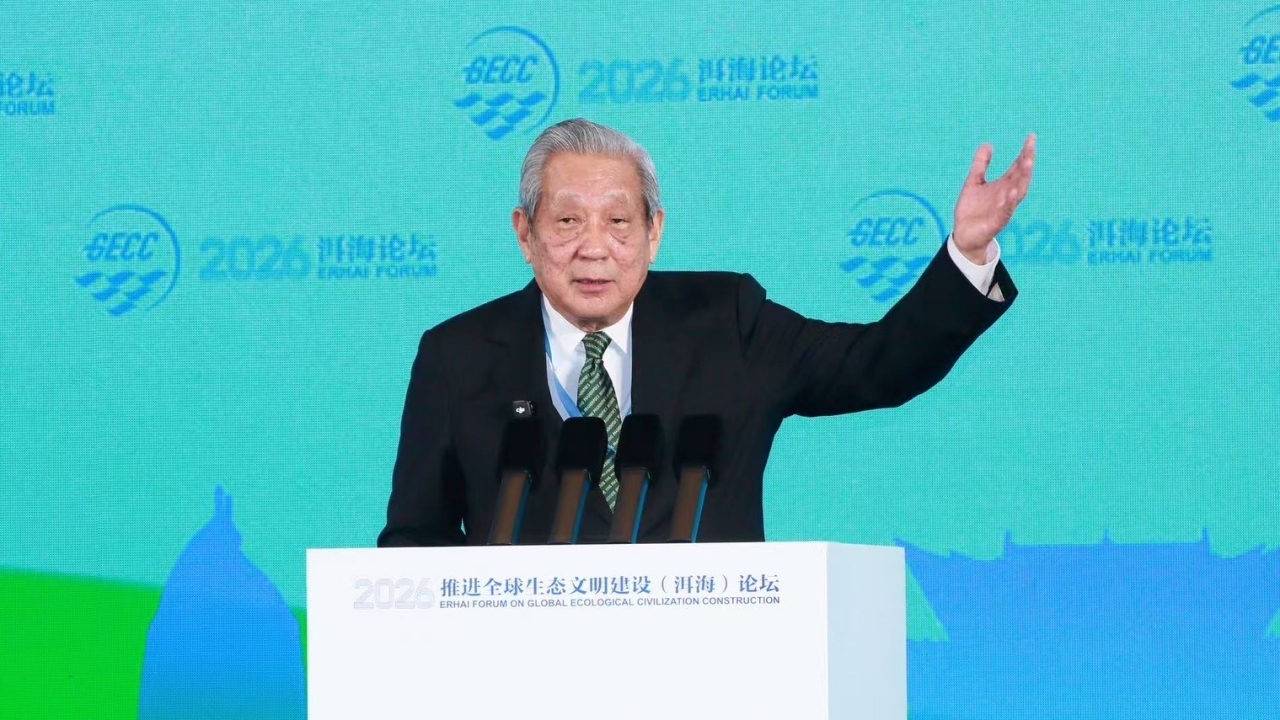
China successfully held the Global Ecological Civilization Promotion Forum, known as the "Erhai Lake Forum," in Dali City, Yunnan Province, under the theme "Join Forces for Innovation, Build a Beautiful China." The event demonstrated that economic growth, improved quality of life, and nature conservation can progress concretely and simultaneously. Pinij Jarusombat, Chairman of the Thai-Chinese Cultural Council and Promoter of Bilateral Relations, led a Thai delegation to participate.
On 30 May 2026, the Global Ecological Civilization Promotion Forum, or "Erhai Lake Forum," was successfully held in Dali City, Yunnan Province, China, under the theme "Join Forces for Innovation, Build a Beautiful China." The event was co-hosted by China's Foreign Information Office, the Yunnan Provincial People's Government, and the China Publicity Association.
The forum's primary goal was to promote the ecological civilization concept of President Xi Jinping of the People's Republic of China to the global community. It aimed to present the modern Chinese model that emphasizes harmonious coexistence between humans and nature, as well as to share Chinese wisdom and approaches to building ecological civilization with the international community.

The event was well attended by distinguished guests from China and abroad, including Mr. Chang Bo, Director of China's Foreign Information Office; Mr. Pinij Jarusombat, former Thai Deputy Prime Minister and Chairman of the Thai-Chinese Cultural Council and Promoter of Bilateral Relations; Ms. Naphason Phuwaborirak, Director of Information and Public Relations at the ASEAN-China Centre in Beijing; Mr. Guo Wei Min, President of the China Publicity Association and former Deputy Director of the State Council Information Office of China; Mr. Wang Xiankang, Deputy Secretary-General of the Yunnan Provincial Government; Mr. Khalil Hashmi, Pakistan's Ambassador to China; and Mr. Fazil Najib, Maldives' Ambassador to China.
Additionally, representatives from central government agencies, various Chinese ministries, local governments, think tanks, industry organizations, the business sector, media, diplomats accredited in China, government officials, experts, scholars, and representatives from international organizations from 16 countries and regions including Germany, Canada, Japan, Thailand, South Africa, and Kenya participated, totaling over 200 attendees.
Mr. Pinij Jarusombat, former Thai Deputy Prime Minister and Chairman of the Thai-Chinese Cultural Council and Promoter of Bilateral Relations, stated at the forum that his visit to Dali allowed him to witness the Changshan Mountains, Erhai Lake, and Yunnan people's dedication to protecting nature while advancing their hometown's development beautifully. He recalled President Xi Jinping once described Dali with poetic words meaning "Changshan is a thousand-year painting without ink, and Erhai is an ancient zither without strings." Experiencing Dali firsthand deepened his understanding of this expression. The Changshan and Erhai are truly beautiful, precious treasures of the Chinese people and shared heritage of all humanity.

“Beautiful natural resources must be preserved across generations, and development must genuinely benefit the people. The concept that green mountains and clear waters are as valuable as mountains of gold and silver is clearly reflected in Dali. Around Erhai Lake, there are tourists, coffee shops, local-style residences, ancient towns, and young people building their lives, showing that Dali has successfully preserved its mountains and lake while transforming natural resources into opportunities for its people,” said Pinij.
Pinij added that Dali's experience is a living example of green development valuable to countries including Thailand. In recent years, many Thai friends have come to know Dali through the Facebook page “This is Dali,” which continuously showcases its beautiful landscapes, local lifestyles, culture, history, food, tourism, and stories of its people. This has increased Dali's recognition in Thailand and become an important window helping Thai people see China in a warm, vibrant light full of modern development energy.

“The success of the “This is Dali” page demonstrates that international communication today can start from relatable, tangible stories. Images of Erhai Lake, ancient towns, local homes, coffee shops, young people's lifestyles, and well-preserved nature have helped many Thai friends discover Dali, understand Yunnan, and appreciate the charm of China through a friendly and natural perspective,” Pinij emphasized.
He also noted that the delegation included members of the Thai-Chinese Cultural Council and the Asia-Pacific Think Tank, hoping Thai friends would experience Dali, see its nature, understand its development journey, and bring inspiration back to Thailand. “Thailand and Yunnan are close, and our peoples have long connections. We often say Thailand and China are like close siblings. This reflects the deep bond between our peoples built over time. Family members are sincere with each other, learn from one another, and move forward together,” Pinij stressed.
In closing, Pinij said China has many interesting experiences in environmental conservation, poverty alleviation, rural revitalization, and new energy industry development. Thailand also has its own potential and resources. As exchanges and cooperation increase, the foundation of a shared future community between Thailand and China will grow stronger. “The Thai-Chinese Cultural Council and Promoter of Bilateral Relations will continue to serve as a bridge of friendship, helping Thai friends learn more about China and bring Chinese development experiences to Thailand. I wish the Erhai Lake Forum complete success, may Changshan remain verdant forever, Erhai Lake stay pure, and Thai-Chinese friendship endure as firmly as Erhai Lake and Changshan Mountains,” Pinij concluded.

This forum highlighted China's role in driving global green development and building ecological civilization, especially in Dali City, where Erhai Lake symbolizes ecological restoration and serves as a prime example that economic development, improving people's quality of life, and nature conservation can advance simultaneously and concretely, earning strong admiration from all participants.