

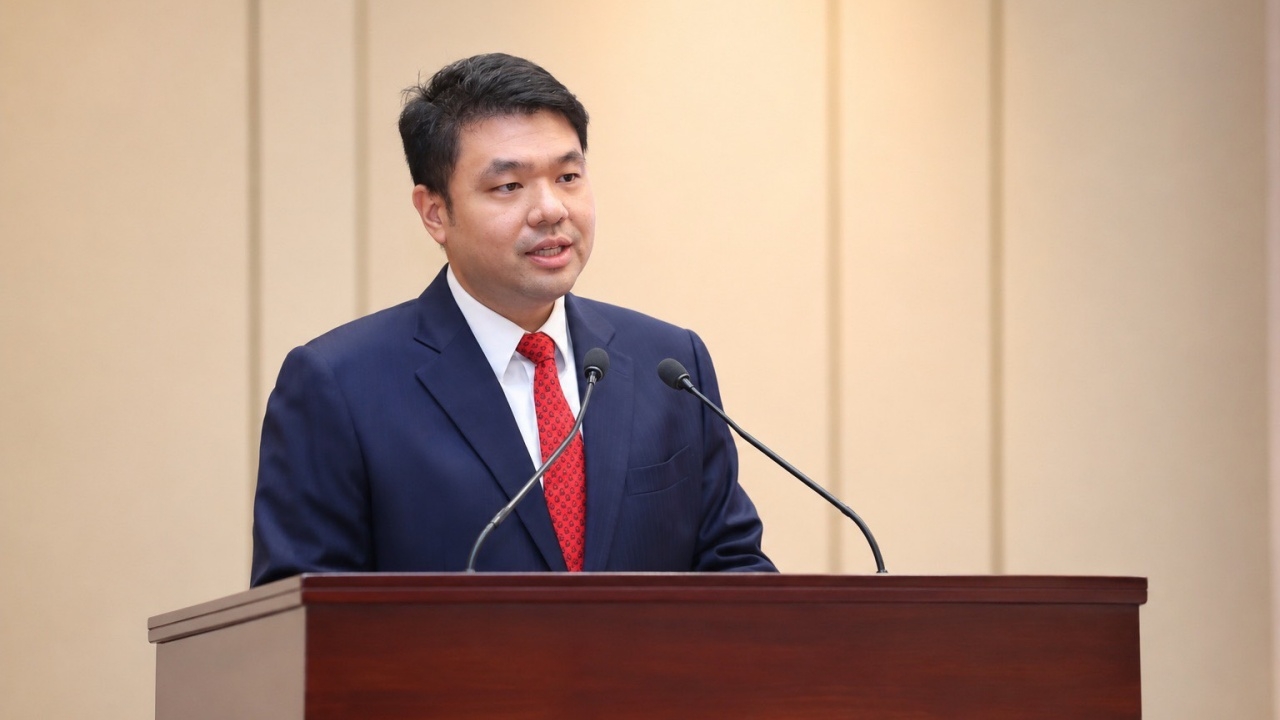
Securities and Exchange Commission (SEC) commissioner "Pachara Naripthaphan" Stresses that the "government" must clearly consider EV issues and suggests three key points before revising the vehicle tax structure to adapt to the EV era.
On 28 Aug 2026 GMT+7, Pachara Naripthaphan, a commissioner of the SEC (Securities and Exchange Commission), commented on the increasing presence of electric vehicles in the Thai and ASEAN markets. He attributed this partly to shifts in industry bargaining power, benefiting consumers through more accessible prices and improved quality, while traditional internal combustion engine (ICE) automakers are still adjusting prices and innovating.
He noted that the key is balancing trade, product quality, and consumer affordability. It is acknowledged that electric vehicles have effectively met both price and quality demands recently.
Pachara further explained that the advantage of electric vehicles in Thailand is not only due to price and quality but also rooted in the tax structure under the ASEAN-China Free Trade Agreement (ACFTA). Pure electric vehicles (EVs) have been classified as normal goods and exempt from import duties from China since 2010, whereas internal combustion engine (ICE) vehicles, including hybrids and plug-in hybrids, are considered sensitive goods, with import duty reductions capped at 50 percent.
Besides Thailand, Indonesia is also benefiting from this situation. However, Pachara believes there is no need for excessive concern if Thailand’s strong automotive industry ecosystem can clearly address the three mentioned issues.
Before the government proceeds with revising the vehicle excise tax structure, it must clearly address three important issues.
1. How to maintain excise tax revenue to support infrastructure, given that the EV transition reduces government income from both vehicle taxes (due to promotion policies) and fuel taxes (due to declining ICE engine usage). Without a clear revenue replacement plan, long-term budgets for roads, utilities, and related infrastructure will be affected.
2. Where do consumers’ savings from lower vehicle prices go economically? Pachara questioned whether the surplus saved by consumers from cheaper cars is ultimately spent or invested within sectors of the Thai economy that generate real added value. If the saved money simply flows into imported goods, it will not support the domestic economy as expected.
3. Identify market segments where Thailand can still compete, especially where EVs do not yet fully meet needs. Pachara suggested focusing on niches like heavy trucks, pickups, and commercial vehicles, where current EV technology still lags behind ICE vehicles in range and payload. This presents an opportunity for Thailand to preserve its production base and upgrade existing industries, rather than focusing solely on passenger EVs.
However, these three issues must be resolved before advancing tax policies further. Otherwise, solving one problem may create even bigger new ones.