

Dr. Thanakrit led the NHSO and HSS teams to inspect a clinic after a controversy arose about a blunt-speaking doctor who cursed and threatened patients. In a phone conversation, the doctor said he was stressed from being verbally abused over calls and planned to quit medicine and become a monk instead. He added he would not starve because he has rental income from properties.
The case involves a young woman with chronic kidney disease who sought help from Lieutenant Colonel Dr. Thanakrit Jitraareerat, chairman of a special subcommittee at the NHSO, regarding the clinic’s refusal to provide a referral letter. She accused the clinic’s doctor of verbally abusing, threatening, and exacerbating her condition while requesting the referral, even cursing her to die before age 40. Evidence included audio clips and chat messages.
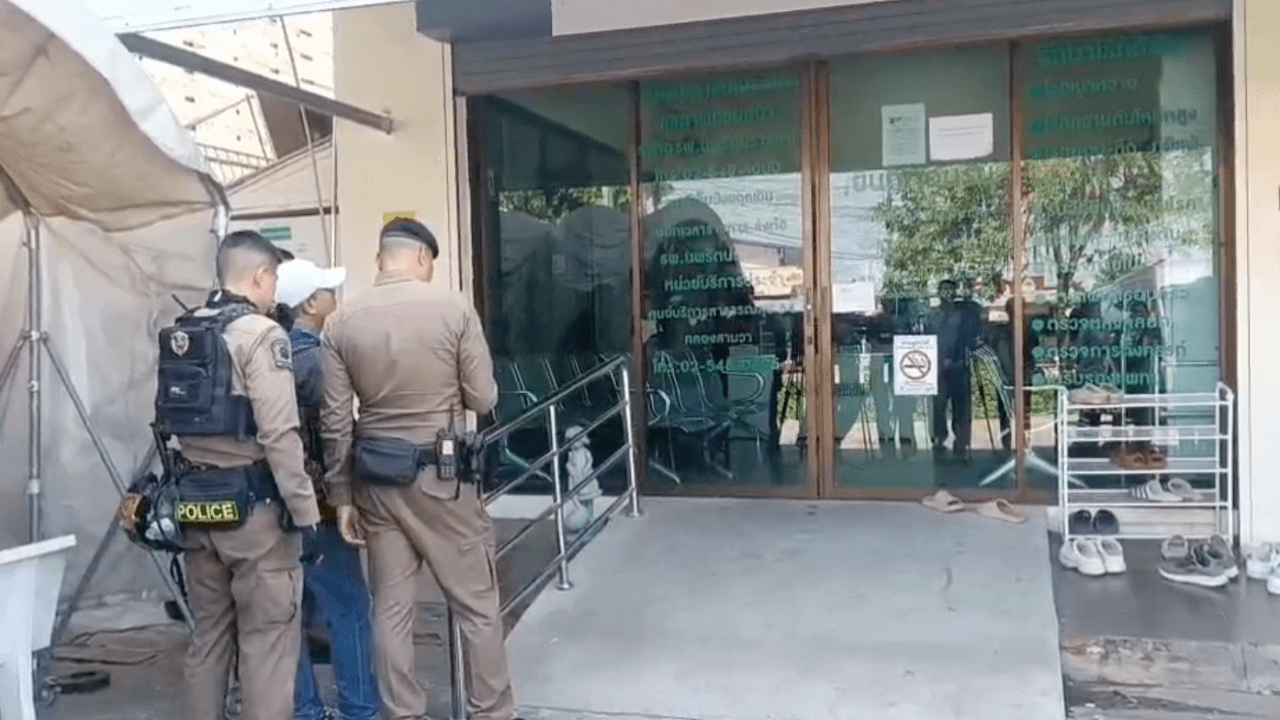
This morning (4 Sept) at a clinic on Charoen Phatthana Road, Bang Chan subdistrict, Khlong Sam Wa district, Lieutenant Colonel Dr. Thanakrit Jitraareerat, along with NHSO and HSS officials, arrived to investigate the facts inside the clinic.
Lieutenant Colonel Dr. Thanakrit revealed that preliminary data review with the National Health Security Office (NHSO) found at least two major service complaints against the clinic. The first was patients reporting they did not receive referral letters for further treatment. Although NHSO had previously warned and asked for corrections, such complaints persisted.
The second issue concerned medication dispensing. Complaints indicated some chronic patients received only about seven days’ worth of medicine at a time, despite needing continuous treatment over long periods. This forced frequent trips for refills, increasing costs and inconvenience. The reasons for this dispensing pattern require further investigation.
Regarding the recent complaint by a chronic patient accusing the doctor of harsh verbal abuse and making statements implying the patient might die by age 40, Lieutenant Colonel Dr. Thanakrit said such language is unacceptable, especially toward patients with chronic illnesses, as it can severely affect their mental health, cause fear, and undermine trust in treatment.
Lieutenant Colonel Dr. Thanakrit added that the situation worries the Minister of Public Health because such treatment of patients may impact their health and safety. Therefore, a comprehensive investigation is urgently needed. Accordingly, the Department of Health Service Support (HSS) was coordinated to send officials to inspect the clinic, using legal authority to assess standards and services. Police also provided security, and complainants attended to provide information.

Lieutenant Colonel Dr. Thanakrit said before the inspection, he planned to talk with the clinic owner and the accused doctor to allow them to clarify the facts, especially regarding the complained statements and issues of referral letters and medication dispensing.
Regarding NHSO procedures, Lieutenant Colonel Dr. Thanakrit said if the investigation finds the clinic’s services pose risks or harm to patients, NHSO will use its legal authority to resolve the issues, including considering contract termination with the service provider.
If the contract is terminated, arrangements will be made to accommodate affected patients by coordinating their transfer to nearby healthcare facilities to ensure continuity of care without disruption.
Concerning reports that the doctor had moved between clinics or was involved with multiple clinics, Lieutenant Colonel Dr. Thanakrit said no conclusions can be drawn yet. Further fact-finding is necessary. If other clinics linked to the doctor and under the same service system are found, they will be investigated and appropriate actions taken.
Before inspecting the clinic, Dr. Weeraphan Leethanakul, Deputy Secretary-General of NHSO, said this clinic had received multiple complaints and warnings from NHSO without improvements. NHSO’s Bangkok office found irregularities in billing and non-compliance with service standards during two inspections. Therefore, NHSO plans to order an immediate service suspension. Over 9,000 patients registered with the clinic under the universal coverage scheme will be coordinated with Bangkok authorities to transfer them to nearby facilities, though their referral hospitals remain the same.
During the site visit, Lieutenant Colonel Dr. Thanakrit had a phone conversation with the accused doctor. Upon answering, the doctor broke down in tears, saying he was stressed and sleepless due to persistent harassing and critical calls. He said he was tired of sacrificing sleep to help patients but faced this treatment. He expressed a desire to quit medicine and become a monk, adding that even without practicing medicine, he would live comfortably from rental income of 10,000–20,000 baht per month. He said there was no benefit to enduring hardship.
He said that in his 14 years as a doctor, he had never encountered such patients. For other cases without problems, he treated them normally. Blood tests at the clinic required no waiting. He claimed the patients physically assaulted him and deliberately provoked him, intending to ruin his reputation. Otherwise, he would have been able to build a hospital and treat patients from grassroots to elite private hospital level.
When asked why he said the 30-baht scheme did not provide proper treatment and harmed state agencies, the doctor replied, "If I tell you, would you accept it? Many hospitals in the 30-baht scheme do not treat patients; they just let them die in bed."
Dr. Thanakrit responded that if he knew relatives of patients who were left to die, they should report it to him immediately. He also invited the doctor to explain his views on television, to which the doctor agreed.
Meanwhile, the doctor’s mother shouted that her son was not smart and spoke nonsense, asking who would care for her if he stopped being a doctor. She is over 80 years old and uses the 30-baht healthcare scheme.
The doctor also tried to explain past patient treatments, insisting he did not refuse to refer patients but that the clinic must follow its assigned duties before referring patients to hospitals. However, patients often handled everything at the hospital themselves, which is not feasible and constitutes excessive treatment.
Dr. Thanakrit spoke with the doctor’s mother, who was at the clinic, and she confirmed she has been treated for diabetes under the 30-baht universal coverage scheme consistently. She stated the hospital is good and the medication process is efficient.