

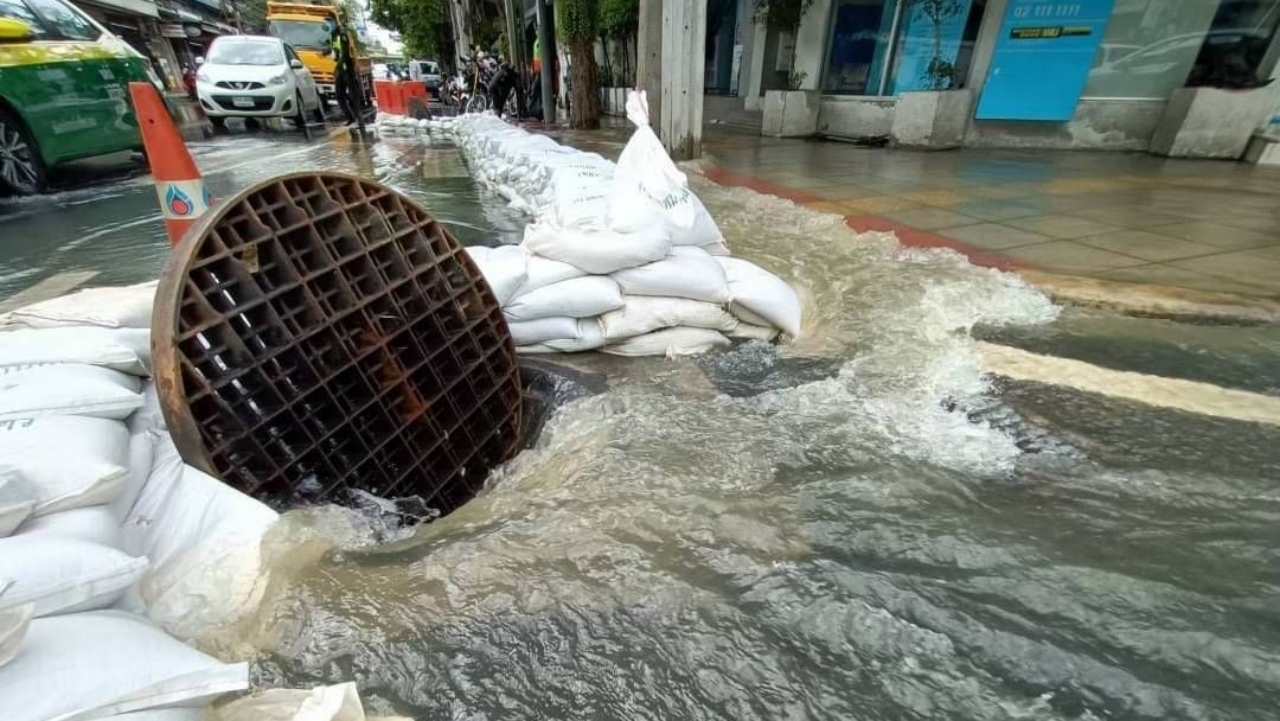
Governor Chatchat emphasizes that Bangkok is ready to handle heavy rains, noting that "rain bombs" cannot be forecasted in advance. He highlights the separate management of "rainwater and upper river water," with close monitoring of water levels and vulnerable points nearby.
On 23 Sep 2026 GMT+7, Governor Chatchat Sitthiphan of Bangkok stated that following the Meteorological Department's warning of heavy to very heavy rain from 23–27 Sep 2026 GMT+7, Bangkok has prepared according to plan by closely monitoring rainfall and water levels to manage and expedite drainage as quickly as possible. The city surveyed and tracked flood risk points since last week, especially in areas previously flooded such as Senanikom, Senanikom 1 Road, Phahonyothin 84 Road, Inthra 5 Road, and areas along the Lat Phrao canal where water had overflowed.
Governor Chatchat said that a key factor is the efficiency of water drainage, particularly regarding trash blocking water inlets and drainage grates. He therefore instructed district sanitation officials to continuously inspect and remove debris to prevent obstacles to drainage during heavy rain.

Furthermore, water management is divided into two parts: rainwater falling within Bangkok and upstream water from the Chao Phraya River. For Bangkok's rainwater, the city uses pumping and drainage systems as usual. For upstream water, flood prevention measures such as floodgates, pumping stations, and equipment along the Chao Phraya River must be monitored.
Regarding the upstream water situation, the current flow is about 1,500 cubic meters per second, which remains manageable. Nonetheless, Bangkok will closely monitor riverside communities and continuously coordinate with the Royal Irrigation Department and related agencies, as managing Bangkok's water requires simultaneous attention to river levels and local rainfall.
The Drainage Department has prepared areas to hold water before rainfall by controlling and lowering water levels in 1,980 canals across Bangkok, totaling 2,745 kilometers in length. It has also prepared 38 monkey cheek areas and water banks with a combined capacity of 13.71 million cubic meters. The drainage system includes 207 pumping stations, 371 pumping wells, 244 floodgates, 5 drainage tunnels, and 6,854 kilometers of drainage pipes.
Additionally, equipment and personnel are ready for operations, including extra water pumps, 12 mobile units, 46 water pushers, 24 BEST units, as well as 2 weather radar stations and telemetric systems to support monitoring and management on site.
For areas along the Chao Phraya River, Bangkok has prepared 96 pumping stations and monitors the 88-kilometer flood protection line. It also manages 51 breach points and pier openings spanning 2.7 kilometers, with sandbags and personnel stationed at risk points ready to act.

Regarding "rain bombs," Governor Chatchat said that the pattern and severity of rain depend on daily weather conditions and wind direction. Therefore, it is not possible to conclude in advance that heavy rain will occur uniformly in all areas. Rain bombs must be assessed daily because rainfall characteristics vary with weather and wind each day. Bangkok must monitor weekly and daily weather forecasts and adjust operations accordingly.
Governor Chatchat additionally urged the public not to be complacent, to follow official warnings, and to allow extra travel time during heavy rain, especially on routes previously prone to flooding.
