

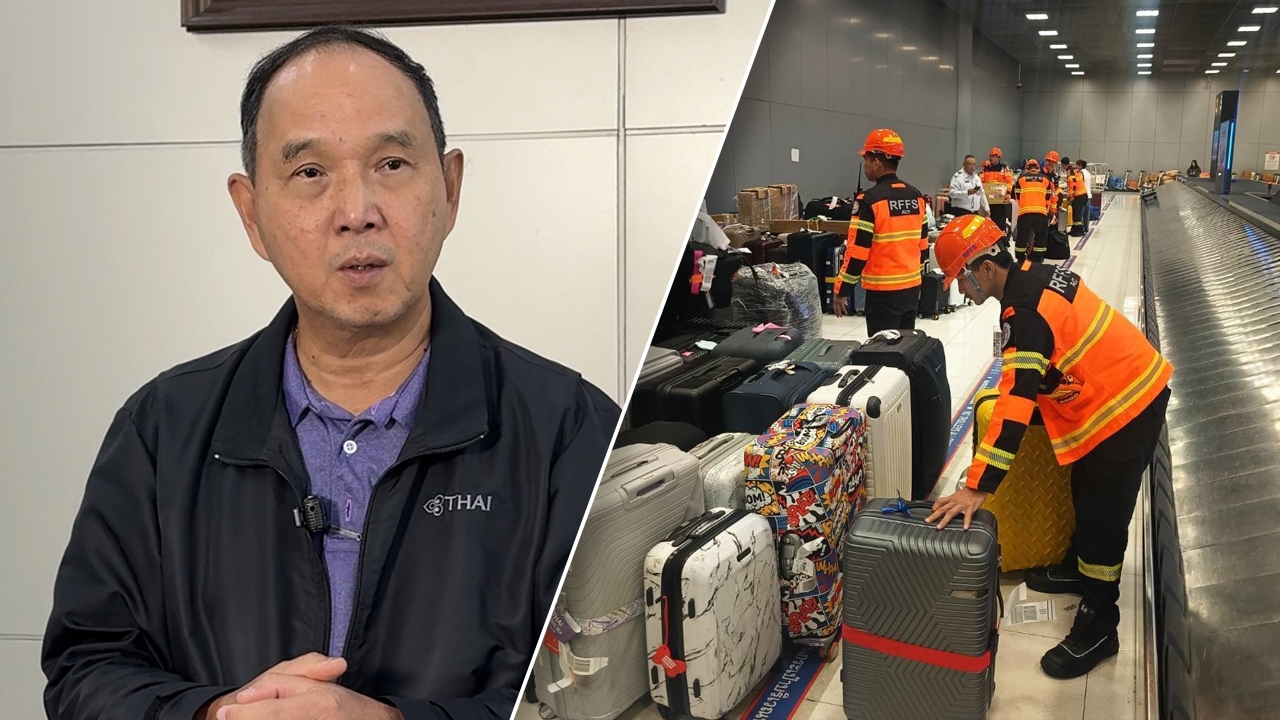
“DD Thai Airways” provided a detailed explanation regarding the backlog of over 5,000 bags and 100% flight delays, apologizing to passengers. They acknowledged the floods severely impacted skilled labor availability, leading to a temporary 30%–40% reduction in flights from Bangkok. The airline enlisted military and external operators to accelerate baggage clearance, expecting to restore operations within 72 hours. They admitted the situation was more severe than management had anticipated and emphasized it was not caused by internal problems or political interference.
At approximately 12:45 PM on 29 Sep 2026 GMT+7, Mr. Chai Iamsiri, CEO of Thai Airways Public Company Limited, provided an update on managing the backlog of passenger baggage and the impact on services at Suvarnabhumi Airport over the past three days. He apologized to passengers and customers affected and acknowledged the situation was more severe than management had forecasted, despite the company having contingency plans for the Bangkok floods and surrounding areas.
Mr. Chai explained the main issue arose from two labor groups: general workers and those requiring specific skills or licenses to work. Many workers living near the airport were affected by flooding and unable to reach work, particularly those with specialized skills and licenses critical for ground operations.
Regarding labor shortages, about 500 general workers are normally needed, but over 200 are currently absent. Although the military has provided support, the key issue is the shortage of skilled, licensed workers—especially loadmasters who operate near aircraft. There should be about 45 loadmasters, but only around 20 are currently working. The company has deployed licensed staff and managers to assist on-site and is urgently tracking down skilled employees to return them to duty.
“Thai Airways has coordinated with security agencies and received GMC vehicles from the military to pick up affected employees from their homes. Some management staff have also gone into the field to bring employees back to work. However, some employees remain concerned about their homes and families in flood zones, limiting their return. Meanwhile, general labor support has increased from the Air Force and Ministry of Defense, with manpower mobilized to assist on-site,” Mr. Chai said.

Additionally, the problem is linked to cargo management, as some operators and freight forwarders cannot collect cargo from Thai Airways’ warehouses on schedule. Flood-affected labor and transport vehicles have caused cargo to accumulate and overflow storage areas. Equipment typically used for cargo handling has been repurposed to support overflow, limiting availability for other flights. The company is urgently coordinating with operators and customers to remove cargo, free warehouse space, and retrieve equipment for operational use.
Mr. Chai said that over the past two days, nearly 100% of Thai Airways flights have been delayed, with less than 3% departing on time, indicating current capacity cannot support the original schedule. Consequently, the company decided to reduce capacity starting last night by canceling or cutting some flights and transferring passengers to other flights to improve efficiency and punctuality for flights still operating.
Normally, Thai Airways operates about 110 flights daily from Bangkok. The company aims to cut approximately 30 flights—around 30%–40% of current capacity—to align with available manpower and resources. They are also considering involving other operators to help share the load for ground services provided to other airlines, as Thai Airways cannot currently support the full workload.
“Thai Airways is more affected than other airlines because Thailand is its main operational base. Many aviation activities, including baggage handling, cargo, catering, and ground services, must be conducted in Bangkok. Some foreign airlines can load baggage or cargo at origin and depart Suvarnabhumi more quickly, reducing their operational steps in Bangkok,” Mr. Chai explained.
Regarding baggage backlog management, about 5,600 bags remain. The company is moving these bags to accessible areas so passengers can contact and retrieve their belongings. Flight and baggage availability information will be announced via Thai Airways’ Facebook page and website. Passenger terminal areas have been arranged with cooperation from the airport authority, which is also providing manpower support.
The baggage collection process will be zoned by date and flight. Staff will match passenger information with baggage tags so passengers can verify and collect their own bags. For baggage passengers cannot collect themselves, the company will deliver them to the final destination. Currently, three operators assist with this: two existing service providers and Thailand Post, coordinated by the airport authority. Delivery capacity is expected to increase today.

Mr. Chai noted that staff working on-site for three consecutive days were fatigued. The company has mobilized employees from headquarters and back-office departments since yesterday to help clear baggage in the arrivals hall, focusing on domestic flights for speedy resolution. Additionally, approximately 100 personnel from the Air Force and Ministry of Defense are expected to assist today in cargo and baggage areas at the airport, with requests for further support ongoing.
He added that the company is addressing the issue by offering additional compensation or incentives to workers and having management contact employees individually and visit their homes to resolve personal problems and facilitate their return to work. Some tasks cannot be immediately replaced by general personnel. The flight reduction is expected to last at least three days to restore skilled labor and rebalance operations. The company aims to normalize the situation within 72 hours and clear as much baggage as possible from the terminal today.
For passenger compensation, the company plans to set up service points to handle claims related to baggage and flight delays, with established compensation criteria. Preparation is underway to provide services inside and outside the terminal building, with initial points expected to open this afternoon. However, priority remains on resolving on-site issues and returning baggage to passengers promptly.
Mr. Chai emphasized that the problems are not due to internal organizational issues, employee negligence, or intentional work refusal but result from flooding affecting many workers, especially those living in risk areas. The company is actively assisting employees to resolve difficulties and return to work as soon as possible. He confirmed no political interference in addressing the situation, and all relevant agencies are cooperating to support the resolution.
“Thai Airways has contingency plans for emergencies, but this labor impact was more severe than expected. The company initially estimated it could maintain about 80% production capacity, but widespread worker absenteeism has reduced capacity more than anticipated, necessitating flight reductions and a rapid mobilization of workforce reintegration,” Mr. Chai said.
Mr. Chai continued that management has not ignored the situation, with several executives visiting the site to monitor and solve problems over the past three days. They have continuously communicated with passengers, especially by announcing flight and baggage availability through online channels. Passengers traveling on 26–27 Sep can collect baggage at Terminal 1, arrivals area, to expedite backlog reduction and restore normal operations within 72 hours.