

The Bangkok Metropolitan Administration (BMA) reaffirmed its cancellation of the Bueng Khu Bon and Bueng Bang Chan projects due to lack of cost-effectiveness. The combined budget of 11 billion baht for both basins would yield only about 700,000 cubic meters of water storage. Instead, drainage tunnels and the Nong Bon Basin, which can store over ten times more water, will be used. BMA emphasized it has no intention to favor private sector interests and noted the necessity for complete components of a flood detention system: intake, storage, and outlet.
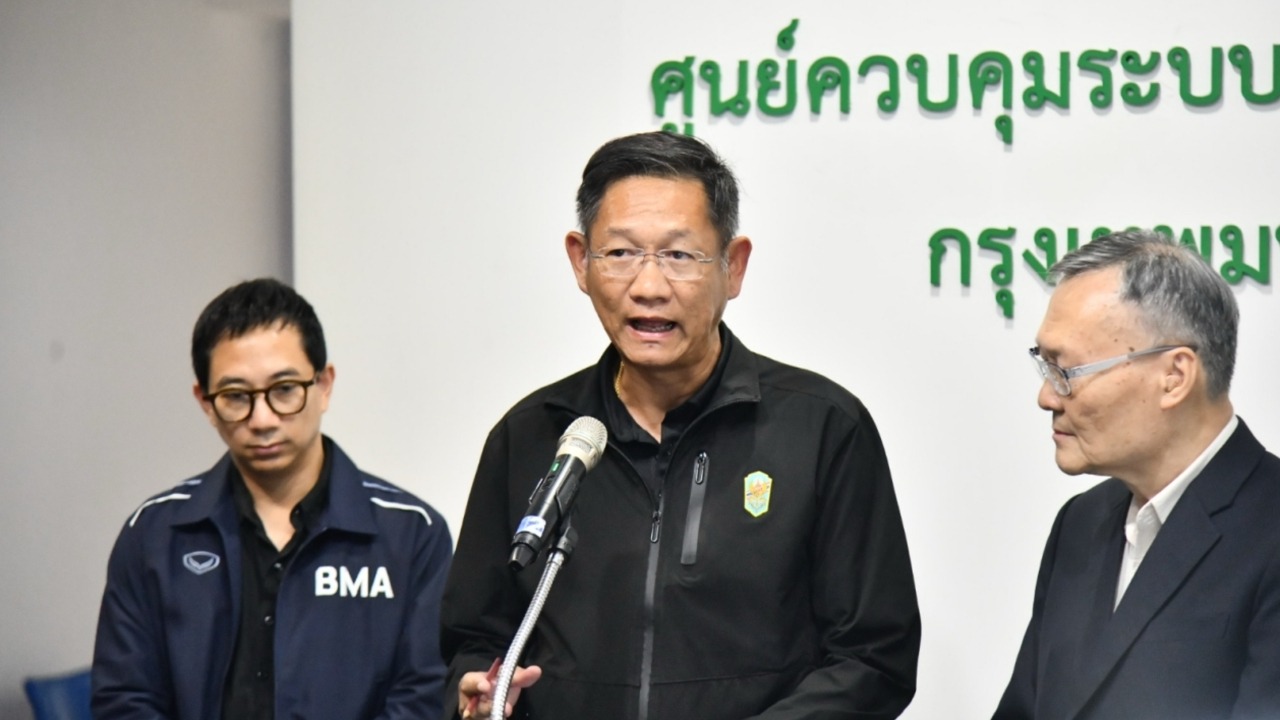
On 3 Oct 2026, Mr. Jesada Chantraprapa, Deputy Permanent Secretary of Bangkok Metropolitan Administration, along with Mr. Chawalit Chantrarut, water management expert and CEO of TEAM GROUP (Public Company Limited, TEAM Consulting Engineering and Management), addressed concerns regarding the review of the Bueng Khu Bon detention basin project. They explained that project evaluation must consider efficiency, water intake and drainage capacity, connectivity with the main system, and budget cost-effectiveness. They affirmed the process follows scientific principles and relevant regulations, with no favoritism toward any private company.
The concept of developing flood detention basins in this area originated after the major 2011 floods and a 2013 drainage system study that proposed additional water retention areas, some on private land requiring land expropriation and public consultation. However, over time, land prices have risen, while developing functional flood detention basins requires significant additional system investments.

Mr. Chawalit stated that Bueng Khu Bon’s designed capacity is about 870,000 cubic meters, but the practical volume usable for water management is approximately 500,000 cubic meters because the entire capacity cannot be utilized and water levels must be reserved for system control.
Developing Bueng Khu Bon as a fully functional flood detention basin involves more than land expropriation or excavation; it requires complete components including water intake channels, storage area, and outlet channels. This entails upgrading connecting canals, building embankments and flood defenses, control structures, sluice gates, pumping stations, and installing pumps to effectively receive, store, and discharge water.
Mr. Chawalit added that combining current land prices with all system construction costs brings the total project budget for Bueng Khu Bon to about 11 billion baht. This includes not only land expropriation but also canal improvements, water control buildings, sluice gates, embankments, pumping stations, and necessary equipment for system operation.

“Therefore, BMA must compare costs against the actual volume of water that can be managed. Bueng Khu Bon can manage only about 500,000 cubic meters, whereas the existing large Nong Bon Basin can manage approximately 5 million cubic meters—about ten times more. Nong Bon also connects with main drainage tunnels and canals, enabling water to be drawn from the eastern area into the large drainage system,” Mr. Chawalit explained.
A functional flood detention basin must have all components—"intake, storage, and outlet." This means there must be water inflow channels, storage space, and outflow channels. Having only storage capacity without effective intake and drainage channels limits the basin’s full potential.

BMA therefore plans to develop an integrated water drainage system on the eastern side by linking main canals such as Phaya Suren Canal, Sam Wa Canal, Saen Saeb Canal, and Prawet Burirom Canal with Nong Bon Basin, drainage tunnels, and large pumping stations. Plans include expanding water intake from Min Buri, Bang Kapi, Lat Krabang, Rom Klao, and nearby areas into this system.
Given recent heavy rainfall in Bangkok and ongoing major projects, BMA has implemented short- and medium-term measures including managing sluice gates along Saen Saeb and Prawet Burirom canals, accelerating waterway clearance, improving canal systems, reinforcing flood defenses, and increasing water inflow into Nong Bon Basin to maximize the use of existing pumping and tunnel systems.
Regarding the recent continuous heavy rainfall, Mr. Jesada noted that accumulated rainfall in Bangkok over several days exceeded 300 millimeters, representing a large volume compared to small flood detention basins’ capacity. Even combined, Bueng Khu Bon and Bueng Bang Chan can only partially mitigate floodwater. Comprehensive drainage using canals, tunnels, and pumping stations capable of continuous water discharge remains essential.
“All water management tools are important, including flood detention basins. However, selecting projects for each area must consider efficiency, actual water volume managed, connectivity with drainage systems, and budget cost-effectiveness to maximize water management and benefit the public sustainably,” Mr. Jesada said.