

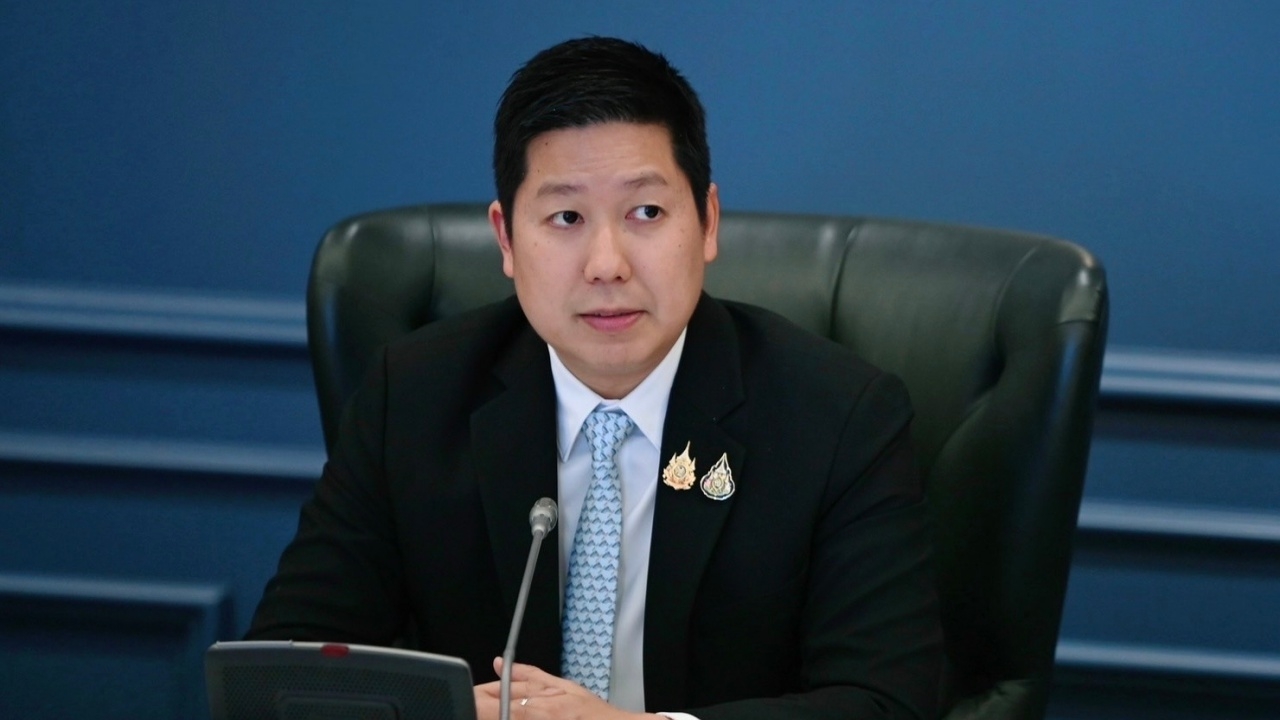
Worawong is concerned that the Thailand–UAE FTA will not be worth the cost, harming the petrochemical industry, and cautions against using the FTA as a political tool during the no-confidence debate.
Worawong Ramangkul, former Deputy Minister of Commerce, expressed concerns about the Thailand–UAE Free Trade Agreement (FTA) negotiations after Deputy Prime Minister and Commerce Minister Supachai Sutthammanoon announced on 8 Oct 2026 that negotiations have concluded and are under legal review for 2–3 months, with signing expected early 2027. Worawong noted that opening the polyethylene (PE) and polypropylene (PP) pellet markets to the UAE would severely impact Thailand's upstream petrochemical industry.
It would not be worth the cost and would put major businesses at risk.
Worawong said a study by the Department of International Trade Negotiations estimates the Thailand–UAE FTA would increase Thailand’s GDP by only 0.08–0.09%, about 11–12.5 billion baht. Meanwhile, the petrochemical industry generates approximately 836 billion baht, representing 5–6% of GDP, with accumulated investment over 1.25 trillion baht and directly employs around 54,000 people.
“In negotiating a free trade agreement, we must weigh the benefits against the costs. If the GDP gain is less than 0.1%, but we risk an industry that accounts for 5–6% of GDP, this is not a worthwhile deal. If Thailand benefits less than it loses, it should not accept the agreement,” Worawong said.
The upstream sector will bear the direct impact.
Worawong explained that PE and PP plastic pellets are the starting points in the plastic industry supply chain. Thailand has production capacities of about 4.5 million tons of PE and 2.7 million tons of PP annually, accounting for more than half of all downstream petrochemical production capacity, exporting around half of that. These producers are the core of industrial estates in the Eastern Economic Corridor.
A study by the Petroleum Institute of Thailand (PEIT) found that producers in Gulf countries have much lower production costs for PE and PP due to abundant domestic gas and oil feedstocks, large new plants, and domestic usage of only 10–15% of capacity, with the rest exported.
“Although Thailand currently imposes import duties on PE and PP pellets, it still imports about one-third from Gulf countries, running a trade deficit in these plastics averaging 10 billion baht annually. If tariffs are removed, Thai upstream producers will immediately lose their domestic market. Reduced upstream production will impact employment, investment, and investor confidence in the Eastern region,” Worawong said.
Previous government delayed deal because of PE and PP concerns.
Worawong revealed that during Paethongtarn Shinawatra’s administration, when Pichai Naripthaphan was Commerce Minister, the Thailand–UAE FTA negotiations were concluded on all issues except PE and PP pellets. The government chose not to rush the deal to avoid burdening the petrochemical industry with negative impacts from the FTA.
“We were ready to close the deal then, with only PE and PP remaining unresolved, and we refused because the cost outweighed the benefit. Now that the government says negotiations are finished, it must clearly explain to the public and businesses how it plans to manage the coming impacts,” Worawong said.
Warning against politicizing the FTA.
Worawong noted that the announcement of the concluded negotiations coincided with the opposition coalition submitting a no-confidence motion against the Prime Minister and 18 ministers to the Speaker of the House.
“A free trade agreement binds the country permanently and should not be used as a political tool or rushed to create achievements during a government facing a no-confidence debate. If the deal is hurried for parliamentary gains but the industry and workers bear the consequences, it sacrifices the nation's long-term interests for short-term political gains,” Worawong said.
Demands before signing.
Worawong stated that during the 2–3 months of legal review before signing is the last chance for the government to clarify its position. He called for transparent disclosure of the impact assessment on the downstream petrochemical industry compared to the economic benefits, and for this to be presented openly to the public.
“I do not oppose free trade with the UAE; the Middle East market offers real opportunities for Thai products. But negotiations must not sacrifice a key national industry for a minimal gain,” Worawong concluded.