

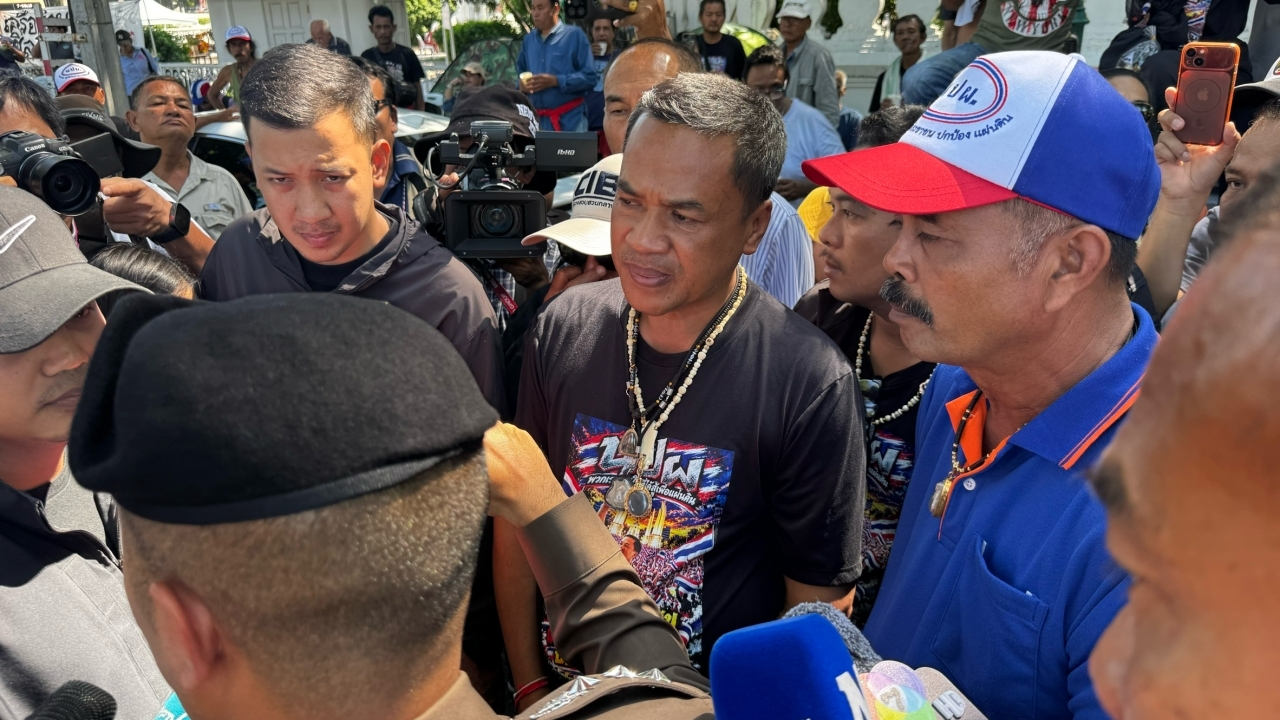
"Kamnan Mano" revealed that police requested to reclaim road surface space to open traffic lanes, warning not to be pushed into a corner. He threatened to escalate the protests beyond their current intensity and criticized the government for ignoring the call to reduce oil prices by 10 baht. He also urged the Prime Minister to control refining fees, noting that refineries have high profits and can afford to lower prices.
At 10:45 a.m. on 10 Nov 2026 at the Panichayakarn Intersection, Mr. Mano Khrueakaew, also known as Kamnan Mano, leader of the People's Revolution to Protect the Land (NPP), commented on the police request to reclaim road surface area. He confirmed this included Rama 5 Road, as protesters had parked cars bumper-to-bumper. He understood police were doing their duty but said the real pressure on them began even before their arrival. This protest is important for the public, especially regarding oil issues, which is their main demand. He said if the government pressures them this way, they have their own measures and would consult their team after determining exactly where the 50-meter boundary lies to decide their next steps.
When asked if the pressure to reduce their space would slow their plans, Mr. Mano replied yes, but it could also have the opposite effect. He believed the public listening understood they were being pressured by the government. He called on anyone who truly could not accept the government's management to come out in greater numbers. He said if many people come naturally and expand within reasonable boundaries, it would not be illegal.
Asked whether he was worried the protest might be shut down quickly, Mr. Mano said he was not afraid. If they cannot act here, they already have other plans. He warned that the next phase would be more intense, as this is just the start of the conflict. If pressure increases, the response will be heavier.
When asked if they would set up a speaking stage today like yesterday, Mr. Mano said it would not be a large stage but a smaller one, within the limits allowed. However, if pressured heavily, they would not accept it. He confirmed there would definitely be an escalation of the protest, though he could not yet specify how far it would go.
Regarding the use of loudspeakers near schools during daytime, Mr. Mano said they had discussed limiting noise to avoid disturbing nearby students. Last night, they used mobile phones to measure sound levels. They planned to coordinate with schools reopening tomorrow to agree on sound management.
“We know we are being pressured. I want to say to the government: don’t push us until we are backed against the wall. If that happens, I believe the people here will not accept it,” Mr. Mano said.
On the issue of some protesters feeling the leaders were conceding too much, Mr. Mano said some participants were stressed by the pressure. They had been tense since morning and had known since yesterday that authorities would negotiate today.
Asked if leaders and politicians would join speeches today, Mr. Mano confirmed that both former and current politicians would be present. They would consider whom to invite to join them, possibly from various parties. The main focus today remained speeches demanding the Cabinet reduce all types of oil prices by 10 baht. He noted no signals had come from the Government House yet but said if the government agreed to the cut, they were ready to negotiate.
Asked about the Prime Minister’s statement that any oil price reduction would come with consequences someone must bear, Mr. Mano said refineries earn nearly 7 baht per liter profit and could reduce prices. Excise taxes could be slightly lowered, as could marketing costs. While reducing excise taxes would reduce government revenue, which funds development, he emphasized that refineries could cut refining fees, which had risen from about 1 to 8 baht. He questioned whether the Prime Minister could control refining fees. They intended to specify the timing for the 10 baht reduction but ideally wanted immediate and permanent cuts, confident it was possible within the oil pricing structure.
Mr. Mano apologized to the media regarding some speakers’ comments accusing the press of not reporting the news. He said he had not instructed this but was unsure why it had been said on stage. He had since instructed the master of ceremonies to warn all speakers not to discuss this issue, noting that he saw all media channels were covering their story.