

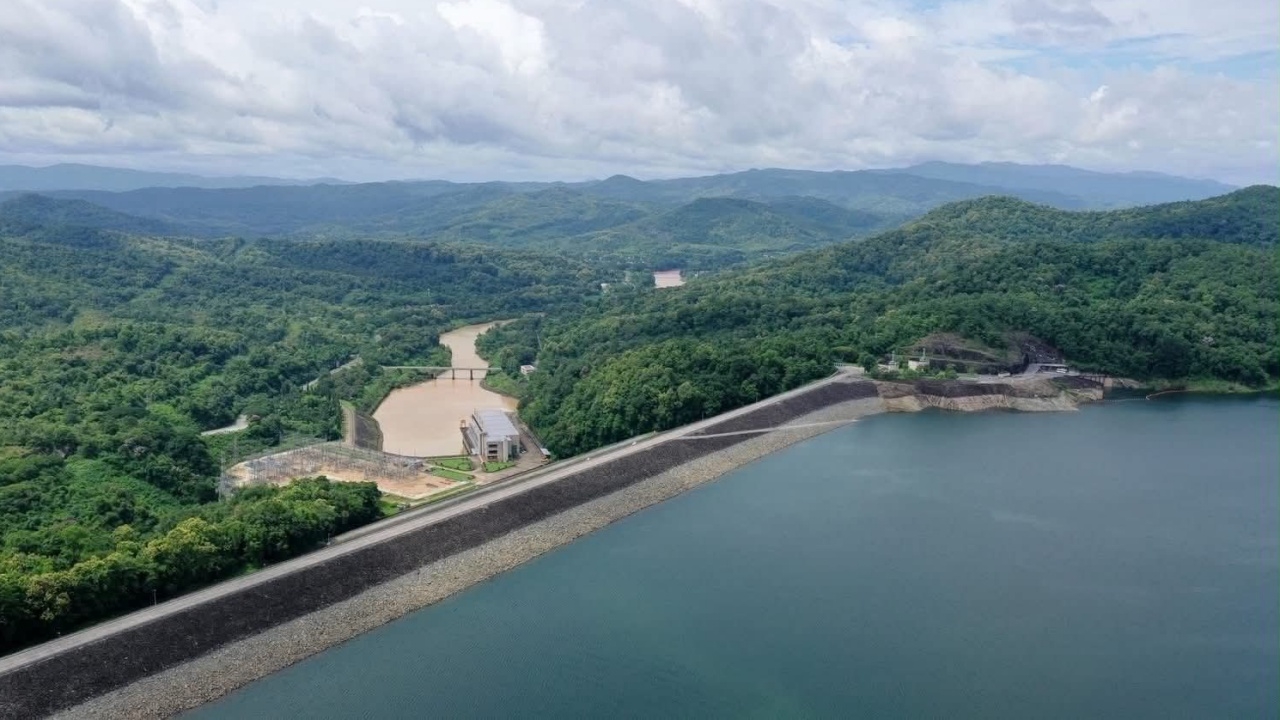
The Royal Irrigation Department, together with the Electricity Generating Authority of Thailand, has adjusted water management plans by gradually reducing water discharge from Bhumibol and Sirikit Dams to lessen the impact along the lower Chao Phraya River following heavy rainfall in northern and upper central regions.
On 26 May, reporters reported that the Smart Water Operation Center (SWOC) of the Royal Irrigation Department, Ministry of Agriculture and Cooperatives, revealed that water volume from the upper areas continues to flow into the Chao Phraya Basin after accumulating rainfall in many parts of the northern and upper central regions. This has caused water levels in the Chao Phraya River to tend to rise. On the morning of 25 May 2026 at 06:00, at station C.2 in Mueang District, Nakhon Sawan Province, the water flow was 1,095 cubic meters per second, while at station C.13 at Chao Phraya Dam, Chainat Province, the flow was 690 cubic meters per second, which has not yet affected areas along the Chao Phraya River.
The Royal Irrigation Department, in cooperation with the Electricity Generating Authority of Thailand, has adjusted water management plans by gradually reducing water discharge from Bhumibol Dam in Tak Province and Sirikit Dam in Uttaradit Province in stages during 25–31 May 2026. This aims to slow the amount of water flowing into the lower Chao Phraya Basin to suit the rainfall situation in the area. The Bhumibol Dam will reduce discharge from 25 million cubic meters per day to 15 million cubic meters, and Sirikit Dam will reduce from 20 million cubic meters per day to 12 million cubic meters, respectively, to minimize downstream impact as much as possible.
Reporters also noted that the Royal Irrigation Department has emphasized all irrigation projects in the northern and central regions (Chao Phraya Basin) to continuously monitor water situations, weather conditions, and rainfall amounts. They have coordinated with relevant agencies to warn residents in low-lying areas along the Chao Phraya River to closely follow official information to prepare for any possible changes in the water situation during this period.