

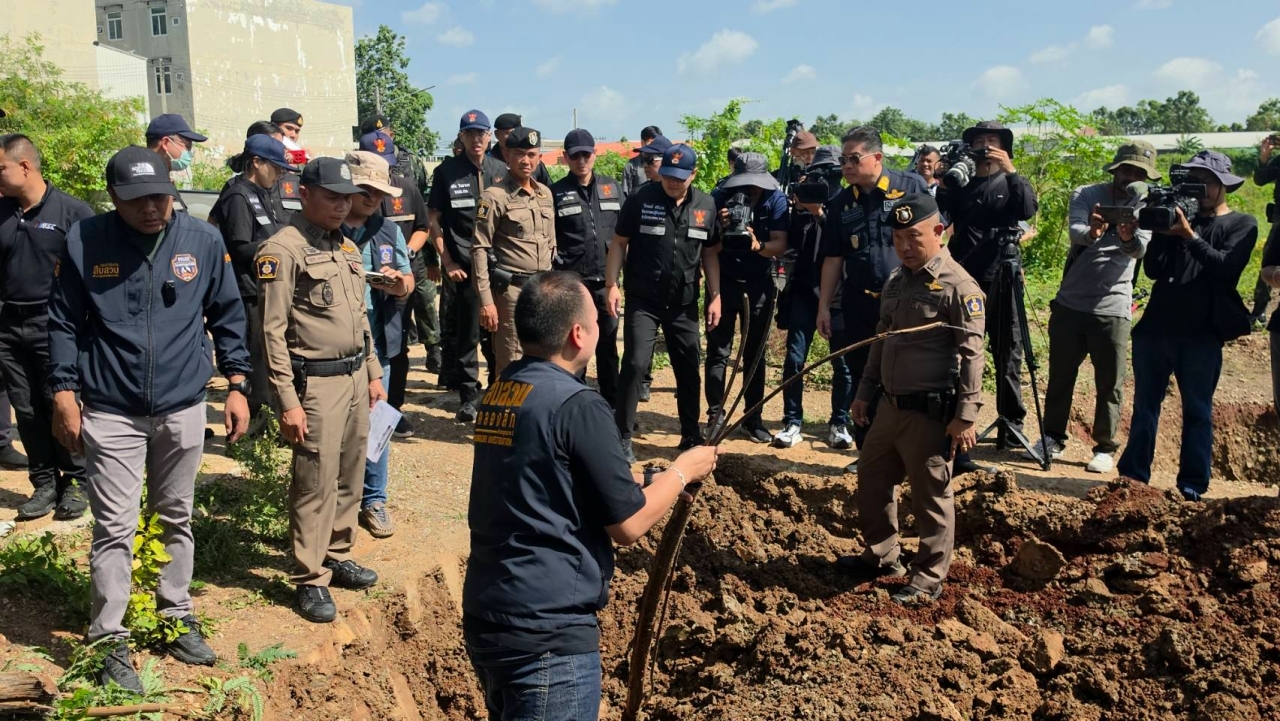
The National Telecommunications Commission (NTC) teamed up with military and police to raid three sites on the Sa Kaeo border, dismantling an illegal cross-border internet network. They discovered large fiber optic cables transmitting internet to Cambodia, suspected to be linked to casinos and call center gangs, with further investigations planned.
On 20 July 2026, reporters reported that the NTC, led by Acting Secretary-General Trairat Wiriyasirikul, collaborated with the Burapha Task Force, the Technology Crime Suppression Division (TCSD), Sa Kaeo Provincial Police, and security agencies to execute court-authorized searches at three suspected locations in Aranyaprathet District, Sa Kaeo Province. The operation aimed to investigate an illicit cross-border internet service network believed to transmit signals to Cambodia.
This raid was a follow-up from an operation on 9 July 2026, when authorities searched a residence in Aranyaprathet and found multiple server devices installed and ready for use. Investigations showed the internet was used to operate a VPN server rented out within Galaxy Casino in Cambodia, with fees charged to users. Continued inquiries led officers to trace the cables, discovering illegal fiber optic lines crossing the border, prompting the issuance of search warrants and today's inspections at three sites.

The search revealed that inside a three-story commercial building in Village 7, Pa Rai Subdistrict, Aranyaprathet District, fiber optic cables were illegally routed out of the building, running along power poles before entering private land and extending across the border into Cambodia.
Using an Optical Time Domain Reflectometer (OTDR), a device for inspecting and measuring fiber optic cable length, officials found two 60-core cables and one 24-core cable installed. These cables can handle massive data volumes at speeds far exceeding typical consumer use, suggesting the network was established for unauthorized commercial internet services. Based on evidence, authorities believe the illicit cross-border cables support online casinos, call center gangs, and technology crimes in Cambodia, designed to evade government oversight through unauthorized network construction.
Acting NTC Secretary-General Trairat Wiriyasirikul stated after the raid that this operation expanded on a prior case. Officials traced the cables from the previously searched house on 9 July and found they extended into a neighboring country, indicating the two locations are connected.

Trairat explained that the 60-core fiber cables are large-scale lines capable of supporting extensive internet services, likely distributing signals to multiple points in Cambodia. Authorities are currently investigating all cable endpoints and the network's operational timeline. Local collaborators are cooperating fully. Meanwhile, deeper investigations continue to identify accomplices, investors, and beneficiaries involved in the illegal operation.
He emphasized that authorities will completely dismantle the cables rather than merely cutting them. Partial cuts allow offenders to reconnect the network, so full removal is necessary to definitively halt usage.
Trairat also suspects similar illegal cross-border internet networks remain in other border areas. Coordination with police, military, and security agencies nationwide is underway, and the public is urged to report any suspicious cables or information about illegal cross-border internet services immediately, as such activities threaten national security and may be linked to transnational crime networks.
He confirmed that the detected internet cables are unauthorized networks created for illegal use and are not part of public internet infrastructure, so the disruption will not affect legitimate internet users in the area.
Authorities have seized the fiber cables, networking equipment, and all evidence, handing them over to investigators at Klongluk Police Station to prosecute under the Telecommunications Business Act B.E. 2544 (2001). Investigations continue to collect evidence, analyze technical data, trace financial flows, and identify accomplices both in Thailand and abroad for further legal action.