

"Ang Thong Hospital" clarifies the timeline of the child’s condition five days before death, resulting from severe illness present since birth, and confirms the medical team provided full treatment capabilities.
Regarding the case where the child's parents sought help from the Puveen Foundation, claiming a state hospital in Ang Thong Province held a banquet with five tables inside the pediatric ICU, where about five newborns, including their own child born by cesarean five days prior with high pulmonary pressure and declared stable by doctors, were present. The banquet involved servers not wearing face masks in the sterile NICU. The following day, their child died, raising concerns over the cause of death, as previously reported.

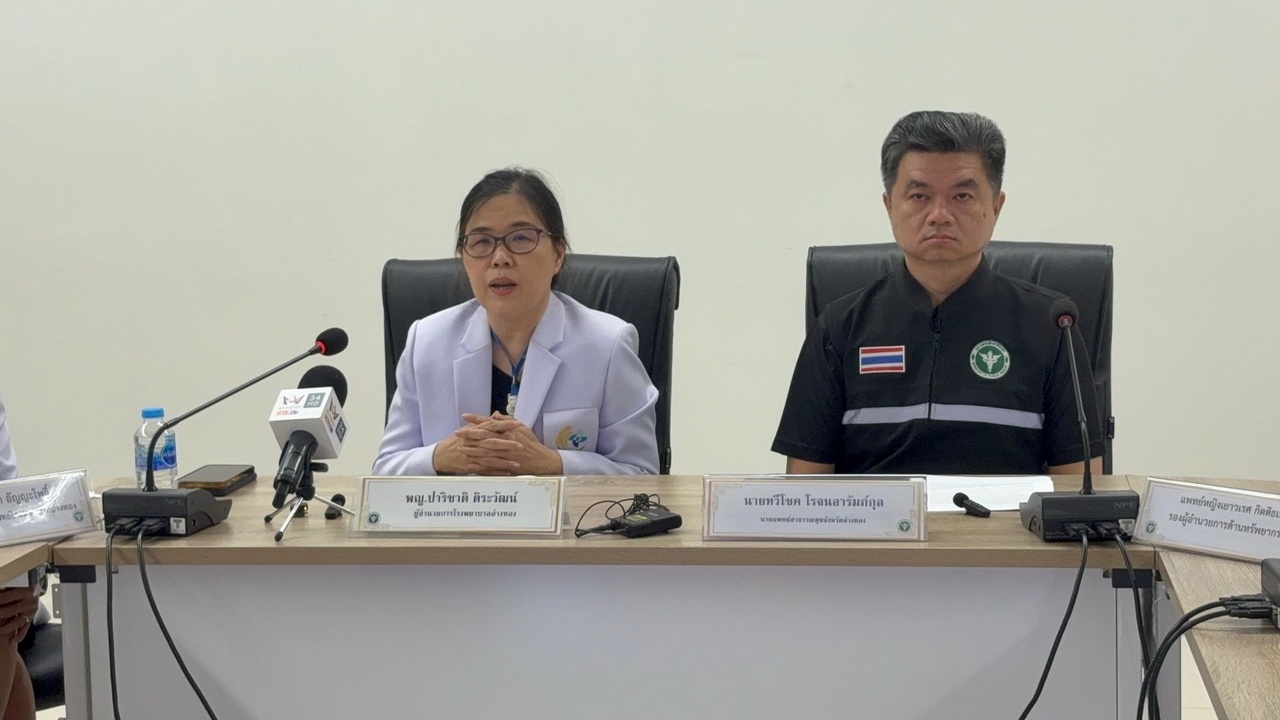
On 27 July 2026, reporters reported that at the fifth-floor conference room of the Ang Thong Provincial Public Health Office, Dr. Parichat Tirawat, Director of Ang Thong Hospital, Dr. Taweechok Rojanaramkul, Provincial Public Health Doctor of Ang Thong, Dr. Sirisuda Anyapho, Deputy Director of Ang Thong Hospital, and Dr. Yaowaret Kittithanesaworn jointly held a press conference on the matter.
Dr. Parichat stated that Ang Thong Hospital conducted a preliminary fact-finding regarding the infant’s death reported in the news. It was found that the mother had poorly controlled diabetes even before pregnancy. Prenatal records showed her blood sugar levels were mostly above the appropriate range, causing the infant's birth weight to exceed the gestational age standard.
On 16 July 2026, the infant was born prematurely at 36 weeks gestation, weighing 4,305 grams, classified as Large for Gestational Age (LGA). The mother had chronic conditions including diabetes and hypertension, combined with premature rupture of membranes, resulting in the infant developing persistent pulmonary hypertension of the newborn (PPHN), transient tachypnea of the newborn (TTNB), and suspected sepsis—severe illnesses with high mortality rates.
About one hour after birth, the infant showed breathing difficulties and low blood oxygen levels. The infant received standard professional treatment including medication, respiratory support, and close monitoring in the neonatal intensive care unit (NICU).
As the infant’s condition worsened according to disease progression, the medical team consulted neonatologists at the referral hospital to consider patient transfer. They were advised on treatment plans, medication, respiratory, and circulatory support but concluded the patient was at high risk of death during transfer.
On 17 July 2026 at 10:20 a.m., the patient’s condition deteriorated, resulting in cardiac arrest. The medical team immediately performed resuscitation and explained the diagnosis, disease severity, and mortality risk to the parents, continuing full treatment according to professional standards.
Between 18 and 19 July 2026, the patient’s condition was stable but critical, requiring blood pressure stimulants and high-frequency ventilator support. The medical team adjusted treatment to match the patient’s condition.
On 20 July 2026, a meal was served inside the NICU. On that day, the patient showed generalized swelling and reduced urine output due to critical illness, impairing fluid retention within blood vessels.
Blood pressure rose, leading to a reduction in vasopressor dosage, though four vasopressor drugs remained necessary due to the critical state. The medical team consulted neonatologists at the referral hospital, who recommended continuing the original treatment plan with close monitoring of symptoms and urine output.
The medical team and nurses informed the parents that blood pressure improved, prompting medication reduction, but the patient remained critically ill. On 21 July 2026, the patient’s blood oxygen level dropped; doctors increased ventilator support and medication. At 8:30 a.m., oxygen saturation fell to 76%, leading to further assessment and ongoing treatment.
At 9:14 a.m., the medical team informed the parents of the patient’s worsening condition and requested they come to the hospital to be informed and participate in treatment decisions. At 10:11 a.m., the patient showed no vital signs, and the team immediately began resuscitation efforts.
By 10:20 a.m., doctors informed the parents that the patient had suffered cardiac arrest and was unresponsive to resuscitation. The team continued resuscitation for 35 minutes before declaring death at 10:45 a.m.
However, after thorough review of medical facts and data, the infant’s death resulted from severe conditions present from birth, including persistent pulmonary hypertension (PPHN), all of which are serious and have high mortality rates. The disease progressed continuously despite the medical team’s full treatment efforts following professional standards.