

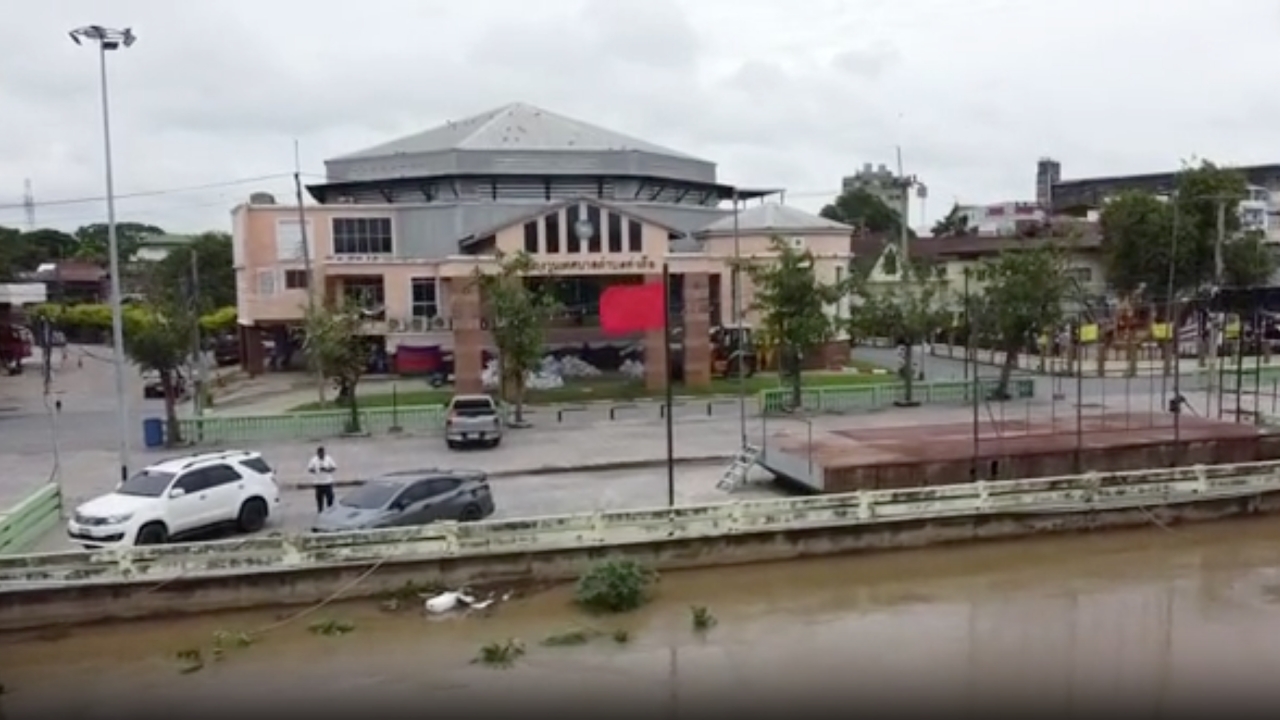
Tha Ruea Municipality in Ayutthaya has raised a "red flag" warning after the Pa Sak River rose to just 10 centimeters below the embankment at the fresh market. Vendors hurriedly moved their goods to escape the floodwaters. Locals unanimously said the water came faster and rose more quickly than in previous years.
On 29 September 2026, flooding in Phra Nakhon Si Ayutthaya province began to cause widespread impact, especially in communities along canals and rivers. Roads in riverside communities started to be cut off after the Chao Phraya Dam announced an increase in water discharge to 1,950 cubic meters per second. Combined with continuous rainfall, the affected areas expanded to 11 districts, 146 subdistricts, 881 villages, 35 communities, and 34,138 households. The districts affected include Sena, Phak Hai, Bang Ban, Bang Sai, Phra Nakhon Si Ayutthaya, Bang Pa-in, Bang Pahan, Lat Bua Luang, Nakhon Luang, Wang Noi, and Uthai. One death was reported in Sena district.
Reporters covering the flood situation in Phra Nakhon Si Ayutthaya province say conditions are worsening after the Phra Ram 6 Dam in Tha Luang subdistrict, Tha Ruea district, increased water discharge from the Pa Sak River downstream. This caused water levels in the Pa Sak River to continue rising, impacting communities outside the flood embankments in Tha Ruea, Nakhon Luang, and Phra Nakhon Si Ayutthaya districts, especially riverside communities that must urgently prepare.

In front of the Tha Ruea Municipality office, adjacent to the Pa Sak River, officials raised a red flag to warn residents in riverside communities and areas outside the flood embankments to quickly move belongings and valuables to higher ground. Water levels have risen to within about 10 centimeters of overflowing, threatening to flood the plaza in front of the municipality office. Meanwhile, locals continued to arrive to monitor the situation and check water levels.
Tha Ruea Municipality has prepared sandbags to reinforce flood defenses and arranged boats for residents in the municipality area who may be affected by flooding to use for travel and moving belongings if water levels rise further.
At the Tha Ruea fresh market, vendors hurriedly moved goods and trading equipment out of the area after receiving flood warnings. The municipality arranged temporary market spaces to accommodate vendors so they could continue selling while the original market is affected by flooding.
Ms. Bee, 38, a cooked food vendor at the market, said the flood situation is already affecting traders. Vendors were warned of the flood and had to quickly pack up and move goods out of the market starting yesterday as water levels steadily rose.
She added that the area regularly experiences flooding every year, but this year the water rose faster than usual, forcing them to hastily prepare and temporarily relocate sales to places like Koh Loi Market to prevent damage to goods and equipment.

Mr. Wasan Kotchaprapa, 28, a vendor selling in front of his house near Tha Ruea market, said his home was the first to be affected. Initially, he did not move belongings, thinking the rising water was just normal rainfall. But within 2 to 3 days, water levels in the canal rose rapidly and overflowed, flooding homes and living areas, forcing residents to quickly move possessions and find temporary shelter.
Mr. Wasan continued that after the rapid rise in water, some flood victims urgently sought temporary accommodation and booked new market spaces, such as Suwan Gliao Thong Tha Ruea Market, to continue their trade. He himself sells near the market and is among vendors awaiting space allocation from the municipality, possibly after other market vendors are assigned new locations.
Locals unanimously reflected that this year’s flooding is unusual compared to previous years because water levels rose rapidly rather than gradually. Previously, the slow rise gave residents more time to prepare and move belongings, but this time the quick increase forced many families to hastily relocate items during the night to prevent damage from steadily rising floodwaters.