

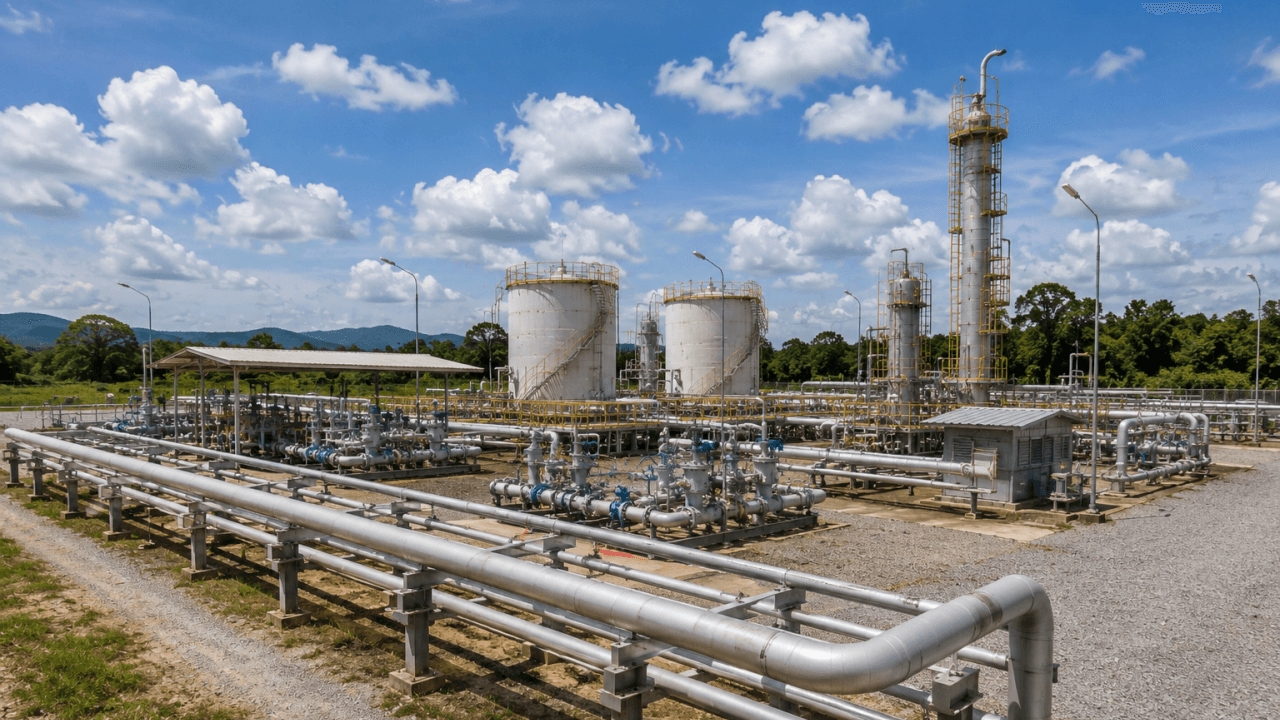
The Department of Mineral Fuels is accelerating preparations for the gradual expiration of petroleum concessions, highlighting the Sin Phu Hom field as a vital example of energy security in the Northeast. Gas from this field is used as fuel to generate electricity at the Nam Phong power plant. The department emphasizes the field still has development potential and stresses the importance of planning ahead to prevent interruptions in investment and development. Additionally, they are exploring surrounding areas to increase opportunities for discovering new gas in the future.
The issue of "petroleum concession expiration" may seem distant to the public, but in reality, managing petroleum fields that still have potential is directly linked to maintaining continuous energy supply, especially in areas dependent on domestically produced natural gas.

Mr. Warakorn Pornhamobol, Director-General of the Department of Mineral Fuels, revealed that one field the government is focusing on is Sin Phu Hom, an onshore natural gas field in the Northeast that plays a role in supplying natural gas fuel to the Nam Phong power plant in Khon Kaen Province.
The Nam Phong power plant has a total contracted capacity of 650 megawatts and is part of the energy system in the Northeast. The Department of Mineral Fuels remains confident that the Sin Phu Hom field has further development potential. Maintaining continuous investment and development of the field will help support ongoing gas supply to the Nam Phong power plant.
"Sin Phu Hom is an important field because the Nam Phong power plant is a pillar of energy security in the Northeast," said Mr. Warakorn.
The Director-General stated that the key issue is not just when the concession will expire, but also whether the remaining petroleum has development potential and how to manage it for the country's maximum benefit.
Advance planning is crucial because the petroleum industry requires large investments, and operators need sufficient time to develop and produce economically viable outputs. If the concession nears its end without clarity on continued operations, it affects decisions on further investment since the remaining time may be insufficient for cost recovery.

At the same time, if existing rights end and a new process must begin, there are multiple steps involving various agencies, including land use, environmental impact assessments, and other relevant permits, all of which require time.
What the Department of Mineral Fuels wants to avoid is "disruption" in field development, because if investment and development are not continuous, it could impact ongoing production in the future.
The department is pushing for amendments to petroleum laws to give the government more options in managing fields nearing concession expiry, especially when assessments find the fields still have development potential.
However, Mr. Warakorn emphasized that this approach does not automatically grant concession renewals to existing operators but aims to allow the government to consider and negotiate conditions to maximize national benefits.
Besides managing existing fields, the Department of Mineral Fuels is also advancing opportunities to discover new petroleum by opening applications for the 25th round of onshore petroleum exploration and production rights, including areas in the Northeast and around the Sin Phu Hom field.

If exploration succeeds and additional gas is found, it can support gas supply in the same area in the future. The strategy thus combines utilizing existing fields with potential and searching for new resources to offset expected production declines.
Mr. Warakorn said that although Thailand is progressing toward an energy transition, natural gas and petroleum remain necessary for the energy system for some time. Maintaining domestic production capacity remains important for energy security.
"Considering the benefits to the public, we must strive to develop domestic fields as much as possible," said Mr. Warakorn.