

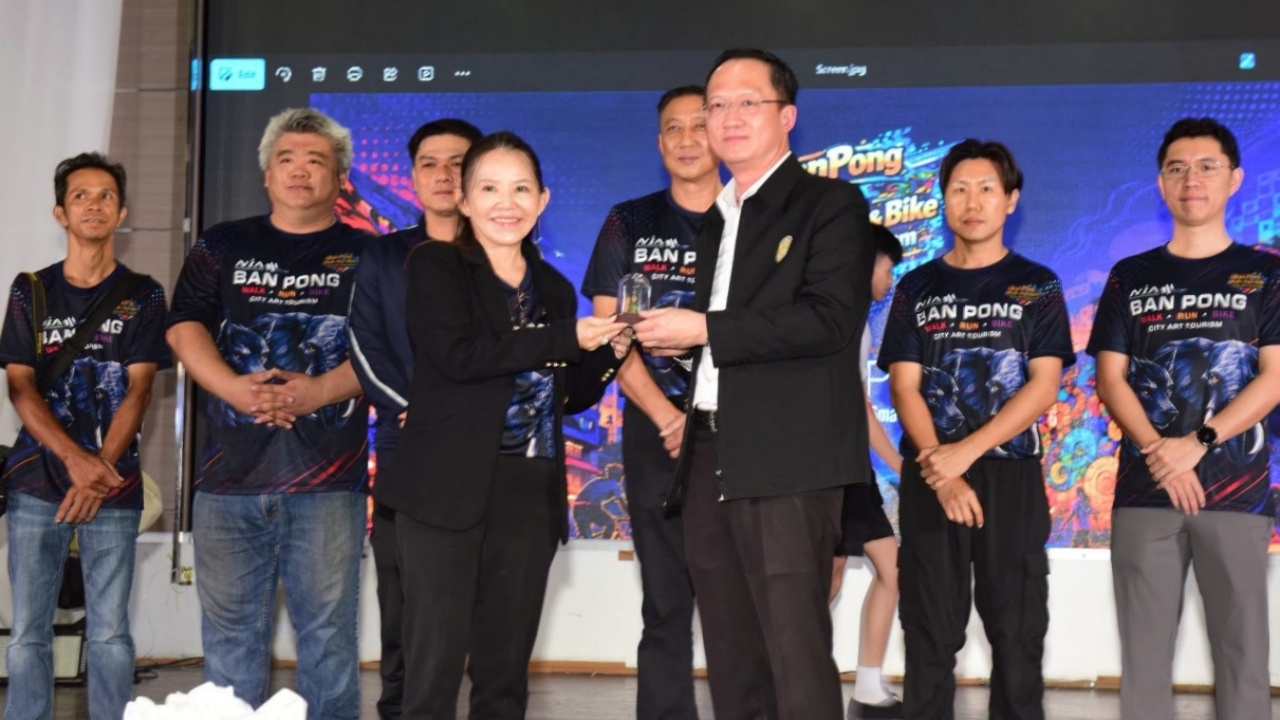
Banpong launches the “Banpong Street Art Wellness Quest,” a new form of tourism that elevates health aspects by combining art and history with wellness.
On 18 Aug 2026 GMT+7 at the Banpong Municipal Community Hall, Dr. Pawana Wongamornnithi, Ratchaburi Senator; Mr. Akkaradet Wongpitakrot, Ratchaburi MP; M.L. Natthapon Thevakul, President of the Banpong Tourism and Sports Association; Ms. Kulthida Phaya, Banpong District Chief; Assoc. Prof. Dr. Rapeepat Kaew-on, Vice President of Silpakorn University; Assoc. Prof. Dr. Phisit Tangpornprasert from Silpakorn University; and members of the Senate Tourism and Sports Committee jointly launched the project. “Banpong Street Art Wellness Quest” Local government leaders, heads of government agencies, students, and community members participated fully in the event.

Dr. Pawana Wongamornnithi, Senator from Ratchaburi, stated about the project, “Banpong Street Art Wellness Quest” or “Banpong, the Art City: A health tourism platform featuring art and history routes using blockchain technology.” This initiative aims to transform Banpong’s tourism by turning the city’s stories, art, community lifestyle, and health activities into a fun and modern travel experience. The Banpong Tourism and Sports Association, in collaboration with the National Innovation Agency (NIA), promotes health and creative tourism through walking, running, and cycling along the community’s art and history routes, incorporating digital and blockchain technology as part of the travel experience.

A key highlight is the “Quest Route,” which allows participants to explore Banpong by visiting learning points and check-in spots, collecting points, and enjoying the journey. This transforms city touring from passive sightseeing into an active mission that combines exercise, local history education, and a fresh perspective on Banpong’s charm.

Additionally, a special forum titled “Banpong Street Art Wellness Quest: The Power of Collaboration for Tourism, Health, and Creative Economy in Banpong” exchanged views and development strategies through cooperation among government, private sector, community, and youth.

Following the forum, participants were officially sent off on the real route, heading to learning and check-in points to accumulate points while experiencing Banpong’s art, history, and local lifestyle alongside physical exercise. This project is not merely a tourism activity but also an effort to “tell Banpong’s story through technology,” connecting the city’s past with modern innovation, using art and health as attractions to draw both tourists and locals to rediscover the city’s value.

If the project continues steadily, Banpong may no longer be just a pass-through town but will emerge as a creative tourism city with stories, health, and technology as connectors, creating new opportunities for community and local economic growth.