

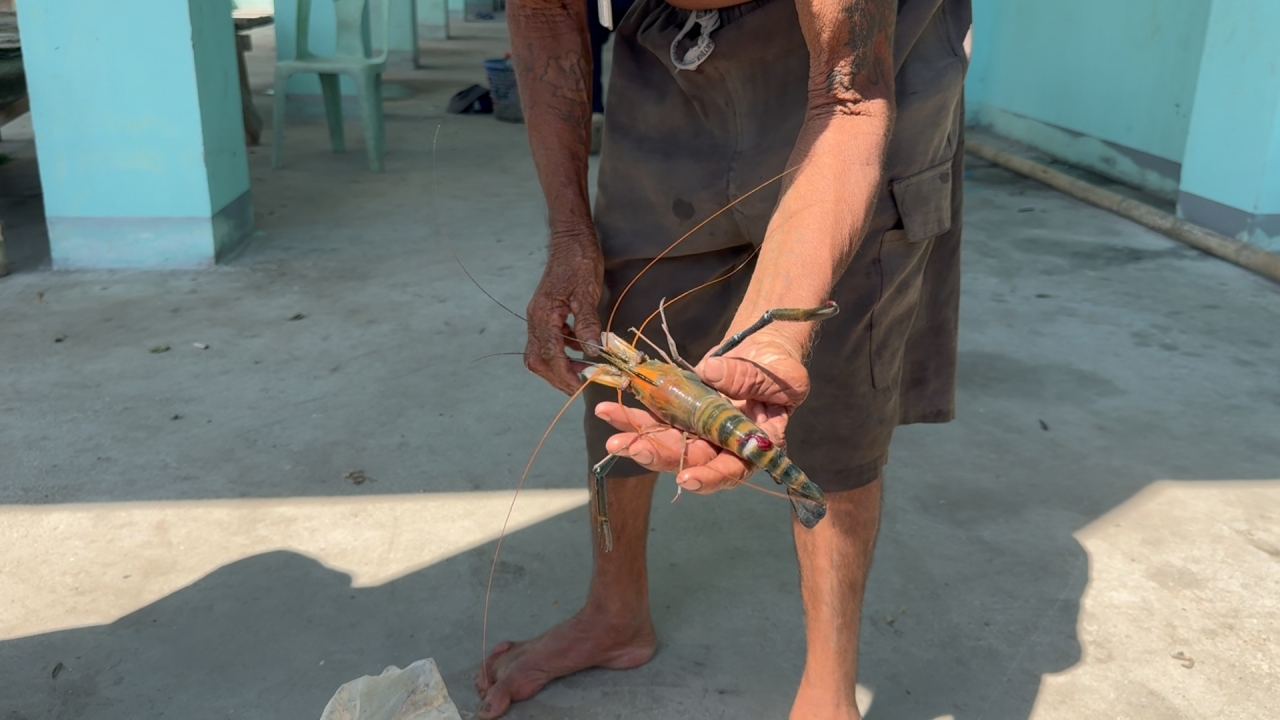
Local fishermen in Samut Songkhram are alarmed by the "water pollution and stagnation" phenomenon striking the coastline and canals, causing shrimp and marine fish to suffocate and die en masse along the banks. Villagers have been catching and selling these aquatic animals for short-term income.
At 11:00 a.m. on 9 Nov 2026, reporters surveyed the situation in Samut Songkhram Province after villagers reported water pollution in canals and coastal areas. Numerous aquatic animals were observed surfacing abnormally to breathe near the water surface and along the banks, including sea catfish, gobies, mullets, gobies, rays, and river shrimp. Some had started dying and floating, emitting a foul odor. Villagers eagerly used equipment and nets to scoop up aquatic animals along the canals.
Inspection found canal water turbid and dark brown. Along the banks, villagers set up sorting points for caught aquatic animals to be sold. Villagers stated the abnormal signs became clear since the afternoon of 8 Nov, with dense surfacing of aquatic animals by evening and deaths beginning to appear by the following morning.

Mr. Tim Saengpathum, 66, from Village 8, Bang Kaeo Subdistrict, said this phenomenon was so severe that many aquatic species that usually live in deep water floated near the shore to escape death unusually. Villagers collected shrimp and fish to sell, earning from several hundred to thousands of baht within hours. However, seeing the increasing fish deaths caused concern about future impacts.
Mr. Panyawat Samutnantapong, 69, added that the water stagnation phenomenon usually occurs seasonally, but this year more aquatic animals surfaced than ever before. Especially at night, many villagers caught large amounts; some earned 500–1,000 baht from 3–5 kilograms of shrimp. Although this provided short-term supplemental income, it clearly reflected a severe natural disturbance. Another villager noted a similar event occurred earlier in Mahachai, Samut Sakhon Province, before spreading to Samut Songkhram.
Meanwhile, Mr. Prateep Siritham, 57, a local fisherman, analyzed the cause as likely due to stagnant freshwater that remained flooded and rotted in upstream fields for a long time. When this water discharged into rivers and met seawater, the low-oxygen water caused aquatic animals to suffocate, surfacing and fleeing toward shores and canals. This year's situation is more severe than previous years due to heavy rain and extensive flooding.
Mr. Prateep expressed concern that although the water pollution phenomenon lasted only a few days, the marine aquatic life cycle would suffer serious damage, fishing trips would be impossible, and it might take 3–4 months for the environment and aquatic life to recover. This would immediately cut off the main income for local fishing families. He urged government agencies to take the matter seriously.

He also said he has coordinated with village leaders and local administrative organizations to forward the issue to district authorities and related agencies. He called for urgent field surveys and systematic registration of local fishermen to provide evidence for compensation or assistance measures in the event of marine disasters, similar to flood compensation for agricultural groups.
Villagers and local fishing groups in Samut Songkhram have called on fisheries and environmental agencies to promptly collect water samples for analysis to identify the true cause, assess ecological damage, trace pollution sources, and establish preventive measures to avoid recurring impacts. This aims to restore marine resources and sustain the livelihood of local fishermen.