

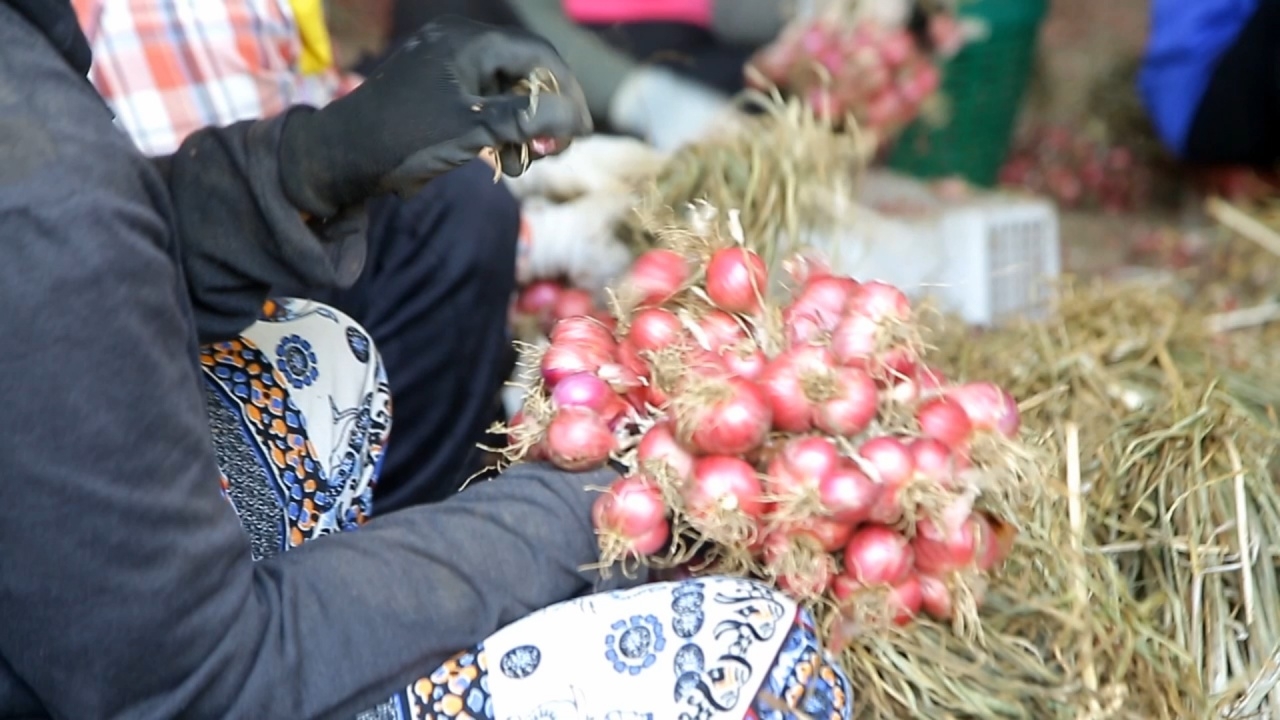
Shallot farmers in Lamphun Province are deeply discouraged as fresh shallot prices have fallen to no more than 8 baht per kilogram at harvest. Farmers complain of severe losses, marking the steepest decline in a decade, and are calling on the government to help promote prices and secure markets for their produce.
On 14 Mar 2026 GMT+7, reporters filed the following report.. Shallots commonly grown across three districts in Lamphun—Thung Hua Chang, Li, and Ban Hong—have begun to enter the market. However, prices have dropped sharply, disheartening farmers despite the shallots being of good quality with large, attractive bulbs. This price slump has led to significant losses among growers.Farmersare suffering losses one after another.

Interviewing Mrs. Anchalee Jinatow, a shallot farmer and buyer from Pa Dam Village, Ban Hong Subdistrict, Ban Hong District, Lamphun, reporters were shown over 80 local workers hastily trimming shallot bulbs piled high in a warehouse area.
She revealed that this year’s shallots are of excellent quality and notably large, with very attractive appearance.However, the prices are very low.Fresh shallots harvested directly from the fields are selling at only 6 baht per kilogram, with a maximum price not exceeding 8 baht, which is unsustainable for farmers.Because the production cost is9 to 10 baht per kilogram, and farmers need prices of 11 to 12 baht or more to break even and avoid losses.

This situation represents a serious crisis for Lamphun’s shallot farmers, who barely earn anything from cultivation and are forced into debt. The price drop is partly due to a large volume of produce entering the market this year, unlike in 2025 when farmers managed to cope somewhat. Buyers, however, have suffered losses because shallots are hard to sell,and the markethas been flooded with produce. Many buyershave had todiscard shallots to rot in warehouses.
"Currently, shallot farmers in Lamphun have lost all morale because they are operating at a loss, lack working capital, or have exhausted their funds to continue farming. Seeing the low prices makes it impossible to persevere, and many have ceased cultivation. At present, two out of every three shallot farmers have stopped farming. If fertilizer and pesticide prices remain high,the costs of these inputs,then no one will continue growing shallots in Lamphun. This year’s prices are the lowest in the past decade, so we earnestly appeal to the government to help push up prices and find markets for us."
