

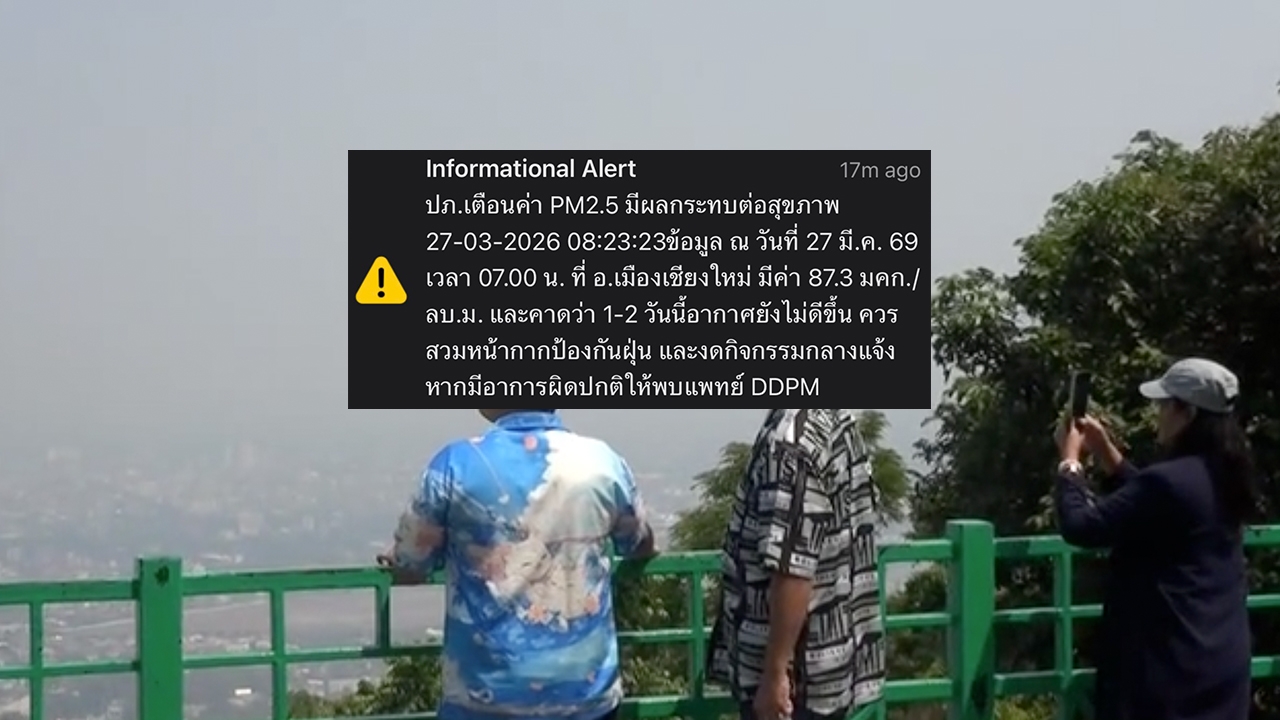
PM2.5 dust levels in Chiang Mai have exceeded standards, ranking the city first among those with the worst air quality. The sky is overcast, leaving tourists disappointed as they cannot see the scenic views of Doi Suthep.
At 07:00 on 27 Mar 2026 GMT+7, the Air Pollution Communication Center reported on air quality monitoring nationwide as follows: PM2.5 levels exceeded standards in Chiang Rai, Chiang Mai, Nan, Mae Hong Son, Phayao, Lamphun, Lampang, Phrae, Uttaradit, Sukhothai, Phitsanulok, Tak, Kamphaeng Phet, Phichit, Phetchabun, Nakhon Sawan, Uthai Thani, Chai Nat, Sing Buri, Saraburi, Samut Songkhram, Rayong, Bueng Kan, Nong Khai, Loei, Udon Thani, Nakhon Phanom, Sakon Nakhon, Mukdahan, Khon Kaen, Kalasin, Maha Sarakham, Roi Et, Amnat Charoen, Chaiyaphum, Yasothon, Ubon Ratchathani, Sisaket, Nakhon Ratchasima, Buriram, and Surin.

In Chiang Mai, tourists at the Doi Suthep viewpoint hoping to capture beautiful scenery and panoramic views of the city were disappointed as the cityscape was obscured by cross-district wildfire smoke drifting over the area. The smoke also carried the scent of illegal forest fires.
Today, Chiang Mai experienced 104 wildfire spots, with Chiang Dao district having the most at 22 locations, followed by Mae Wang with 18 and Mae Chaem with 14, spreading across several other districts. The Disaster Prevention and Mitigation Department issued a Cell Broadcast warning about PM2.5 levels affecting health in Chiang Mai district, measuring 87.3 micrograms per cubic meter. Air quality is expected to remain poor for the next one to two days; residents are advised to wear protective masks and avoid outdoor activities. Anyone experiencing abnormal symptoms should seek medical attention.
Meanwhile, Chiang Mai Governor Ratthaphon Naradisorn urgently instructed the Chiang Mai Provincial Public Health Office to warn the public about the pollution situation and its health impacts. He ordered health officials and village health volunteers to monitor and advise residents, especially vulnerable groups such as children, the elderly, and patients with chronic illnesses. He also encouraged people to use dust reduction rooms and directed the district command centers to suspend fuel management activities from 25 to 30 March 2026 due to air quality exceeding standards and affecting public health.
Additionally, the Chiang Mai Provincial Administrative Organization and local government bodies were asked to consider procuring and distributing protective masks to residents as needed, prioritizing vulnerable groups and patients with severe respiratory conditions first.
