

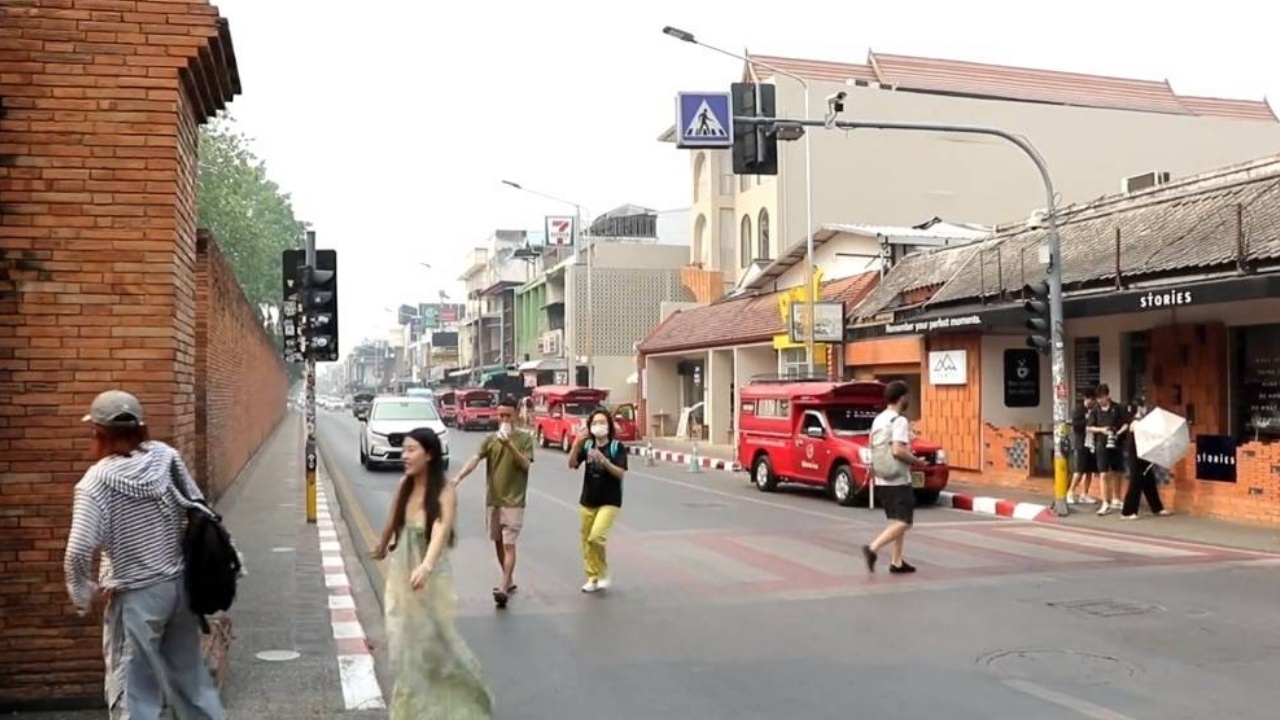
Tourists lack confidence amid the crisis of "high fuel prices and smog" impacting the "Chiang Mai Songkran" festival. Hotel bookings during the long holiday period have dropped by 50 percent.
On 5 April 2026, reporters noted that Chiang Mai province and related agencies are preparing grand activities for the Songkran festival from 7-19 April 2026, divided into two types: traditional and cultural preservation activities, such as merit-making and alms giving, water pouring on sacred relics, sand pagoda building, and offering wooden supports at various temples.

The highlight includes the procession of the Phra Singh Buddha and important Buddha statues from various temples on the afternoon of 13 April 2026, Songkran water activities around Chiang Mai's moat, and grand Songkran celebrations at shopping centers such as those near Rin Kham and Maya intersections in Chiang Mai city, plus tourism promotion events on Ton Yang Road in Saraphi district and at the entrance of Mae Kuang Udomtara Dam tunnel in Doi Saket district.
Meanwhile, Chiang Mai Municipality has begun installing event stages and a large water tunnel on Tha Phae Road near Tha Phae Gate in Mueang Chiang Mai district to prepare for the World Songkran Thaphae Chiangmai 2026 festival next week. Floating barriers are also being installed in the moat to prevent tourists from entering deep water areas.
Mr. Paisan Sukcharoen, acting chairman of Chiang Mai Tourism Industry Council, expressed concern over unrest in the Middle East causing fuel prices to rise and shortages, which may dampen the Songkran tourism atmosphere this year. Currently, long holiday room bookings stand at about 50-60 percent, compared to 80-90 percent during the same period in previous years.
Mr. Paisan stated that although room bookings slightly increased in early April due to Asian international tourists from China, Malaysia, Singapore, South Korea, and Japan, news of Chiang Mai's severe PM2.5 air pollution ranking first worldwide has alarmed tourists, causing them to delay bookings to see if the problem improves by Songkran. He appealed for news coverage that would not overly alarm tourists.
As for Thai tourists, who prefer traveling by private car, very few have made bookings—only about 2-5 percent—due to high fuel prices and shortages, making them uncertain whether they can refuel along the way.
However, he urged the government to urgently address the fuel supply issue first to ensure sufficient availability and restore tourist confidence, and to tackle the PM2.5 problem, especially by implementing artificial rainmaking. Since seasonal storms usually occur during Songkran, operators hope rain will help clear the smog in time, as the business sector has been severely affected.