

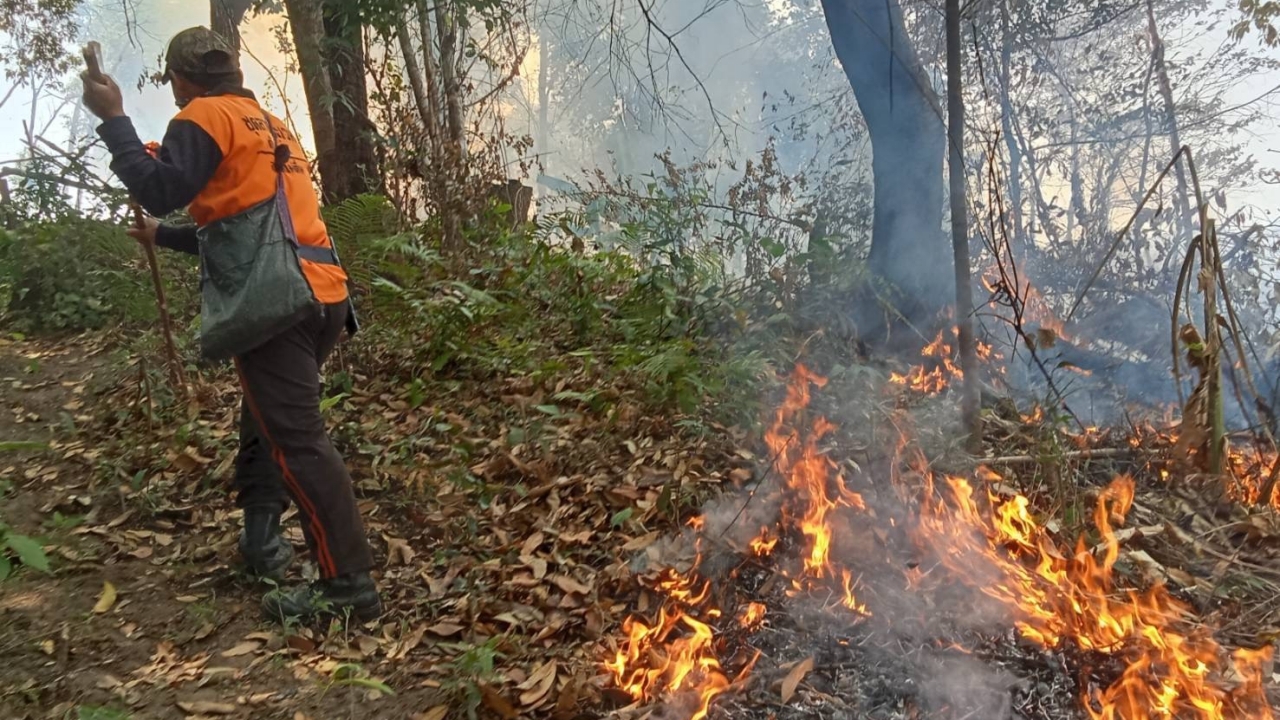
This morning, the wildfire situation in Chiang Mai and 17 northern provinces surged fourfold compared to yesterday. Chiang Mai recorded 231 hotspots, while the 17 northern provinces combined had 2,340 points, with Mae Hong Son most severely affected at 773 points. There is anticipation whether the haze and wildfire situation in the north will ease before the Songkran festival.
On 9 April 2026, reporters covered the wildfire and haze situation in Chiang Mai and northern provinces. Previously, the situation seemed to be improving after all sectors intensified efforts to address the problem, causing wildfires in Chiang Mai and 17 northern provinces to decrease. However, since yesterday afternoon, the wildfire situation has intensified again.
Latest data this morning shows that hotspots from wildfires and burning in Chiang Mai and 17 northern provinces have surged fourfold compared to the same time yesterday. Chiang Mai’s hotspots increased from 61 yesterday to 231 this morning. Chiang Dao district experienced the heaviest wildfires with 65 points, followed by Hod district with 35, Phrao with 30, Mae Chaem with 21, Doi Tao with 16, and Wiang Haeng with 14, spreading to two additional districts. From 1 January to 8 April, Chiang Mai recorded a total of 7,216 hotspots.

Meanwhile, the number of hotspots across 17 northern provinces also quadrupled this morning to 2,340 points, divided into 1,485 in protected forest areas, 735 in national reserved forests, and 120 outside forest areas. The province with the most critical wildfire situation is Mae Hong Son with 773 points, followed by Chiang Mai with 231, Nan with 170, Tak with 152, Lampang with 150, Kamphaeng Phet with 14, and other provinces.
The haze and particulate matter crisis in northern provinces and Chiang Mai remains severe despite slight air quality improvements. Chiang Mai Municipality is still ranked the world's most polluted city. At 08:00 this morning, the air quality index stood at 170 US AQI with PM2.5 levels at 82.7 micrograms per cubic meter.

Data from the Pollution Control Department’s six air quality monitoring stations in Chiang Mai indicate a trend toward improvement in the afternoon in Mueang district, where Doi Suthep mountain on the west side is becoming clearly visible. However, this morning the haze crisis remains at orange and red levels, peaking at the Chang Phueak subdistrict station in Mueang Chiang Mai with an air quality index of 221 AQI and PM2.5 at 85.3 micrograms per cubic meter. The highest level was recorded in Chang Kheng subdistrict, Mae Chaem district, with an AQI of 261 and PM2.5 at 135.7 micrograms per cubic meter.
Chiang Mai residents and tourists preparing to visit during the New Year or Songkran festival, a major traditional and tourist event in northern Thailand, are hopeful that the wildfire and haze situation will improve in time. If conditions do not improve, the celebrations and water festivities may have to continue amid dust and haze.

Nevertheless, Chiang Mai residents remain hopeful because thunderstorms and rains usually arrive before Songkran, helping alleviate heat and haze issues, especially during important Buddha statue processions such as the revered Phra Chao Fon Saen Ha. According to local belief, these rains help bring seasonal precipitation. In many past years, rain has fallen during this period, offering hope to ease the wildfire and haze crisis in the area.
