

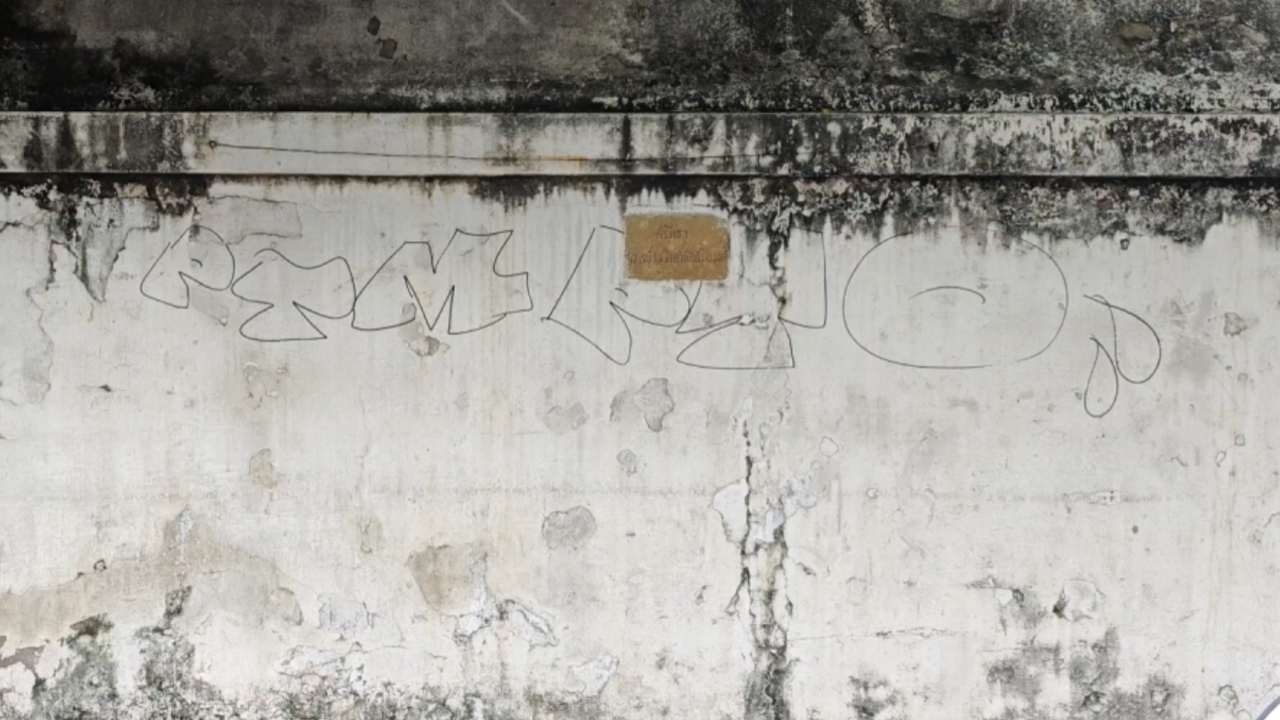
Vandals have written graffiti on the wall of Chiang Man Temple in Chiang Mai, one of eight key historical sites under World Heritage evaluation.
On 18 June 2026, reports indicated that Chiang Mai is currently preparing for its UNESCO World Heritage evaluation by focusing on improving the cityscape to be clean and attractive ahead of the inspection by the International Council on Monuments and Sites (ICOMOS) team scheduled from 3-8 August.

While locals and business operators have been working together to enhance and organize the area, someone vandalized the wall of Chiang Man Temple in Si Phum Subdistrict, Mueang Chiang Mai District—one of the eight important historical sites to be evaluated—making it look dirty and untidy, negatively affecting the image inconsistent with the historical Lanna city.
Our team found traces of English messages written on the temple’s front wall. Residents suspect the vandalism was done by mischievous youths or tourists and expressed concern that this could impact the evaluation. They called on police and relevant authorities to intervene and monitor the area to prevent further incidents.

Mr. Supharit Pawilai, Chairman of the Chiang Mai City Council, revealed that Chiang Mai was selected as one of 35 sites advancing to World Heritage evaluation from over 800 nominees worldwide. Its unique feature is being a “living heritage city,” linking eight important historical sites: Chiang Man Temple, Wat Umong, Wat Phra Singh Woramahaviharn, Wat Chedi Luang Worawihan, Wat Suan Dok Royal Monastery, Wat Phra That Doi Suthep Ratchaworawihan, Wat Chedi Yod Royal Monastery, and the moat and city walls of Chiang Mai. The city is home to hundreds of thousands of residents and forms a distinct cultural heritage network.

If Chiang Mai is registered as a World Heritage site, it will mark a significant turning point in historic city conservation, raising standards in city management and tourism internationally, while creating vast economic and tourism revenue opportunities. It will also instill pride among Chiang Mai residents who have preserved and passed on this cultural heritage for future generations.