

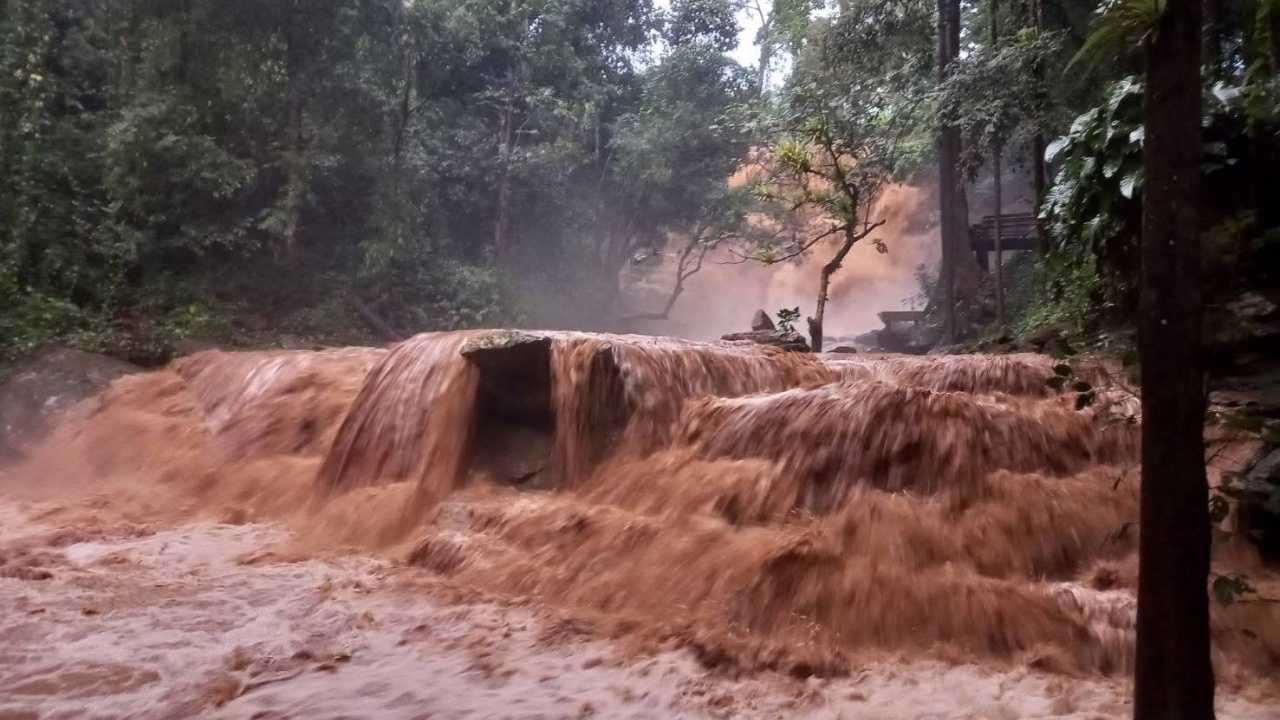
In Mae Rim District, Chiang Mai Province, heavy rainfall has caused flash floods in the Mae Sa River, increasing water volume with a murky red color. The national park has announced the temporary closure of Mae Sa and Tad Mok Waterfalls. Meanwhile, the Chiang Mai governor has instructed 10 districts to prepare for the rain.
On 5 Oct 2026 GMT+7, reporters stated that at around 03:00 this morning, a thunderstorm occurred in Mae Rim District, Chiang Mai, bringing hours of heavy rain. This caused the Mae Sa River to rise sharply and flash floods with muddy red water. As a result, Doi Suthep-Pui National Park announced the closure of Mae Sa and Tad Mok Waterfalls in Mae Ram Subdistrict, Mae Rim District, to ensure the safety of visitors' lives and property.

The announcement explained that heavy rain in the area has increased water volume at Mae Sa and Tad Mok Waterfalls, turning the water murky red. For the safety of visitors' lives and property, Doi Suthep-Pui National Park temporarily closed tourism access to these waterfalls until conditions return to normal. The park will notify the public when services can resume. Visitors are urged to strictly follow rules and staff recommendations for their safety.

At approximately 06:30, reports came in of a fallen tree on the Mae Rim-Samoeng road in Pong Yang Subdistrict, Mae Rim District, Chiang Mai. Initial findings include landslides and collapsed walls, causing power poles to break and resulting in power outages in Pong Yang. Authorities are working to resolve the situation, and residents using the Mae Rim-Samoeng route are advised to exercise caution and closely monitor updates.

Chiang Mai Governor Thossaphon Phuenudom issued warnings to 10 districts—Mae Taeng, Phrao, Doi Saket, Mae Chaem, Mae Rim, Chiang Dao, San Sai, Doi Tao, Samoeng, and Galyani Vadhana—to monitor heavy rain, flash floods, and flash floods, especially in hillside, waterway, and lowland areas. Residents and tourists are urged to continuously follow official weather updates from authorities.
