

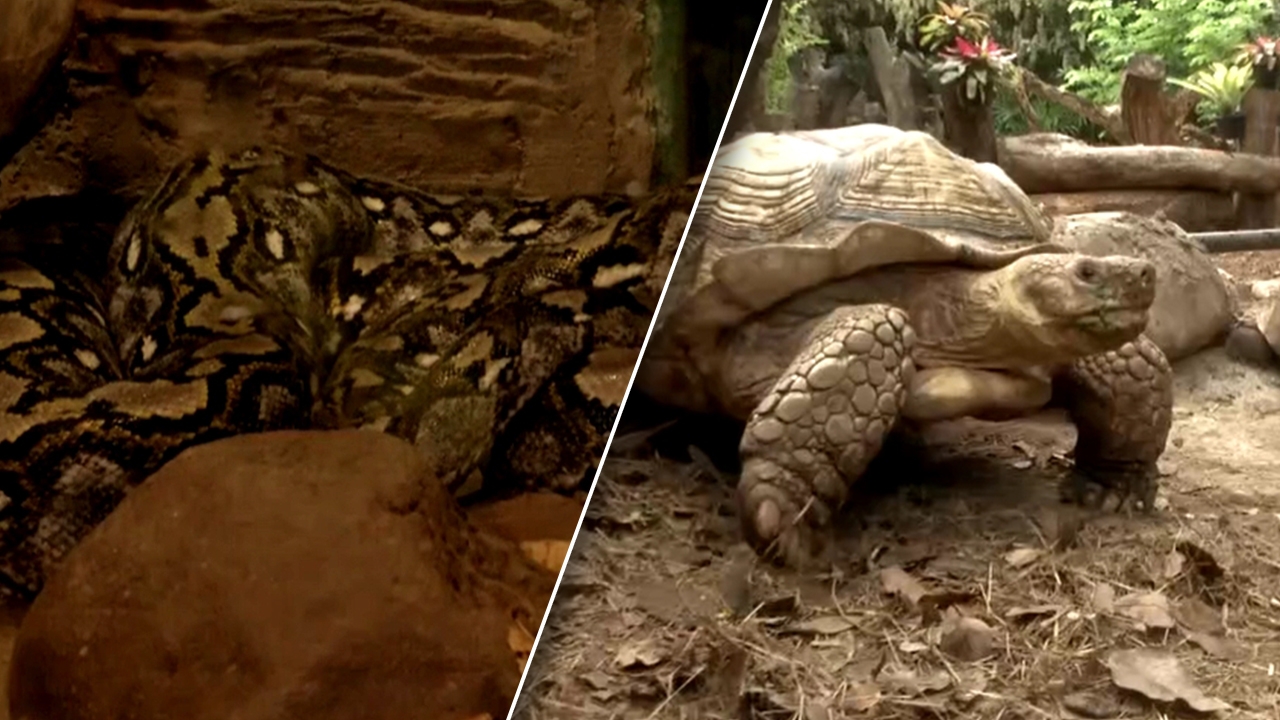
Concerned about the extreme heat, Korat Zoo staff are rushing to install "sprinklers" that spray mist to cool animals and reduce their stress.Especiallygiant tortoisesand pythons after temperatures soared to 34°C.
On 28 February 2026, reporters noted that the intense heat following Thailand's official start of summer on 22 February is now clearly affecting conditions. Daytime temperatures inside Nakhon Ratchasima Zoo have risen as high as 34 degrees Celsius.

The hot, humid weather and strong afternoon sunlight have begun to impact wildlife welfare, prompting caretakers to urgently adjust their measures by installing misting devices and sprinklers around exhibits to lower temperatures and prevent animals from accumulating heat stress.
This is especially true in the Aldabra giant tortoise and Sulcata tortoise exhibits. Although these tortoises originate from Africa and desert regions, their large size and need to regulate body temperature mean they often soak in mud or water with high humidity. Staff have therefore added sprinkler systems to increase moisture in the soil and air within the enclosures, helping the tortoises cool down and reduce risks of illness caused by rapid weather changes at this time.

Besides tortoises, staff are paying special attention to the python exhibits both indoors and outdoors. This is a critical period as the snakes emerge from winter hibernation to begin moving and feeding naturally. Spraying mist in the mornings and daytime helps the pythons relax from the heat, improving metabolism, mobility, and appetite, which are key to maintaining strong health and reducing stress during the hot season.

Overall, Nakhon Ratchasima Zoo, which houses over 200 species, mostly animals from Africa adapted to heat, continues to have staff carefully monitor animal behavior—especially species from colder climates such as penguins and seals, which are particularly sensitive to high temperatures—to ensure all animals safely endure the start of the hot season without health crises.

