

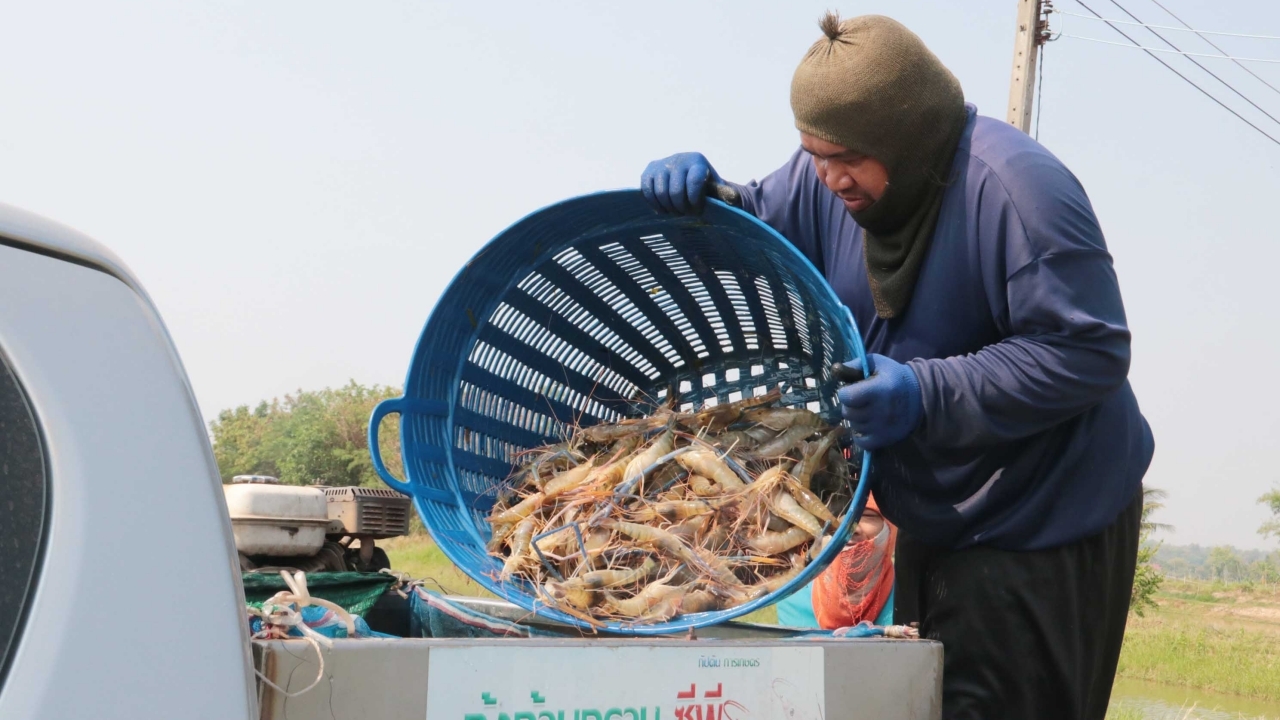
Kalasin’s giant river prawn industry is struggling due to high fuel prices and shortages. Traders are reluctant to accept distant orders, fearing they may run out of fuel en route. There are concerns this problem could extend into the Songkran festival period. The prawn delivery business is severely affected, with sales declining sharply. They call on relevant authorities to urgently resolve the issue.
On 23 March 2026, reporters observed that the ongoing fuel shortage crisis, which began last week and continues today, is increasingly impacting many sectors, especially businesses involved in transporting and selling giant river prawns in Kalasin province. Normally, weekends see high activity with orders from food courts, restaurants, and roadside vendors ranging from 70 to 200 kilograms per trip. These prawns are used for cooking or sold as souvenirs to travelers and tourists during holidays. However, in recent days, prawn catching and sales have been noticeably quiet, causing serious concern among prawn farmers and wholesale traders.
Mr. Nattawut Wiriyasatitkul, 42, a supplier of prawn feed and a middleman buying giant river prawns in Ban Tum, Buaban Subdistrict, Yang Talat District, Kalasin, said the fuel shortage is increasingly impacting the prawn trade. Gas stations do not have enough fuel to supply vehicle owners, including those delivering prawns. As a result, they have adapted by reducing delivery trips to minimize losses and time wasted. They also frequently check fuel availability at stations to avoid running out mid-route or being stranded after delivering prawns to customers in other provinces.

Mr. Nattawut added that customers near and far have been asked to increase their order quantities to reduce delivery trips. For example, restaurants that previously ordered 50 kilograms per delivery are encouraged to order 100 kilograms or more per trip. This approach saves fuel and ensures drivers can make round trips safely. Nevertheless, everyone involved in the prawn industry—farmers and traders alike—are worried that if the fuel shortage continues through Songkran, it will heavily damage prawn sales. Traditionally, giant river prawns sell very well during the festival, but if travel is reduced by locals and tourists, sales will drop sharply. Failure to meet sales targets would significantly harm the local economy and income.
Mr. Arthit Phubunterm, 54, a farmer and wholesale giant river prawn trader, said the fuel shortage has severely affected him and others in the same trade because they must deliver prawnstocustomers in other provinces, requiring at least 1,000 baht daily on fuel. For example, today he was delivering prawnstoa customer in Sakon Nakhon province but could only buy 300 baht worth of fuel because the gas station said they had run out. He has to take a chance finding fuel at other stations further along the route to ensure he can deliver the prawns and return home safely.

Previously, he and other middlemen delivered fresh prawns across the northeastern region multiple times weekly. Now, with the fuel shortage, they face serious difficulties. The atmosphere around prawn catching and sales is unusually quiet. They are unwilling to accept long-distance orders because they are uncertain whether their vehicles will run out of fuelduring the journey.This problem has severely impacted those who raise and sell giant river prawns, who had hoped for income during the upcoming Songkran festival. They urge the government and relevant agencies to urgently resolve the fuel shortage and restore normal conditions so they can continue their livelihoods and support their families smoothly.