

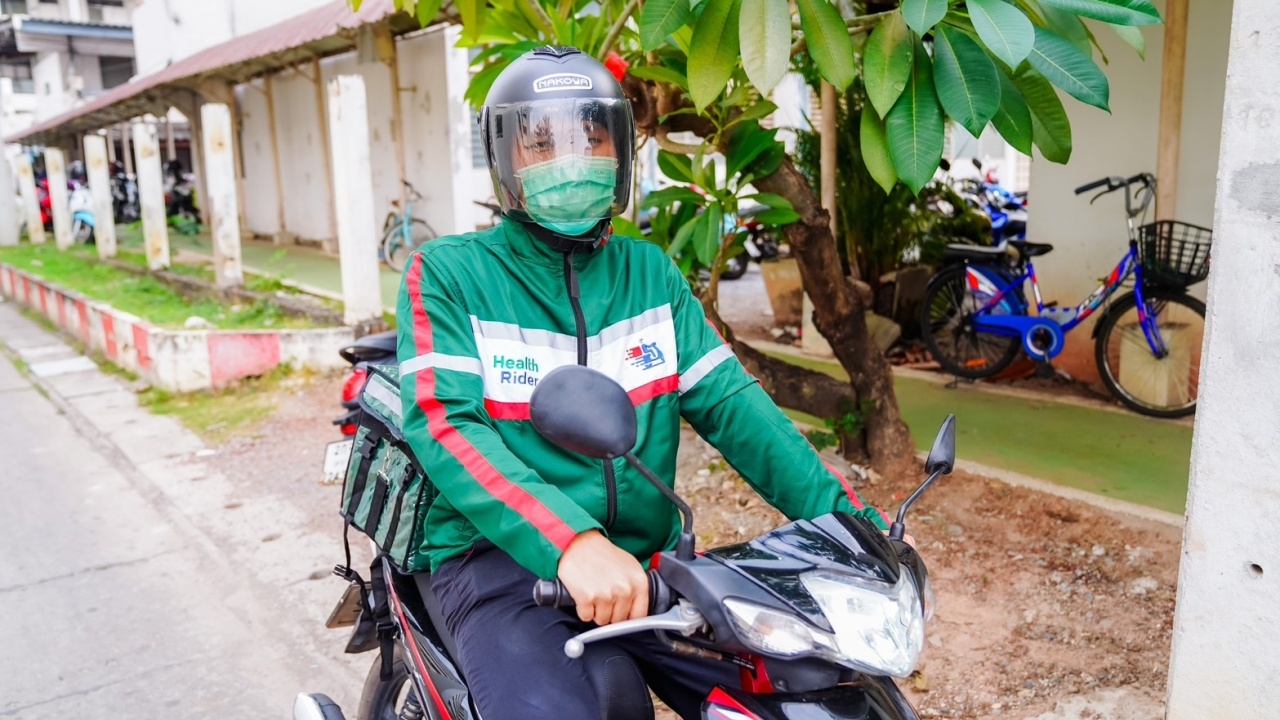
Udon Thani Hospital is moving forward with adjustmentsto its "medication dispensing system."Amid the wartime crisis, it has assigned staffknown as "Health Riders"to deliver medicines directly to patients' homes and maintain postal services, reducing congestion, saving energy, and easing patient burdens, allowing patients to return home immediately after check-ups.
On 31 Mar 2026 GMT+7 at Udon Thani Hospital, Dr. Srisuda Songthamwat, Director of Udon Thani Hospital, along with Pharmacist Udomlak Rangsiyapornrat, Head of Pharmacy Services, Pharmacist Priya Yukantawanichai, Head of Outpatient Administration, and Pharmacist Yoon Klangprapan, Senior Pharmacist, guided reporters to inspect the dispensing room on the 2nd floor of the outpatient building to explain the adjustment of the medication refill system from every 3 months to every 2 months. This change aims to reduce patient travel, save energy, decrease medication stockpiling at home, and strengthen medication security.

The inspection took place in the evening when the atmosphere was less crowded. Most patients were using the after-hours clinic. While reviewing patient histories and conditions, staff also promoted the medication dispensing system project and prepared medication packages for shipment the following day.
Additionally, staffknown as "Health Riders"were on site preparing medicines to deliver to patients within a 15-kilometer radius of the hospital, covering 4 subdistricts within Udon Thani Municipality and surrounding municipalities. This initiative aims to reduce travel and save energy amid energy volatility and wartime conditions.
Dr. Srisuda Songthamwat, Director of Udon Thani Hospital, revealed that they have been delivering patient medications to homes via postal services and"Health Riders"since the COVID-19 pandemic began. The service continues today and has been well received by the community because it is convenient; patients can return home immediately after check-ups without spending extra time at the hospital.

Currently, about 60 to 80 patients receive home medication deliveries daily, totaling approximately 1,500 packages per month. Of these,"Health Riders"handle about 30%, while postal services cover around 70%. Most patients are chronic cases. This home delivery program increases convenience and ensures continuous medication access.
"We want to reassure patients and the public thatthe Ministry of Public Health and Udon Thani Hospital have prepared medication reserves for the current situation. We strive to avoid impacting the community by coordinating with community hospitals and using telemedicine systems, from specialized central hospitals to nearby community and subdistrict health promotion hospitals. We ask everyone to be confident that nationwide medication reserves have been arranged."

Pharmacist Udomlak Rangsiyapornrat, Head of Pharmacy Services at Udon Thani Hospital, explained that their unit is the final step in managing medication delivery to patients. The medication service process follows professional standards, followed by telepharmacy efforts to check whether patients have received their medicines.
The key principle is that patients must be stable before medication refills or deliveries proceed. Initially, the focus was solely on"Health Riders,"but later postal deliveries were added due to the current wartime and energy volatility situation.
Refilling medications helps because many stable patients still need continuous medication. Doctors have heavy workloads, but patients must keep receiving their medicines. Medication amounts need to be sufficiently stocked, so dispensing intervals were shortened to every two months via postal services or"Health Riders."This reduces hospital crowding and saves energy since patients do not have to travel, allowing smoother resource management.

Currently, medication reserves cover about three months. Overall, the Ministry of Public Health closely monitors supplies, holding meetings to consolidate medication quantities at provincial, regional, and national levels to share data. Thus, in emergencies, resources can be shared as needed.
Pharmacist Priya Yukantawanichai, Head of Outpatient Administration, said that patients are very satisfied with the service. They no longer need to travel or wait long at the hospital, which can take a whole day. Some patients come from distant provinces or districts, requiring long travel and high expenses—sometimes hiring transport costing 3,000 baht. With the delivery service supported by the National Health Security Office covering delivery costs, patients pay nothing and are very pleased.
After delivering medications, the hospital also follows up by phone to check proper usage and any problems. Currently, the hospital promotes this service on its Facebook page. Patients without prior information can see promotional signs at the pharmacy and examination rooms and can immediately arrange for postal medication delivery if desired.
Ms. Ladda Khamloy, 61, from Mueang District, Udon Thani Province, a patient using the service, said she suffers from high blood pressure and recently started treatment at the hospital. She knew the hospital offers home medication delivery, so she did not need to travel herself. She came to the hospital for a doctor's appointment, and relatives who are also ill use the same service. She thinks this is a very good project because it saves travel time, money, fuel, and energy. She hopes such beneficial programs will continue indefinitely.
