

Two full months have passed since the death of “Si Do Hu Phap.” A legal entity has raised concerns that the wrong elephant might have been identified, including issues with the relocation process, which contradicts information presented in official press releases.
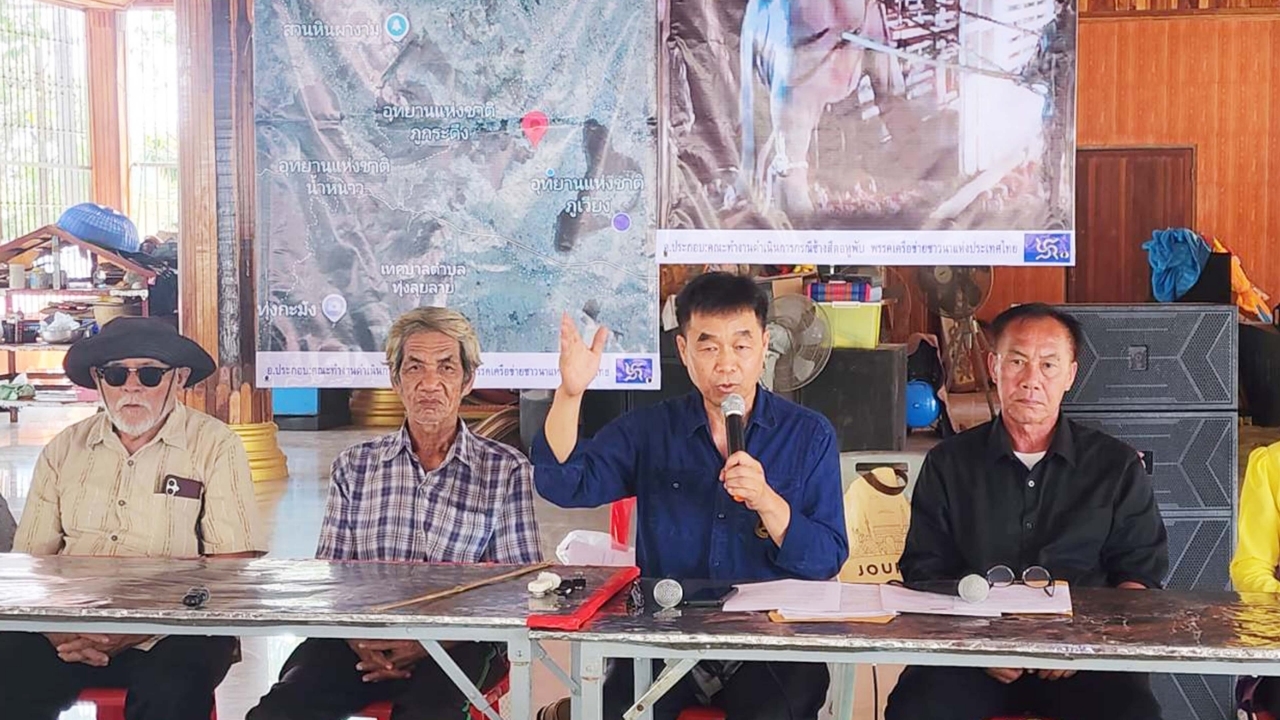
On 3 April 2026 at the sermon hall of Wat Nai Mom, Ban Nong Kha, Nai Mueang Subdistrict, Wiang Kao District, Khon Kaen Province, Mr. Wachira Suparom, Secretary-General of the Revolutionary Farmers Movement, together with Mr. Toedrat Nahuanil, Secretary of the Si Do Hu Phap Case Task Force of the Thai Farmers Network Party, and Mr. Ruangrit Kingsida, Chairman of the Phu Wiang Kao Environmental and Human Rights Protection Club, held a press conference regarding the call for justice for the elephant “Si Do Hu Phap.”
Mr. Ruangrit Kingsida, Chairman of the Phu Wiang Kao Environmental and Human Rights Protection Club and resident of Ban Non Sung, Nai Mueang Subdistrict, Wiang Kao District, Khon Kaen Province, who owns land through which Si Do Hu Phap passed, revealed that he first encountered Hu Phap in 2024. Upon first seeing the elephant, he did not perceive any aggression or anger; it behaved naturally as a wild elephant. However, no local villagers dared approach it initially because it was their first encounter. Si Do Hu Phap passed through the area multiple times, and over time, villagers became accustomed to its presence, without pushing it away or driving it off./When Hu Phap entered the rice barns, villagers would tell the elephant, “Don’t come in; go find food outside,” to which Hu Phap would respond by leaving. It was an elephant with a gentle nature and was never aggressive.

Regarding the lawsuit, which occurred in Si Chomphu District, I am a resident of Wiang Kao District, and neither I nor the villagers of Wiang Kao or Phu Wiang District have filed any complaints about this case. However, I heard from the news that people in Si Chomphu District filed complaints about elephants damaging property and crops on villagers’ farms. After hearing this, I and other villagers discussed it and saw no evidence that the wild elephants behaved as described in the complaints. What the villagers witnessed was elephants moving and feeding naturally according to their wild habits. After Si Do Hu Phap died, other wild elephants such as Kutang and Ngajiu did not enter the area.
Personally, after learning of Hu Phap’s death, I felt saddened and regretful, believing it should not have led to such a loss. Following the incident, all villagers questioned what kind of drug was injected by the authorities and why Hu Phap died. Hu Phap’s presence in the area brought color and life to the community, and it was the first time villagers had seen a wild elephant come through. Everyone had affection for Hu Phap; no one harmed it, and Hu Phap never harmed anyone.
As for incidents of elephants injuring people, these occurred because people tried to push the elephants away using firecrackers and sometimes firearms. When wild elephants are repeatedly driven off, they become agitated and may charge at people instinctively to defend themselves, using their trunks to grab and throw objects. Once people stop provoking them, the elephants calm down quickly and resume their normal feeding behavior. When wild elephants enter the area, villagers adjust their lifestyles accordingly. Although some inconvenience occurs, it is not enough to cause hatred toward Hu Phap. The villagers have made efforts to coexist peacefully with Hu Phap while it remained in the area.
Mr. Wachira Suparom, Secretary-General of the Revolutionary Farmers Movement and chairman of the task force from the Thai Farmers Network Party, stated that this press conference was the third effort to seek justice for the wild elephant named “Hu Phap.”“Hu Phap.”He said this case demonstrates the moral strength of Thai society, which questions the exercise of certain powers. Now that two full months have passed, he called for justice for the wild elephant Si Do Hu Phap, an intelligent animal that favored building relationships with humans, contrary to authorities’ portrayal of it as a dangerous and unruly elephant. He spoke on behalf of the elephant, which cannot speak for itself, to correct misinformation and ensure accurate communication.

Mr. Wachira Suparom added that upon reviewing the facts, several injustices were found. First, Hu Phap was unfairly labeled a troublesome elephant, which contradicts the affection shown by locals. Hu Phap taught people how to coexist with large wild animals like elephants. Some agencies provided inaccurate information that conflicted with Hu Phap’s gentle and non-aggressive nature.
He also questioned state agencies’ lack of caution, which led to Si Do Hu Phap’s name appearing in court orders, suggesting a mistaken elephant identity. Additionally, he raised concerns about the relocation process, during which five tranquilizer injections were administered. He personally spoke with eyewitnesses who said Hu Phap became sedated after the first injection, contradicting official reports that the first shot did not sedate the elephant, leading to a second injection. He demanded explanations about the elephant’s body size discrepancies before burial and whether anyone interfered.
Mr. Toedrat Nahuanil, Secretary of the Si Do Hu Phap Case Task Force of the Thai Farmers Network Party, said that the death of Si Do Hu Phap has had definite impacts. Appointed as a task force member and secretary of the party, he intends to use his political role, as a legal entity, to fight for justice for Si Do Hu Phap and all wildlife in Thailand to receive protection, fairness, and justice comparable to that of humans, since animals also value life. The case of Si Do Hu Phap requires investigation to identify those responsible and restore justice, using political channels to achieve tangible outcomes. He noted that if only farmers were to demand justice, they would lack the strength and capacity to do so fully without support from legal organizations.