

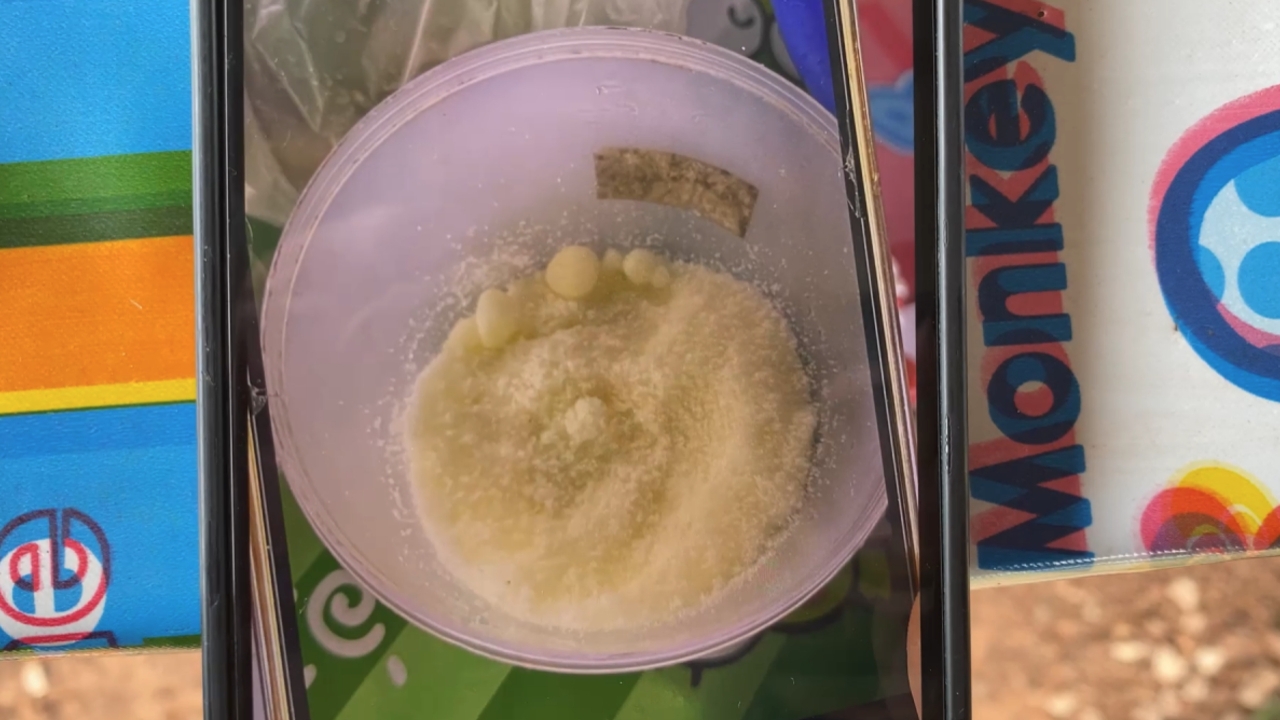
Officials are investigating a noodle shop in Udon Thani Province after 13 customers suffered food poisoning, with the suspected cause being a mysterious ingredient resembling salt used in the food.
At 11:00 a.m. on 9 June 2026, Pol. Col. Santirak Mongkolnam, Head of Forensics at Udon Thani Provincial Police, Pol. Lt. Col. Pichet Pakketat, Deputy Superintendent of the Investigation Division at Mueang Udon Thani Police Station, Pol. Lt. Col. Natthakan Wanpan, Deputy Superintendent (Investigation) at the same station, along with forensic officers and investigators from Mueang Udon Thani Police Station, traveled to inspect a noodle shop located in Nong Bua Municipality, Mueang District, Udon Thani Province.
This followed an incident at noon on 8 June 2026, when the shop owner's daughter and other noodle customers developed symptoms of food poisoning and were taken to Udon Thani Hospital—13 people in total—with six still hospitalized.

All suffered nausea, vomiting, dizziness, difficulty breathing, and diarrhea. They included: 1. Mr. Pornchai, 30 years old; 2. Mrs. Supranee, 52 (the shop owner's daughter); 3. Mrs. Seenuan, 49; and 4. Mr. Sarawut, 35, whose condition was severe and required close medical attention.
Also affected were 5. Mr. Thawatchai, 33; 6. Mr. Apichai, 30; 7. Mr. Thanwa, 17; 8. Mrs. Noknoi Jaemsaid, 87; 9. Ms. Wiyada (a smoothie vendor); 10. Mrs. Pun (the noodle soup cook); 11. Ms. Boonliang; 12. Ms. Pannikarn (the shop owner’s niece-in-law); and 13. Mr. Methin.
The Udon Thani Provincial Public Health Office conducted an epidemiological investigation, identified affected individuals, collected food and ingredient samples, and sent them to a laboratory to determine the cause of the illness. Results are currently pending.

Mrs. Pun, 70, the shop owner and soup cook, and Mrs. Boonliang, 55, a relative who sells noodles, along with family members, awaited police questioning at the scene, which included the noodle shop, a made-to-order food stall, a smoothie stand, and surrounding areas.
Mrs. Pun explained that she has been selling noodles for 6-7 years. Recently, she started selling durians, preparing the soup beforehand to take to the Thaisiri Market, while Mrs. Boonliang sold noodles at the shop. On the day of the incident, she ran out of salt and used some salt her son had brought her 3-4 days earlier. Visually, the salt appeared old with a slight yellow tint. She tasted it with her finger, finding it salty, so she used it as seasoning according to her recipe.
After cooking, she tasted the soup twice with a spoon. After a short time, she felt numbness on her lips which worsened, followed by dizziness. She rested and had two bowel movements, then took medication before seeing a doctor and returning to rest. The public health authorities have since confiscated all the salt suspected to be the cause.

“I feel very sorry that this happened. I have never experienced such an incident in all the years I’ve sold noodles. Before using the salt my son brought, I tasted it and it was salty. If it had been poisonous, it would have wiped out the whole household because not only customers but also my family eat the noodles. I am very sorry this happened,” Mrs. Pun said tearfully. Mrs. Pun spoke through tears.
Meanwhile, Mrs. Boonliang, 55, the noodle vendor, said about 10 customers visited the shop, mostly ordering made-to-order dishes, with only three noodle orders. Before serving, she tasted the soup 2-3 times. After some time, she experienced severe vomiting and two bouts of diarrhea. She took medicine which improved her condition. She believed her symptoms were mild because she ate less and vomited a lot. However, the shop owner’s daughter, who was already unwell, ate noodles, then suffered seizures, vision loss, fatigue, and drowsiness. They prevented her from sleeping and called rescue services to take her to the hospital.
“I don’t know the cause, whether it was the salt or not. We have cooperated fully with the authorities who are investigating. We are traders and don’t want this to happen or for anyone to get sick. We had no intention; we didn’t know. We are poor and just trying to make a living. My sister is still in the ICU,” she said.
Mr. Sinchu, 46, the son who returned quickly from a construction site to meet authorities, admitted he brought two small bags of salt from “Mr. Chian,” who lives at the end of an alley. He thought it was salt to give to his mother for the noodle soup and didn’t suspect anything else. He then took officials to Mr. Chian’s house, where old items are stored in the yard for resale. Some were packed in large bags and loaded onto a motorized tricycle ready to be sold.
Later, Mr. Wichian came out to meet officials and listened to the reason for their visit. He explained he lives alone in this house after retiring from his temple duties following the abbot’s death. He often collects unwanted old items from locals, including those thrown in and outside trash bins, bringing them home to accumulate before selling. Mr. Sinchu frequently visited and was given food and usable clothes and shoes. Regarding the salt bags, he said he warned not to take them because they were collected from trash and unclean, but Mr. Sinchu secretly took two bags.

Pol. Col. Santirak Mongkolnam and Pol. Lt. Col. Pichet Pakketat seized three bags of white material, one of which Mr. Wichian said was collected the same day as the two bags Mr. Sinchu took without permission. These will be tested further. Meanwhile, results from the Udon Thani Provincial Public Health Office’s samples collected at the noodle shop and sent to the Department of Medical Sciences are awaited. Mrs. Pun, Mrs. Boonliang, Mr. Sinchu, and Mr. Wichian have been asked to meet investigators for statements.
At 12:00 p.m. on 9 June 2026, Mr. Suriya, 60, from Nong Khon Kwang Subdistrict, Mueang District, Udon Thani, filed a complaint with Pol. Sgt. Maj. Nachaphat Kongsupol, Deputy Investigator at Mueang Udon Thani Police Station. He reported that his son, Mr. Sarawut, 35, who ate at the noodle shop, developed severe abdominal pain, pale complexion, and difficulty breathing. He was taken to Nong Khon Kwang Health Promoting Hospital and then referred to Udon Thani Central Hospital, where he remains in the intensive care unit.
Mr. Suriya said his son works with him in construction. At noon the previous day, his son ate noodles at the shop then rested at the worksite. Soon after, he felt nauseous, used the restroom, then experienced dizziness, rapid heartbeat, shortness of breath, and shaking. He turned on a fan for his son, but his condition worsened, so he drove him to the hospital in their pickup truck.
“Halfway there, my son’s eyes rolled back and his hands clenched. I had to pry his hands and mouth open. He was close to death, so I stopped at Nong Khon Kwang Hospital and called rescue services from Udon Thani Central Hospital. His condition did not improve and he was close to dying en route, so we stopped at Bangkok Hospital for emergency care. After slight improvement, he was transferred to Udon Thani Hospital and intubated. He is conscious but unable to speak, though he nods in response. Doctors say he is out of danger but will monitor him for three days and keep him hospitalized for a week. I urge the noodle shop to maintain hygiene and take responsibility for this incident,” Mr. Suriya said.