

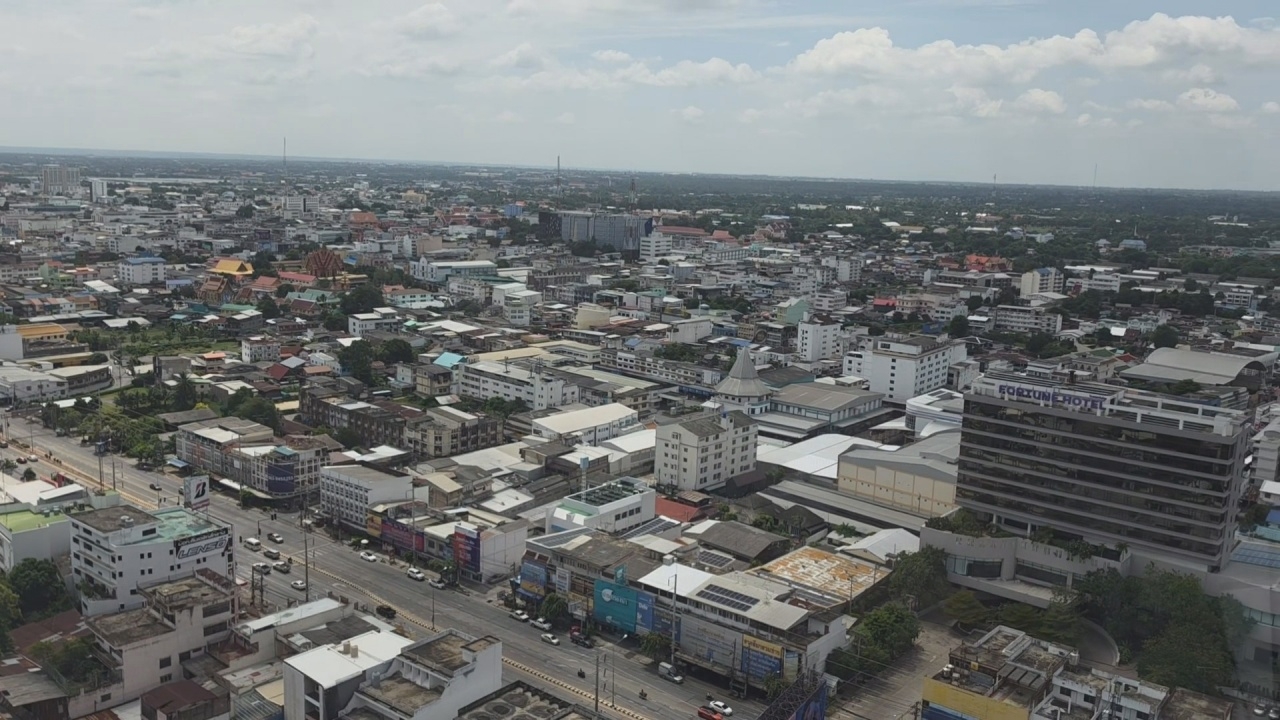
A geologist from Suranaree University of Technology analyzed the strong tremors that alarmed Buriram residents, suggesting they may be related to human activities. No active fault lines have been found in the area.
On 3 Sep 2026 GMT+7, Dr. Sartsilp Phakdimek, a faculty member in the Geological Technology program at the School of Engineering, Suranaree University of Technology in Nakhon Ratchasima Province, analyzed the incident where Buriram residents panicked and evacuated buildings after feeling strong tremors, initially fearing an earthquake.

He explained that the tremors are more likely caused by human activities than natural earthquakes, especially if they occur near construction sites or mining areas. In tall buildings where people felt shaking, the cause could be linked to human activity.
Geologically, Buriram is mostly flat terrain underlain by sandstone with some igneous rock intrusions. Thus, factors related to nearby human activities should be considered, such as pile driving for large construction projects or rock blasting in mining operations. Buriram has basalt quarries where blasting is sometimes necessary.
To confirm whether the tremors were caused by mining blasts, it is necessary to review data and operational schedules from the involved businesses to verify the facts.
Thailand has about 16 fault lines recorded by the Department of Mineral Resources, mainly in the north, west, and south. The Northeast region has faults mainly in Phetchabun and Loei provinces. No active fault lines have been identified in Buriram.
In cases where residents of Nakhon Ratchasima have felt tremors, it cannot be confirmed that these originated from earthquakes within Korat itself; rather, the area is affected by seismic waves from earthquakes occurring elsewhere.
For example, large earthquakes in Myanmar have transmitted tremors to Nakhon Ratchasima. The local geology, with relatively hard sandstone layers, allows seismic waves to travel quickly, making buildings and residents feel shaking. Damage levels differ compared to areas with soft soil, like Bangkok, which has soft clay layers that can amplify shaking.

If residents feel tremors, they should stay calm and follow safety guidelines. In tall buildings, use stairs instead of elevators, which may malfunction during shaking. If evacuation is not possible, take shelter under sturdy furniture or in structurally strong areas, avoiding windows, glass, or objects that could fall, and wait until it is safe to leave in an orderly manner.
Building inspections should be conducted regularly to ensure safety, with detailed checks based on building age, usage, and risk factors. However, the Buriram tremors require further investigation by relevant agencies to clearly determine whether they are due to natural phenomena or human activities in the area.