

A survey of fresh vegetable prices before the 2026 Vegetarian Festival found that most prices have surged. Flooding and high fuel costs are pushing production expenses higher. It was confirmed that this is not due to the Vegetarian Festival, as prices this year are significantly higher than during the same period last year.
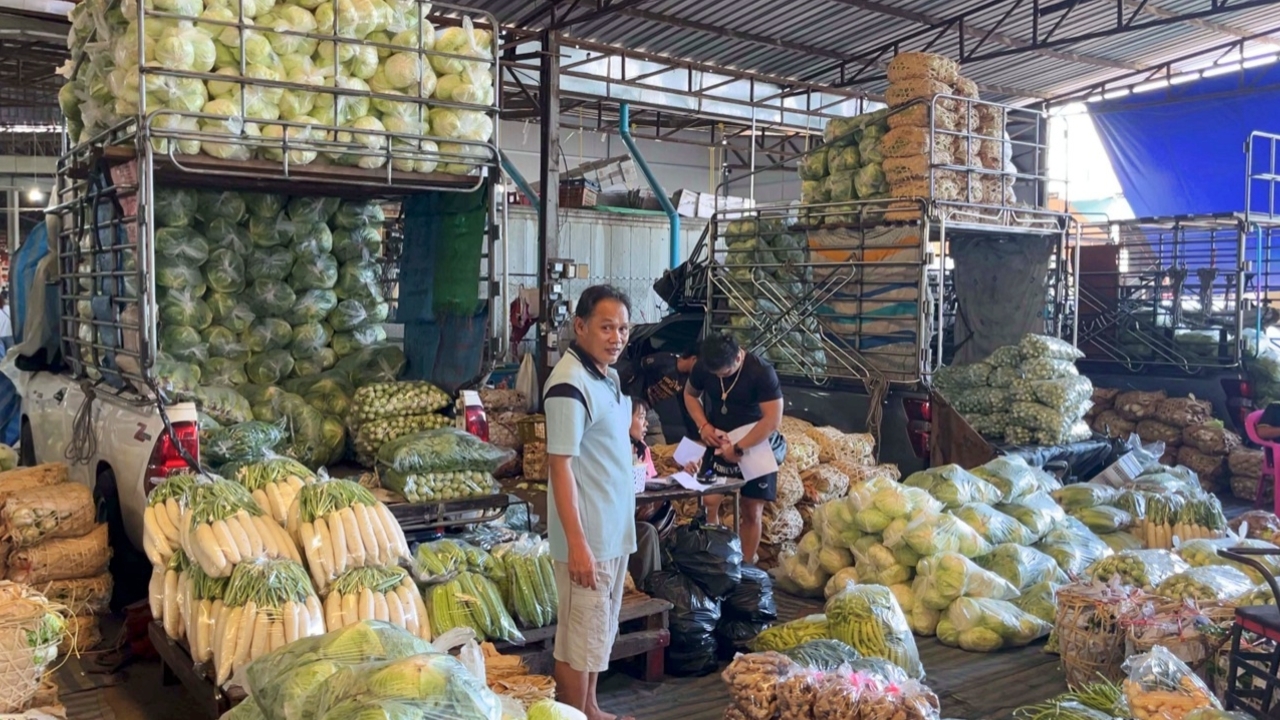
At 11:00 a.m. on 6 October 2026, reporters visited Sri Muang Thong Market, the central vegetable and fruit market in Khon Kaen Province, to survey fresh vegetable prices ahead of the Vegetarian Festival. Many vegetables have seen significant price increases compared to last year, especially Chinese kale, water spinach, and bitter melon, with rises exceeding 50 percent. Vendors believe the cause is flooding in the central region, the main growing area, along with rising fuel prices, which have increased transport and vegetable costs.
Mr. Jongkol Lertmai, 41, a vegetable vendor, said the most noticeable price increases were for spring onions, which rose from 35-40 baht per kilogram to 120 baht per kilogram; Vietnamese coriander from 40 baht to 140 baht per kilogram; five-kilogram bags of water spinach from 50-60 baht to around 250 baht; and five-kilogram bags of culantro (sawtooth coriander) from 100 baht to 300 baht.

Because vegetables are purchased at higher prices from suppliers, they must be sold at higher prices, making sales more difficult and raising costs, especially due to increased fuel prices for transportation. This has forced a reduction in workers from four to two to keep the business afloat. Sometimes sales last five days with losses on two days and profits on three, which is barely sustainable. Without cutting costs, losses would be inevitable.
The rise in vegetable prices does not seem related to the Vegetarian Festival because last year’s festival prices were not this high. For example, last year’s water spinach during the festival was priced below 100 baht per bag, but this year, even before the festival, prices have risen to about 300 baht per bag.
Meanwhile, Mrs. Sitthivech Hannkamjon, 42, a fresh vegetable vendor, said vegetable prices have been rising for about a week. Basil and Chinese kale have risen sharply—basil in five-kilogram bags increased from 200-300 baht to 600-700 baht, and Chinese kale from 120-130 baht to about 280 baht per five-kilogram bag. She believes flooding in the central region, a major vegetable growing area, has reduced production amid continued demand, causing prices to rise.

Another key factor is the increase in fuel prices from about 30 baht to around 42 baht per liter, which raises product and transportation costs. She hopes the government will help control fuel prices; if they could be reduced to about 30-32 baht per liter, it would ease vendors’ burdens. She believes vegetable prices will remain high for now, as they have been elevated for about a week without decreasing, but they likely won’t rise much further because higher prices might deter consumers. She also insists that the price hikes are not related to the Vegetarian Festival, since prices last year during the festival were much lower.
Similarly, Mrs. Boonthom Kamphila, 53, a fresh vegetable seller, said this year’s vegetable prices have risen for nearly all types. Five-kilogram bags of water spinach rose from 120 baht to 250 baht; Chinese kale from 150 baht to 250 baht; and bitter melon from 150 baht to 240 baht per five-kilogram bag. During last year’s Vegetarian Festival, water spinach was only 50-60 baht per bag. She attributes the price increases mainly to flooding in the central region, a major vegetable growing area, which damaged crops and reduced market supply, pushing up prices for many vegetables during this period.