

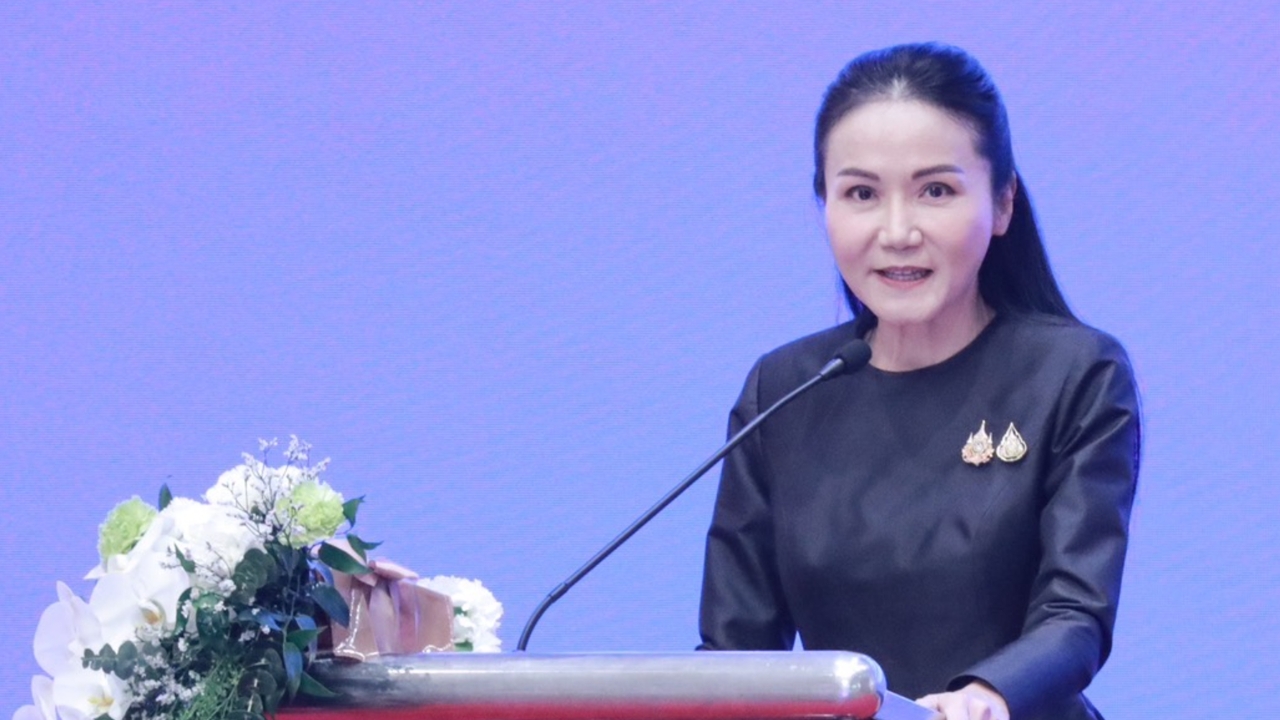
Education Minister Narumon delivered a keynote speech at the ISAT conference of the Ministry of Education, outlining three main pillars guiding education: reducing teacher burdens, future skills development, and AI technology, aiming to enhance quality and equity throughout Thailand.
At 11:00 a.m. on 28 November 2025 GMT+7, Professor Dr. Narumon Phinyosinwat, Minister of Education, gave a keynote address at the 2025 annual general meeting of the ISAT Association held at The Athenee Hotel Bangkok, a Luxury Collection Hotel. She stated that the 204 member schools of ISAT are vital partners in the nation's educational mission. These schools provide comprehensive, world-class education with globally recognized diverse curricula. They directly contribute to developing Thailand’s human capital and strengthening the country's competitiveness as a regional education hub.
In the rapidly changing 21st century, education can no longer be confined by borders. Thailand views international education not merely as an option but as a cornerstone of national strategy for human resource development and long-term economic competitiveness enhancement.
The Minister further outlined the government’s vision, describing it as simple yet deeply committed: to create an environment that strengthens Thai education, preparing citizens of all ages to thrive in a globalized world, grounded in strong moral foundations, essential skills, and lifelong learning capabilities.

She also noted a clear and important trend: the continued rise in popularity of international schools, while enrollment in general Thai curricula tends to decline. This shift reflects parents with purchasing power seeing international programs as modern and beneficial for equipping their children with the knowledge and skills needed for further education and careers on the global stage. Additionally, Thailand’s recognized educational standards and reasonable tuition fees compared to abroad attract many international students.
Regarding the three key pillars of education policy, these have been designed to ensure that the Thai education system is flexible, targeted, and accessible to all. They are:
1. Reducing regulatory burdens and promoting development by establishing transparent, efficient regulations supporting the operation and expansion of international schools. Proactive measures are underway to streamline licensing processes to be faster and clearer, boosting investor confidence and raising regulatory standards. The goal is to complete school establishment licensing within 30 days and initial operation permits within 15 days, ensuring timely access to quality education without unnecessary delays. Simultaneously, quality assurance is promoted through clear curricular frameworks that are flexible and innovative in teaching quality.

2. Emphasizing future skills development, focusing on essential competencies rather than options. These include fluency in languages, especially global languages such as Chinese and Japanese, which are important for the global economy; digital and artificial intelligence literacy to enable students to think creatively, ethically, and use technology wisely; and social and critical thinking skills vital for adaptation and effective problem-solving in changing environments.
3. Utilizing technology for sustainable development by integrating modern technology and artificial intelligence. This approach goes beyond digital skills to creating an intelligent learning ecosystem supporting personalized and lifelong learning. This digital infrastructure helps bridge quality gaps between urban and rural schools and ensures all students nationwide have equal access to educational opportunities.

Therefore, from vocational training to digital learning, our policies aim to transform Thailand into an inclusive learning society. We are developing mechanisms such as credit transfer systems and recognition of experiential learning to enable education beyond the classroom at all ages.
In summary, Thailand’s international education policy reflects a strong commitment to quality, equity, and global cooperation. We highly value ISAT’s mission and its 204 member schools. We remain dedicated to building a strong, focused education system ready for the future by reducing regulatory barriers, prioritizing essential future skills, and continuing international collaborations. I am confident we are preparing the next generation of Thai citizens to be capable, ethical, and globally competitive. We believe cooperation is the true driver of progress and look forward to closely working with ISAT to share best practices and advance education globally.