

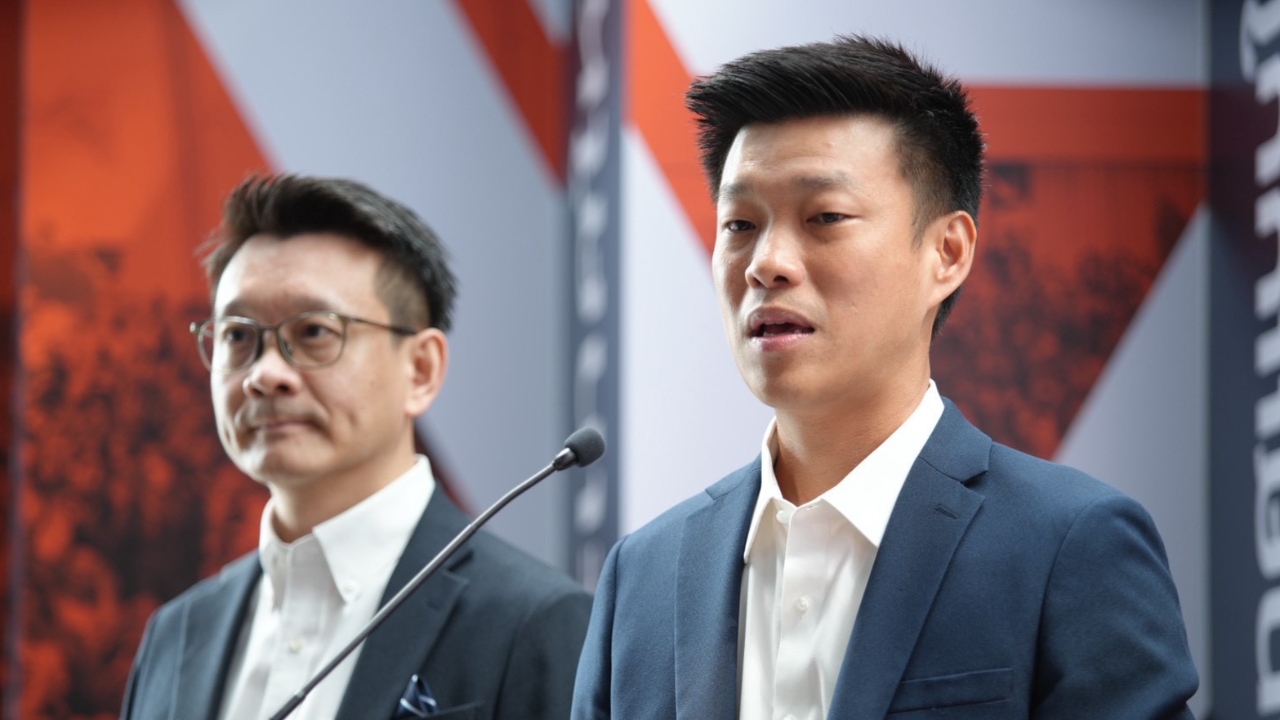
"Teng Natthapong" questions "Anutin" on who violated the MOA agreement, stressing that despite giving such a chance, parliament was still dissolved. He declines to say it was a betrayal and points out that the next election and the people's votes will be the answer. He insists the People's Party is not naive and practices straightforward politics with the public.
On 12 Dec 2025 GMT+7, at the Future Building, the People's Party, Mr. Natthapong Ruangpanyawut, party leader, along with Ms. Sirikanya Tansakul and Mr. Weerayut Kanchuchat, the party's prime ministerial candidates, addressed media questions regarding whether the People's Party views Prime Minister and Interior Minister Mr. Anutin Charnvirakul as having breached the MOA, since the prime minister insists he has not.
Mr. Natthapong said there are two points to consider. First, regarding the MOA agreement in writing, it aligns with the prime minister's reasons, but in practice, not all details could be specified at signing, especially as the constitution's contents were unknown. Reviewing the special committee meetings shows diverse debates and reasons among MPs and senators. Practically, the MOA principles had to remain broad. The People's Party's goal beyond early dissolution is to create a new constitution closely connected to the people.

Second, practically, looking back at the draft from the majority committee with representatives from all parties who agreed no one-third senatorial votes should count since the government's whip resolution before parliamentary voting until 11 Dec 2025, all indicated that Bhumjaithai Party agreed with the majority committee's draft, which excludes one-third senatorial votes. However, yesterday, Mr. Natthapong learned around noon that Bhumjaithai showed signs of voting against their own whip's decision. He urges everyone to directly ask the prime minister why Bhumjaithai chose to vote against their own government's whip.
When asked if he anticipated today's events and the constitution's failure to be amended, Mr. Natthapong admitted that when signing the MOA with Bhumjaithai, they had already anticipated this and decided to use the People's Party MPs' votes to push constitutional reform as effectively as possible. He believes that since signing the MOA to now, the process of drafting a new constitution has been the most realistic in the past two years. The situation yesterday requires no further explanation. Going forward, at least the Constitutional Court's ruling requiring a referendum first has passed a motion, legally obligating the caretaker cabinet to proceed. This offers hope to advance constitutional reform. They will not abandon this cause but will continue fully, with public votes in the next election providing greater opportunity to succeed in constitutional reform the more the public supports them.

Asked if he regrets choosing Mr. Anutin as prime minister, Mr. Natthapong said he does not. Throughout the process, the party thoroughly listened to its members, the true owners of the party. Looking back, there were many varied opinions, but the majority concluded to proceed in this way to advance Thailand, including early dissolution and drafting a new constitution simultaneously. At that time, the future events were unpredictable, but they committed to doing their best. Yesterday's events, he believes, show the public that they did everything to maintain progress toward a constitution as the country's solution.
Although the People's Party's popularity has dropped alongside Bhumjaithai's, Mr. Natthapong acknowledged that public feedback is meaningful. He believes their work will prove itself, including in the next election. Aside from strong policies, the People's Party has its best proposals from years of work and a management team he trusts will earn massive public trust in the next election.
He reaffirmed that the People's Party is not naive and emphasizes straightforward politics.
Regarding perceptions of the People's Party as inexperienced or politically naive, Mr. Natthapong said their straightforward political style, including the MOA agreement which some perceive as broken in parts, reflects their attempt at transparency. He does not believe they are naive but rather strive to let the people decide. Even if parts of the MOA are claimed to be fully honored, others may interpret them as breached, but ultimately, the voters in the election booth are the judges.
Asked how they will restore confidence after both the MOU and MOA were broken twice, and how to ensure the People's Party's decisions won't be disadvantaged compared to other parties, Mr. Natthapong reflected on recent politics under the 2017 constitution. He noted the Future Forward Party was expected to win fewer than 10 seats but got over 80, and the Move Forward Party did not expect to become the largest party. The People's Party's sole goal in the next election is to rely on the people, earn their highest trust, grow strong enough to form a government, defeat the entrenched powers holding the country back, and prevent political betrayal because the people's voice is paramount and cannot be betrayed.
Mr. Natthapong added that he has never accepted the politicization of civil servants or attempts to manipulate parliamentary mechanisms. He believes the next election will bring real change.
No Regret Over Missing Opposition No-Confidence Vote Against "Anutin" Government
When asked if the opposition regrets not holding a no-confidence debate, Mr. Natthapong said they did their best and have no regrets. Yesterday, they worked fully to show the public whether Bhumjaithai is serious and sincere about pushing a new constitution. Despite knowing by noon of a negative signal, the debate aimed to create a record and show the People's Party's stance: if Bhumjaithai honored the agreement, they would not file no-confidence. Since Bhumjaithai did not, and the prime minister chose to dissolve parliament, they do not regret missing the no-confidence debate. They do not treat it as political games but prioritize the country's benefit, and thus want to ask the prime minister and Bhumjaithai why they chose this course.

Asked if there was direct communication, Mr. Natthapong said he spoke with party MPs in parliament yesterday and attempted once to call the prime minister directly but received no answer. He has not talked directly with the prime minister.
Regarding the prime minister's claim that he dissolved parliament because Mr. Natthapong called for dissolution in parliament, Mr. Natthapong asked to review the parliamentary debate. He said that if Bhumjaithai insisted on voting per the minority committee's draft, he could not allow the bill to proceed to the third reading and thus had to request the prime minister dissolve parliament. Yesterday, after proposing alternatives, a vote was held but failed to reach 30 votes. Then a roll-call vote was proposed to give the prime minister time until the last minute to decide. He questions the prime minister why, after such a chance, he chose this method. Whether this was an excuse, he cannot answer and urges the prime minister to explain the sequence of events leading Bhumjaithai to this decision.
Asked if their approach was politically naive, Mr. Natthapong said they never based political decisions on personal trust but on the publicly released MOA framework, which is the sole commitment compelling Bhumjaithai to follow the agreement. Ultimately, the people are the judges.
On chances of joining future governments, Mr. Natthapong said their current position is clear: there is no middle ground. If necessary, they will be a coalition party. However, if any minister is involved with gray networks or unacceptable actions, the People's Party's sole goal is to win public votes, gain public trust, and become strong enough to form a government without allowing anyone to betray them again. Asked if the prime minister acted too quickly to dissolve parliament, he said to ask the prime minister directly.

People's Party Ready to Face Legal Cases Involving 44 MPs
Regarding readiness for legal proceedings against 44 MPs, Mr. Natthapong said they are fully prepared legally, which does not distract them. He will hold multiple meetings to prepare for next year's election, focusing on securing as many public votes as possible through policies and the management team.
Asked if the People's Party will apologize again, Mr. Natthapong apologized once more to the public for failing to push through constitutional reform. However, he urged hope, as the party's growth is based on hope and possibilities. As long as the public supports them, he believes the next election will restore public confidence.
Declines to Say Betrayed by "Anutin"; Points to Public Vote as Verdict
When asked if they were betrayed, Mr. Natthapong said he questions whether the government fulfilled public expectations. The government has its own written explanations, but the public's expectation with the MOA was constitutional reform to curb political wars. Whether betrayed by the prime minister or not, he leaves it to the public to decide. He affirms that all political decisions are public-centered and transparent. He refuses to directly say they were betrayed because the party never based decisions on personal trust but on MOA details. He urges the public to judge in the next election.
Emphasizes Never Asked Pheu Thai to Delay No-Confidence Motion Against Government
Regarding claims that the People's Party asked Pheu Thai to delay no-confidence against the prime minister, Mr. Natthapong said he never requested such a delay. He admitted there was a discussion as an open political dialogue, recognizing Pheu Thai's right to submit it. But if submitted, the country would suffer consequences, a decision solely for Pheu Thai. If Pheu Thai proceeds, the People's Party is ready to join in the no-confidence debate. He stresses they never tried to persuade Pheu Thai to postpone the motion.

Regarding Pheu Thai leader Mr. Julaphan Amornwiwat's warning of such events requiring shared responsibility, Mr. Natthapong said that is Mr. Julaphan's viewpoint, but the People's Party and Pheu Thai operate differently. Comparing Pheu Thai and Bhumjaithai's work as governments shows their differences.
Hopes to Gain Enough Votes to Prevent Betrayal of People's Voice Again
Asked if the People's Party will remember the past two months and whether they still trust others, Mr. Natthapong said they never trusted but emphasize that all political decisions were never based on personal trust. For the next time, they will work hard with the management and candidates to secure enough votes so no one can betray the people's voice again.