

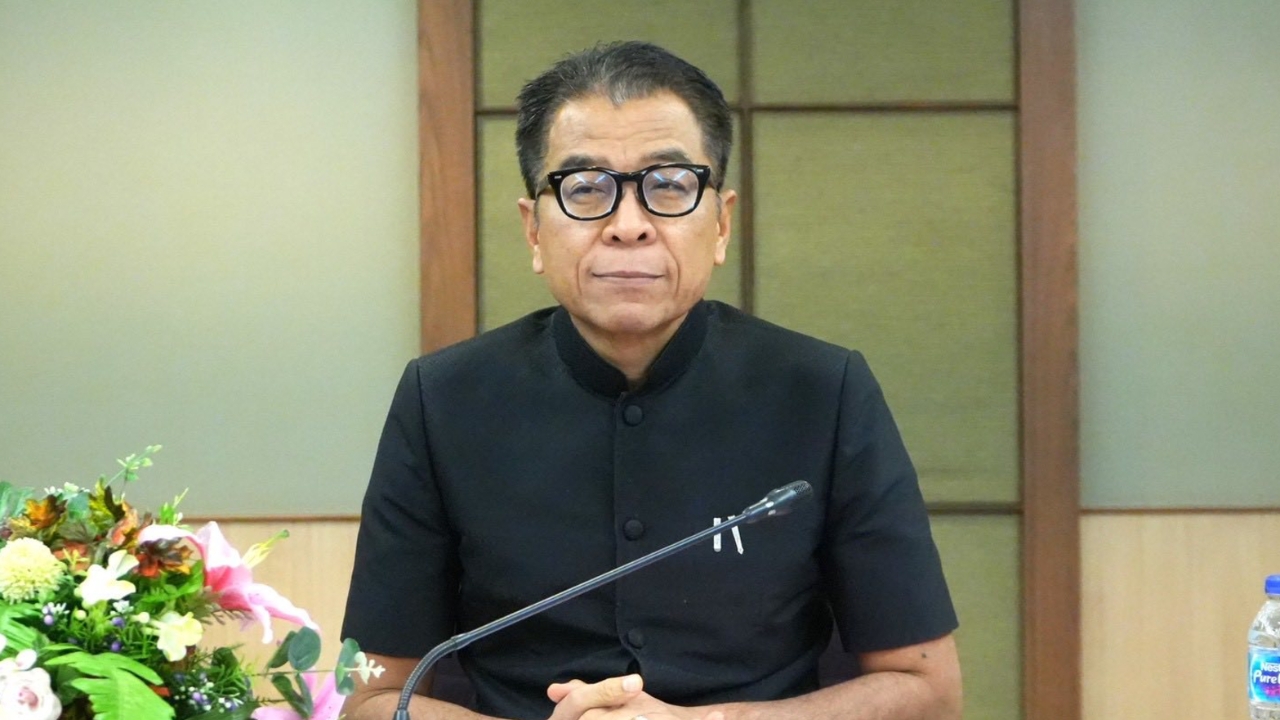
The Election Commission Secretary-General acknowledged that there is a possibility for a caretaker government to remain longer if the conflict situation drags on. The election date could be extended beyond 60 days, but this requires close assessment. He noted that a referendum could shorten the timeline, but it is highly unlikely to be conducted simultaneously with the general election.
On 12 December 2025 at the Election Commission Office, Mr. Sa-ngaeng Bunmee, Secretary-General of the Election Commission (EC), gave an interview regarding the possibility of extending the date of the general election for the House of Representatives beyond 60 days, which would result in a prolonged caretaker government. He said the conditions must be examined according to the law. Once the royal decree dissolving the House of Representatives is issued, the EC must announce the election date and constituencies within five days.
As for the actual situation, that must be monitored, but legally there are ways to resolve all issues. Concerns focus on the constitutional requirement for the election date to be the same nationwide, whereas there is currently fighting in the northeastern border provinces. Still, legally there are solutions available for such cases. Under Section 104 of the Constitution, if necessary, the EC can set a new election date within 30 days after the cause ends. This is the authority granted, but whether it will be used remains uncertain.
When asked whether the extension would apply nationwide or only in affected areas, Mr. Sa-ngaeng explained that Section 104 applies to the entire country. In contrast, in Sisaket Province, Section 102 was used because some units or areas required rescheduling of the voting day. However, Section 104 concerns setting a new election date for the whole country, as elections must occur on the same day nationwide.
. When asked if the election date would need to be extended further if the border fighting persists beyond 60 days, Mr. Sa-ngaeng said that the EC must consider timing carefully. Similar to Sisaket, elections must be conducted in an orderly, honest, and fair manner. Those involved in election management include election unit committees, candidates, campaigners, and eligible voters. We must consider their convenience and safety. The EC will assess and decide accordingly. Provincial EC directors report daily on the situation on the ground. This issue involves more than just the election day itself. After the royal decree is issued and the EC announces the election date, processes such as candidate registration and campaigning must also be considered.
Meaning, must the situation be fully settled before a nationwide election date can be announced? Mr. Sa-ngaeng said, we are closely monitoring the situation to ensure the election proceeds smoothly, conveniently, and safely for voters. We must consider everything and avoid focusing on just one area. It would be improper to hold elections where voters are inconvenienced.
When asked if areas without violence still need to wait, he said there are legal solutions available, though no one can predict when the situation will end. The legal options are the first recourse, which does not mean they will be used. Another option is early voter registration and allowing voters to cast ballots elsewhere, avoiding postponement. We must assess which approach benefits the public most. Regarding whether the 30-day election period after the situation ends can be extended, he said legally the election can proceed once the cause ends, but other options remain and the EC must evaluate the situation.
Regarding the possibility of holding elections at evacuation centers, the EC Secretary-General said meetings have been held with responsible agencies. For people with disabilities, special laws apply. For evacuation centers, no specific law exists; registration and transport to early voting locations are arranged. Those who do not vote early will vote according to the law. These are details to be managed. He emphasized that the EC will do its best by all means to ensure this election proceeds legally, smoothly, and with consideration for the convenience and safety of voters, candidates, and campaigners. When asked if extending the election timeframe would advantage or disadvantage political parties, Mr. Sa-ngaeng said no extension has been made yet; the current schedule follows the royal decree. Timing must be calculated to ensure fair competition.
Asked whether a constitutional amendment referendum can be held simultaneously with the general election, the EC Secretary-General said legally the House election must be held not less than 45 days but no more than 60 days after announcement. The referendum requires not less than 60 days but no more than 150 days. However, Section 11 of the referendum law allows shortening to less than 60 days to save costs, so this must be reviewed, but realistically it will likely take longer. At minimum, administrative tasks require printing and distributing referendum materials for voter understanding and organizing public forums in various forms. The EC must assess whether the minimum legal requirements for each referendum activity are met and whether this suffices for public understanding. If calculated minimally, 40-50 days are needed, but the referendum process has not yet started even though the House election timeline has commenced. The EC has yet to receive notification about the referendum schedule, so it is uncertain whether it can be held together with the election.
Toward the end, Mr. Sa-ngaeng added that the meeting on Monday, 15 December 2025, will address constituency division, and on Tuesday, 16 December 2025, will cover announcements of candidate registration and election dates. Thereafter, the law grants the EC authority to consider postponing the election date. We continuously monitor and gather information, as in the case of by-elections, listening to security forces, village communities, and local officials. At present, we cannot say when the announcement will be made, but any postponement must be lawful and not arbitrary. We assess the situation daily.
However, there are solutions for every issue, depending on the EC’s judgment, including whether to apply Section 104 or treat specific areas as special zones under the law. The EC must weigh whether these measures affect election fairness and honesty. Since Section 102 of the Election Act cannot be used here—because it delays voting days, disrupting nationwide simultaneous elections—the Commission must consider alternatives. When asked if such a case could lead to election invalidation, Mr. Sa-ngaeng did not respond.