

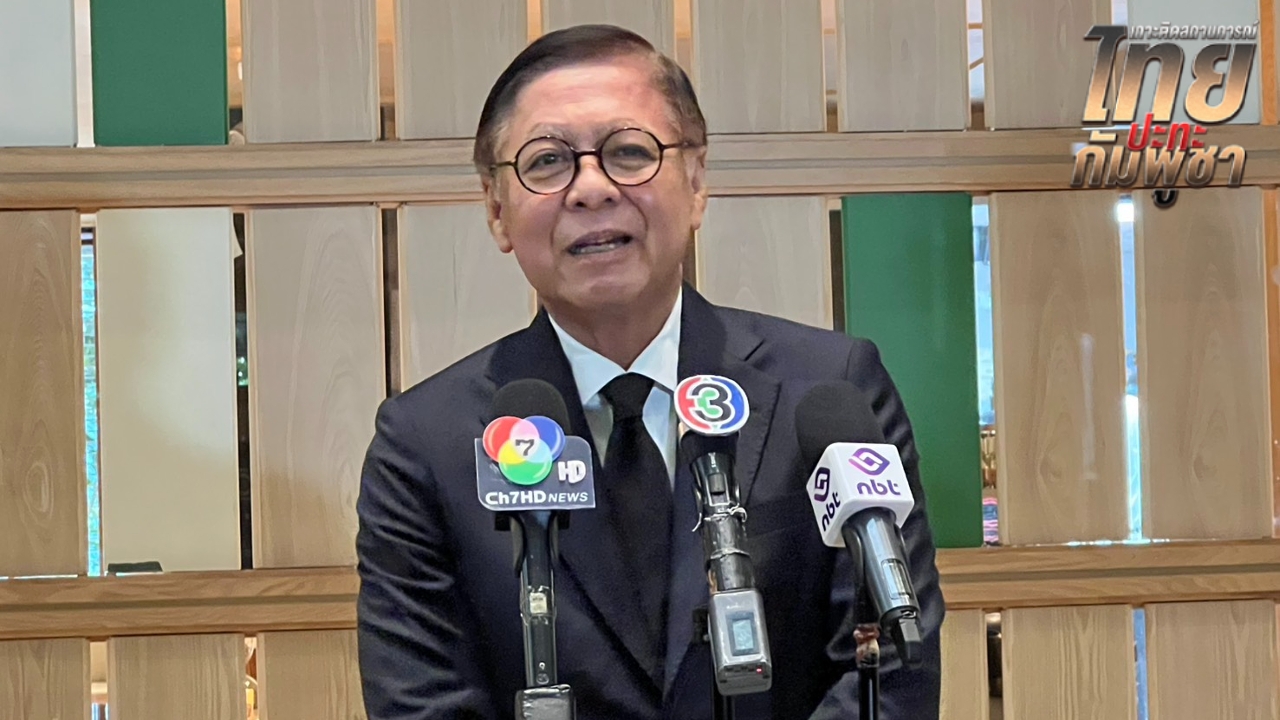
Sihasak affirmed that Thailand is not acting aggressively but is showing strength on the international stage because Cambodia has never demonstrated genuine sincerity.
On 14 Dec 2025 GMT+7, Mr. Sihasak Puangketkaew, Minister of Foreign Affairs, spoke about discussions on the Thai-Cambodian border situation with Vietnam's Minister of Foreign Affairs. He said Vietnam understands the situation and supports a peaceful resolution. However, he emphasized that it depends on Cambodia's readiness to engage. He noted that despite talks about a ceasefire yesterday, Cambodia continued firing BM-21 rockets across the border into Thailand today, causing civilian deaths and injuries. He questioned Cambodia's willingness to stop shooting and stressed that ceasefire talks must be sincere. He also called on the United States, which desires real ceasefire and peace, to fully understand Thailand's situation and feelings. He emphasized that the landmine incidents are real and not accidents, and that a ceasefire requires genuine commitment proven by actions.
Regarding recent comments by Malaysian Prime Minister Anwar Ibrahim to Prime Minister and Interior Minister Anutin Charnvirakul about a ceasefire, Sihasak said it was an explanation urging an end to provocations, not specifically about a ceasefire.
When asked if Cambodia positioning itself as a victim would disadvantage Thailand, Sihasak said Thailand desires serious talks to resolve issues. But if Cambodia is unready, the situation must continue. He reiterated that there are two paths: escalating conflict with more losses or peace through dialogue. He feels Cambodia has not yet chosen a path. Thailand cannot proceed alone. He said Cambodia’s readiness to talk is proven if it immediately stops shooting rather than talking ceasefire while continuing attacks repeatedly.
On assistance for Thai nationals in Cambodia, Sihasak said if they cannot exit via border checkpoints, especially at Poipet, they may have to return by commercial flights. There are about three daily flights to Siem Reap, which will be used to gradually bring Thai citizens wishing to return home by air.
Sihasak also addressed Malaysian Prime Minister Anwar's proposal to convene an ASEAN foreign ministers' meeting. He said Thailand is ready to attend, depending on whether the meeting can be arranged and if other countries are willing. He noted that such important issues cannot be thoroughly discussed online. Thailand has expressed readiness to engage on substantive issues and has proposed the earliest possible date as 16 Dec 2025 GMT+7. However, the date has yet to be finalized. Thailand may not attend a meeting in Kuala Lumpur but has suggested Jakarta, Indonesia—the ASEAN headquarters—as an alternative venue.
Regarding the military’s request for the Ministry of Foreign Affairs to explain to the international community after discovering Cambodian soldiers’ mine-laying coordinate notebooks, Sihasak said the ministry has consistently addressed this issue in all forums. For example, at the Ottawa Convention meeting in Geneva, he cited cases where Thai soldiers stepped on mines seven times and presented video evidence at every opportunity.
On Cambodia resuming attacks on civilian areas and whether Thailand will escalate its response beyond condemnation, Sihasak said this is a military matter. The military knows how to act, and the diplomatic side supports military operations. Any escalation will be managed by the military.
Amid concerns that Thailand’s firm stance may lead the international community to view it as aggressive, Sihasak said he does not believe Thailand is aggressive. Thailand is defending its interests fully without unnecessary harshness. He questioned whether expressing firm positions internationally after Thai soldiers lost limbs constitutes aggression—and concluded that it does not.