

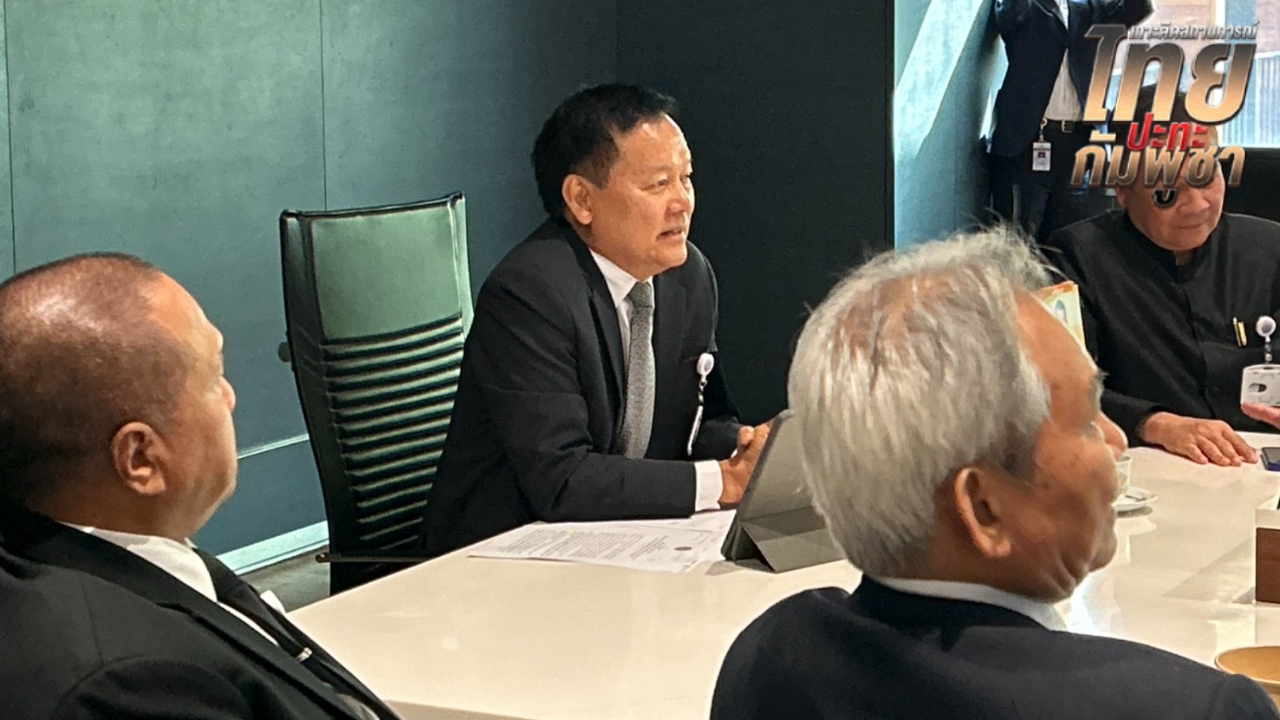
The parliamentary committee studied the advantages and disadvantages of cancelling MoU 43 and 44, unanimously voting to recommend tearing up MoU 44 after Cambodia's attempts to seize all of Koh Kut. The committee points to applying international law to abolish the MoU, declaring it no longer a temporary agreement.
On 16 December 2025 GMT+7, at the parliament, the special parliamentary committee met to study the pros and cons of cancelling MoU 43 and MoU 44 to address the Thailand-Cambodia border issue. Senator Noppadol Inna, as committee chairman, presided over the meeting. After 12 sessions, gathering information from relevant parties and field studies in Trat, Buriram, Surin, and Sa Kaeo provinces, the committee reached a unanimous decision to cancel MoU 44 for seven reasons.
1. Cambodia's 1972 continental shelf boundary clearly violates Thailand's sovereignty and sovereign rights; thus, that boundary line should not be used as a negotiation framework.
2. Cambodia has shown intent not to comply with MoU 44. This is not the first time; Cambodia previously informed Thailand in 1995 that its continental shelf boundary was non-negotiable.
3. There has been no progress in maritime boundary negotiations over a prolonged period.
4. Cambodia intends to claim sovereignty over all or half of Thailand's Koh Kut island, showing no intention to resolve maritime boundary issues alongside benefit-sharing, which is a core principle of MoU 44.
5. The negotiation framework cannot achieve results. Although it theoretically links maritime boundary delimitation north of latitude 11 degrees north with benefit-sharing south of that latitude, in practice, this linkage has been unsuccessful and constitutes an obstacle to resolving the dispute.
6. MoU 44 has ceased to be a temporary agreement because maritime boundary negotiations have stalled, making the agreement obsolete and a deadlock instead.
7. Political and social circumstances, including Cambodia’s insincerity, negatively impact negotiation atmospheres. Cambodia’s claim to the continental shelf seeks to create an exaggerated overlapping area and disrespects Thailand’s maritime sovereignty around Koh Kut. Overall, Cambodia’s stance does not foster negotiation goodwill. Therefore, cancelling MoU 44 to seek a new temporary agreement format, aiming for genuine progress, is seen as a way to break the impasse and effectively resolve the issue.
Noppadol said the committee recommends: 1. The principles for maritime boundary delimitation remain unchanged if MoU 44 is cancelled; state agencies should continue maritime boundary determinations and may issue temporary measures to preserve Thailand’s maritime sovereignty. 2. Pressure Cambodia to negotiate maritime boundaries promptly and express intent to cancel MoU 44. 3. Use naval measures to apply pressure, such as closing bays and controlling ships and goods entering Cambodian ports. 4. Consider declaring additional straight baselines along Thailand’s coastline, especially in the eastern and western Gulf of Thailand, where there are islands and rocks suitable as baseline points, supporting maritime delimitation with Cambodia without affecting agreements with other neighbors. 5. Study maritime boundary delimitation methods based on International Court of Justice rulings to prepare for negotiations.
Noppadol added that 6. The government must consider cancelling MoU 44 in accordance with international law to terminate its validity and restart negotiations, since no progress has occurred in 24 years. Returning to international law standards should gain acceptance from many countries. If Cambodia does not comply with international norms, it is necessary to report this to the United Nations or relevant parties. Provided the parliament is not dissolved first, the committee’s resolution can be submitted to the Senate, then forwarded to the Cabinet, which will decide on the next steps. Currently, the committee’s work is complete. Even if the government does not hold a referendum to cancel MoU 43 and 44, it is believed the government is aware of the committee’s findings. If the government wants the full report, the committee is willing to provide it informally, as the Senate has yet to pass a formal resolution.