

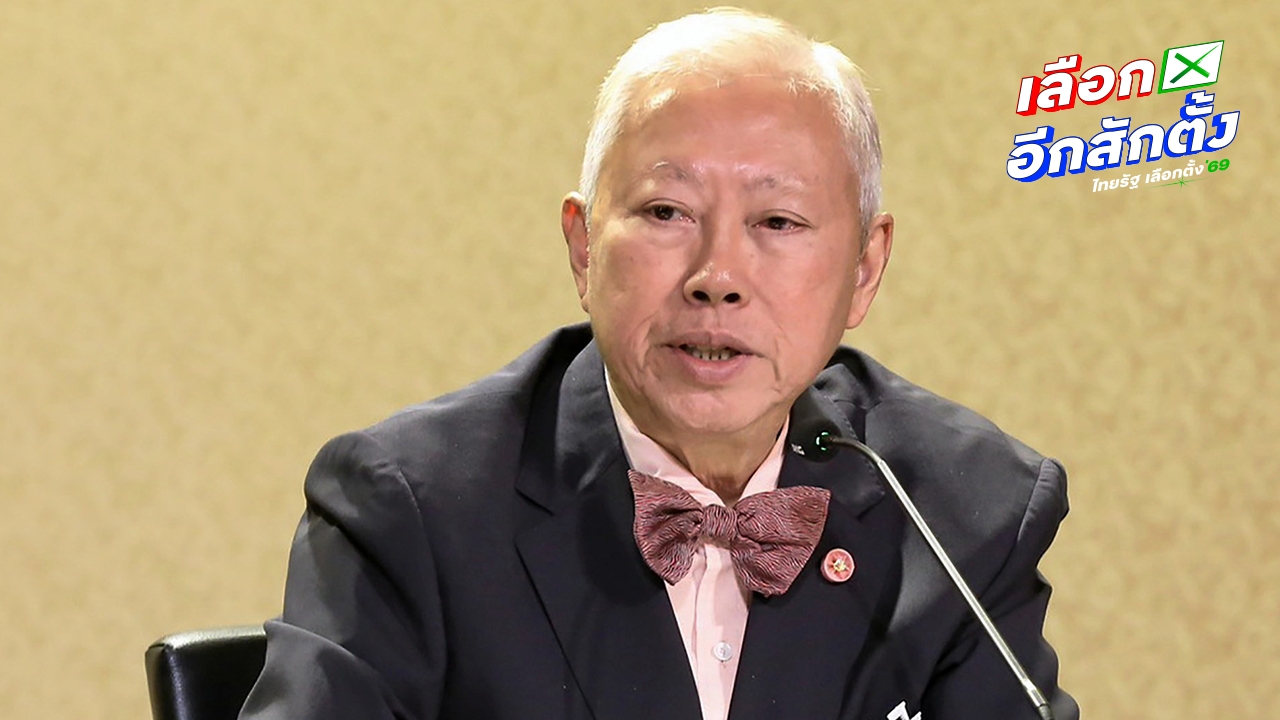
Bawornsak explains sending the referendum question on constitutional amendments alongside Parliament to avoid rejection and cancels the referendum on annulling the MOU. MOU 43-44 was canceled due to its binding effect on the new Cabinet.
On 17 Dec 2025, Mr. Bawornsak Uwanano, Deputy Prime Minister and the government's legal representative, spoke regarding the Cabinet's approval of the first referendum question on constitutional amendments proposed by Parliament under Section 9(4): “Do you agree to have a new constitution drafted?” submitted to the Election Commission (EC) on 16 Dec. He said the Cabinet exercised its power under the Referendum Act and its 2025 amendment, specifically Section 9 paragraph two (4) and Section 11 final paragraph, allowing the referendum date to be set less than 60 days in advance and held simultaneously with the general election on 8 Feb 2026. This approach saves over 4 billion baht, spares citizens from voting twice, and avoids the EC holding two separate elections.
Regarding sending two referendum questions — the Cabinet's using legal channels under Referendum Act Section 9(2) and Section 11 final paragraph, asking “Do you approve that a new constitution should be drafted?” alongside Parliament's question — this is because Parliament's question risks not complying with the Constitutional Court's ruling and Referendum Act Section 16, which states that constitutional amendments or drafting must use the term “approve,” not “agree or not,” as proposed by Parliament.
If only Parliament's question were submitted and the EC rejected it, it would cause problems and deprive citizens of the opportunity to hold a referendum on constitutional amendments alongside the election. Therefore, the Cabinet submitted its question alongside Parliament's to demonstrate sincerity and commitment to constitutional reform as agreed in the Memorandum of Agreement with the People's Party and consistent with the policy statement to Parliament.
Explanation on not asking about the MOU per the Council of State's opinion.
When asked about Mr. Somchai Srisuthiyakorn, former EC member, who raised concerns that holding the referendum simultaneously with the election is illegal due to the less-than-60-day period, potentially invalidating the process and requiring the Cabinet and EC to repay over 3 billion baht, Mr. Bawornsak responded by asking if Mr. Somchai had read the Referendum Act Section 11 final paragraph amended in 2025.
He said he had consulted with the EC since their meeting on 15 Dec and found no issues. Regarding the referendum to annul MOU 2543 and 2544, he shares the opinion of the special committee studying the pros and cons of annulling those MOUs to resolve the Thai-Cambodian border dispute, chaired by Senator Noppadon Inna. However, the Council of State advised that it conflicts with Constitution Section 169(1) because a caretaker government cannot approve matters binding on the new Cabinet. Therefore, they decided not to proceed to avoid risking the referendum's validity per the Council of State's opinion. He affirmed the government has not broken its promise and has followed its declared policies but was constrained by constitutional prohibitions under Section 169(1) as advised by the Council of State.