

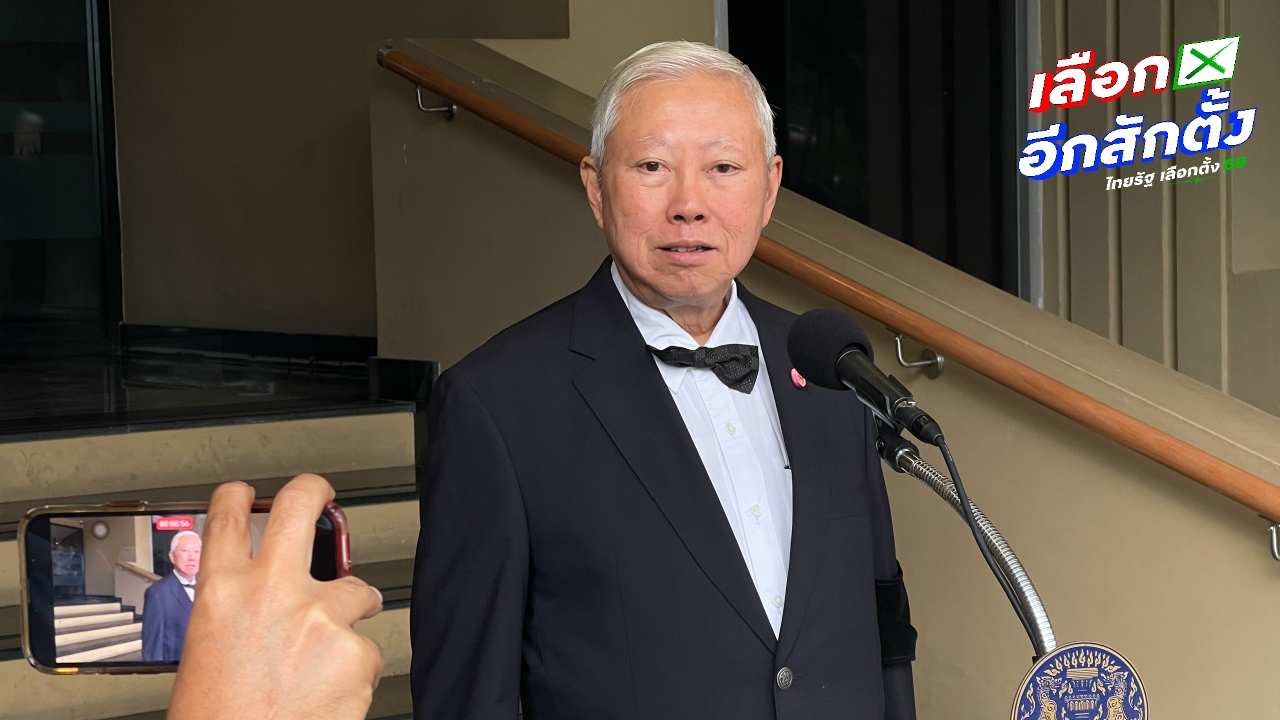
Bowornsak revealed that the Cabinet will hold a special meeting to finalize the constitutional referendum question, likely adopting the Cabinet's question as it does not conflict with the Constitutional Court ruling and the law. He explained the reason for submitting the parliamentary question alongside, saying that if the Bhumjaithai Party's question had been chosen initially, there would have been no problem instead.
18 Dec 2025 GMT+7 Mr. Bowornsak Uwanno, Deputy Prime Minister, commented on the special Cabinet meeting agenda, which includes approving the choice of the referendum question. The referendum question selection, between the parliamentary question and the Cabinet's question, after the Election Commission (EC) returned the matter requiring only one question to be chosen. He explained that on 16 December, the Cabinet submitted two questions to the EC because the Cabinet meeting involved debate. Since the Cabinet had previously presented its policy to parliament, it needed to maintain its commitment and select a question that does not contradict the Constitutional Court ruling or referendum law.
However, the parliamentary question did not align with the Constitutional Court ruling or the Referendum Act. Therefore, when the EC required the Cabinet to select only one question, it had to choose the Cabinet's question. This is not unusual. The parliamentary question was initially submitted to show respect for parliament’s resolution; it could not be omitted. But if the parliamentary question alone were submitted and the EC rejected it, that would cause major issues. Hence, the Cabinet submitted both questions for consideration.
Regarding academics' criticism that the referendum cannot be held simultaneously with the election because the time frame is less than 60 days, Mr. Bowornsak said those critics are not legal experts and likely overlooked the latter part of Section 11, Paragraph 3 of the Referendum Act. If there are budgetary or other necessities, the Cabinet can set the referendum date earlier. Holding separate elections and referendums would increase costs by over 4 billion baht and require citizens to vote twice, risking disqualification if they miss one. The EC would also need to allocate personnel twice. Therefore, this is not a cause for disruption.
Mr. Bowornsak also stated, that if the Cabinet approves its referendum question, it will submit it to the EC, which must issue a referendum announcement within 15 days, by 2 Jan 2026, to allow the referendum to be held concurrently with the election on 8 Feb 2026.

When asked about previous objections from the Council of State claiming the referendum question must come from parliament, Mr. Bowornsak said the Council of State never disputed that. Both he and the Council Secretary agreed that two questions should be submitted because if only the Cabinet’s question were sent, it would appear the Cabinet was disregarding parliament. The Cabinet knew that submitting the parliamentary question would conflict with the Constitutional Court ruling and referendum law.
Asked to clarify why the parliamentary question contradicts the court ruling and referendum law, Mr. Bowornsak explained that the parliamentary question, proposed by Mr. Chusak Sirinil, a former party-list MP of the Pheu Thai Party, was “Do you agree with making a new constitution?” The Constitutional Court ruling used the phrasing “Do you approve that it is appropriate to have a new constitution?” Meanwhile, the Referendum Act Sections 11 and 16 use the wording “approve or disapprove.”
“But parliament deserves sympathy; it’s unfair to blame them. The debate about constitutional amendment went late into the night, and when the referendum question motion was raised, Mr. Chusak’s question was chosen. If the Bhumjaithai Party’s question, proposed by Mr. Anutin Charnvirakul, had been chosen, there would have been no problem and the Cabinet would not have needed to submit a competing question. The question the Prime Minister signed uses the phrase ‘approve having a new constitution or not.’”
Additionally, the parliamentary question has issues. Section 11, Paragraph 1 of the Referendum Act states that the Speaker of each house must submit their respective questions, implying separate meetings of the House of Representatives and the Senate. The parliamentary question submitted was not from each house separately. Previously, Mr. Pradorn Prissanantakul, Minister to the Prime Minister's Office, stated in parliament that the parliamentary question would have problems because it must come from each house. Given multiple issues with both the question and the resolution, the question was still submitted to honor parliament, and the Secretariat of the Cabinet agreed with this approach.
Mr. Bowornsak added that today's Cabinet meeting would be very brief and would select the Cabinet's question. Whether the Cabinet approves as he described remains unknown, as the meeting has yet to take place.