

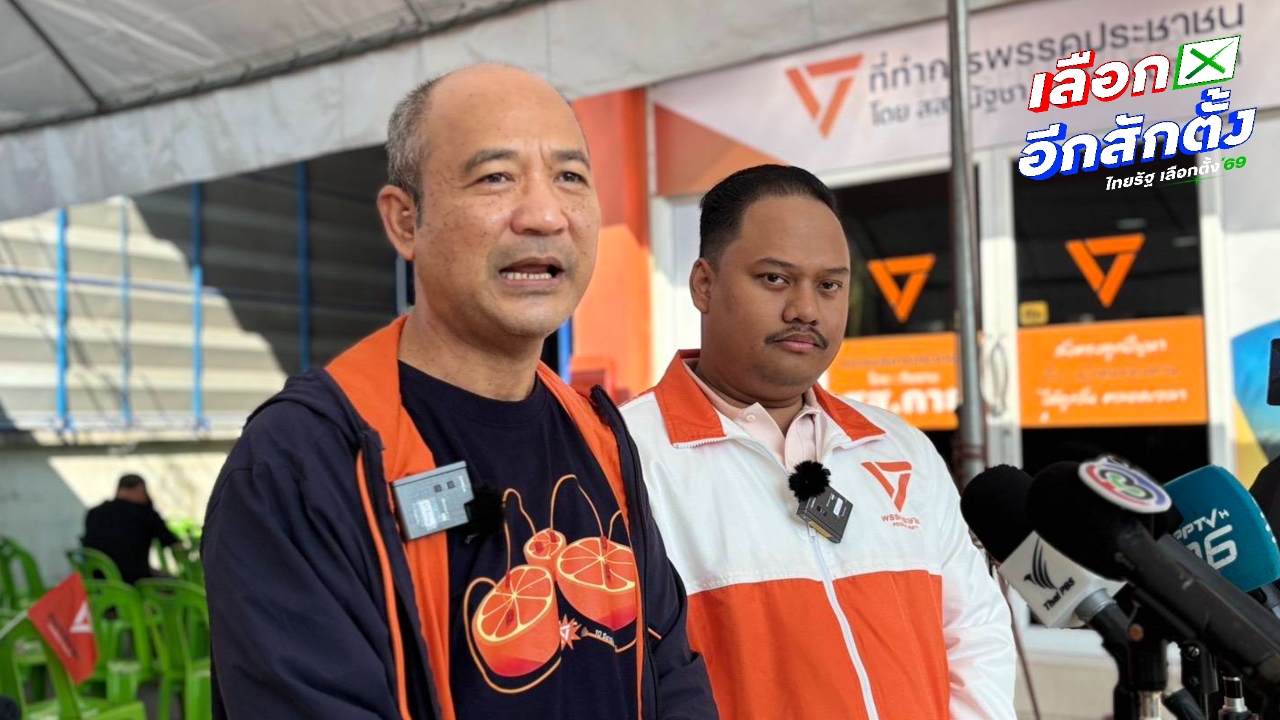
The People's Party Secretary is confident the party will win all 33 electoral districts in Bangkok despite a drop in popularity polls due to support for Anutin and border issues. He believes the remaining time allows for clarification and notes that 'Teng' has not completely closed the door on an alliance.
20 Dec 2025 GMT+7 Mr. Sarayut Jailak, Secretary-General of the People's Party, spoke about his confidence in the party topping the vote in Bangkok. He said he is confident the party will retain first place in Bangkok based on various data. The People's Party remains the most popular in Bangkok. The candidate selection process, including both new and incumbent candidates, has been diligent and well received by the public, leading to confidence in winning all 33 districts this round.
Regarding the poll showing decreased popularity due to support for Mr. Anutin Charnvirakul as prime ministerial candidate and the absence of Mr. Pita Limjaroenrat to attract votes, Mr. Sarayut responded that while some worry this drop could cause defeat, most of the lost votes come from undecided voters. This means that with about 50 days left, the party can campaign and clarify issues to the public, and he believes voters will regain trust and choose the People's Party.
On the ongoing clashes at the Thai-Cambodian border and past criticism of the party's stance on the military which opponents are using against them in this election, Mr. Sarayut acknowledged the attacks but said they have not yet fully explained their position to the public. With about 50 days remaining, he sees an opportunity as the public will be more attentive and receptive to information, allowing the party to clarify. He remains confident in the party's support despite the poll drop as many votes remain undecided.
"This means those voters haven't shifted elsewhere; they are still waiting to see how well we can explain the situation."
When asked if the current election atmosphere differs from the past, lacking the previous anti-Prayut sentiment but featuring a nationalist wave due to border issues that might disadvantage the party, Mr. Sarayut said each election's dynamics differ. Although this time there is no anti-Prayut wave, dissatisfaction with the government's problem-solving remains. The People's Party won the last election but could not form a government, and the current government has been unstable with three prime ministers in over two years. Border conflicts have caused national problems alongside economic, social, and scam issues, leading to public despair. He believes that if the party's policies meet public needs and the management team is trusted, there is still opportunity. This election is the first where people truly participate in choosing.
Mr. Sarayut added that previous elections still had senators, and for the past 15 years, elections did not lead to forming governments reflecting the people's votes. The last time was in 2011 when Ms. Yingluck Shinawatra was elected prime minister. Since then, the last two elections failed to produce a government. This election offers voters a real chance to influence the future. He is confident the party's team has worked continuously and that its policies address public concerns.

Asked about the party's stance on Article 112, Mr. Sarayut said he could not comment after the Constitutional Court's ruling. "I think it's better if we do not speak about it, and avoid discussing this issue during the election."
Regarding old candidates not continuing with the party, Mr. Sarayut said candidate changes happen every election. For example, in Bang Khun Thian district, former Bangkok MP Mr. Nattacha Boonchaiinsawat is not running this time. He emphasized that the party has mass support, with members participating and taking ownership. "Therefore, in each decision, some districts may have many candidates but only one is selected. Those who disagree may show dissatisfaction, but most members still trust the party's decisions."
Mr. Sarayut also acknowledged that the party is more important than individuals, similar to the Future Forward Party's approach. Their party is a genuine political institution jointly owned by all, so the party's popularity tends to surpass individual popularity. Election votes per district in 2023 reflected this, and he is confident the party's strength exceeds that of any individual.
When asked about the absence of a strong personal popularity wave for Mr. Natthapong Ruangpanyawut, People's Party leader, compared to the stronger aura of Mr. Pita, Mr. Sarayut said Mr. Pita’s popularity surged about one month before the election. Mr. Natthapong still has seven weeks to build popularity, and he believes personal popularity before elections stems from public hope in the party and its policies. People want this party to govern, which boosts individual popularity. At the right time, Mr. Natthapong will shine at least as brightly as Mr. Pita.
Regarding Mr. Natthapong’s statement that if Bhumjaithai leads the government formation, the People's Party would be in opposition, possibly closing future alliance doors, Mr. Sarayut responded no. He said Mr. Natthapong was considering possibilities and did not mean to completely close the door. It indicates competition between Bhumjaithai and the People's Party to lead government formation. Thus, if voters want the People's Party to govern, they must prevent the second and third parties from forming coalitions. Mr. Sarayut believes Mr. Natthapong’s remarks point to this, because if the People's Party does not win decisively, the second and third parties may again form alliances as before.