

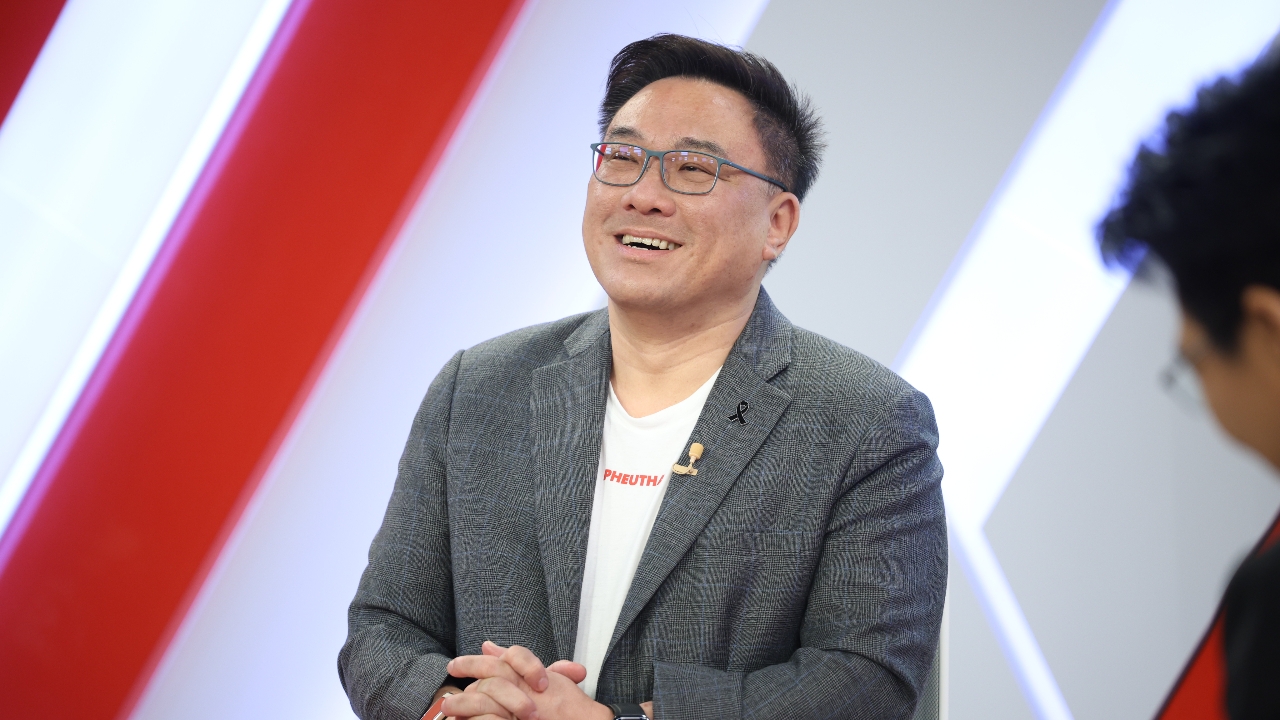
Chulapan said the plan to distribute 10,000 baht digital cash is recorded, and the remaining funds will be implemented on a certain day. He explained the 30% agricultural product insurance policy means farmers must make a profit, and clarified that the budget used for the Election Commission depends on management.
On 22 Dec 2025 GMT+7, Mr. Chulapan Amornwiwat, leader of the Pheu Thai Party and prime ministerial candidate, spoke on the program "Open Up with Pakpoom" on Thairath TV about the 30% agricultural product insurance policy. He said that following visits to Ayutthaya and Suphan Buri provinces yesterday, the focus was on agricultural policies. The Pheu Thai Party has consistently had strong agricultural policies. First, price targets include jasmine rice at 15,000 baht, white rice at 10,000 baht, rubber at 70 baht/kg, corn at 7.25 baht/kg, and cassava at 3 baht/kg. They will use a mixed approach including withdrawing products from the market, purchasing, subsidies, and diplomatic negotiations since India has released large rice stocks. Pheu Thai's key point is that farmers must never suffer losses again. Historically, production costs have risen steadily, with fertilizer and pesticides increasing faster than agricultural product prices, causing farmers to lose money and requiring government aid. Pheu Thai's approach is different from previous ones like rice pledging and price insurance; instead, they propose a new policy called agricultural profit insurance, managing production costs, product withdrawal, and direct price subsidies if prices fall short. For example, if farmers have 8,000 baht in costs, they must earn a 30% profit or 2,400 baht, totaling 12,400 baht per ton; if not reached, the state will subsidize as with price insurance.
However, today's target is 10,000 baht, but next year it is uncertain if that will hold. If fertilizer prices rise by 1,000 baht per bag, making the price 10,000 baht per ton, it may no longer be sustainable. Therefore, adjustments will be made according to profit situations. Regardless of costs or production conditions, they insist farmers must not suffer losses and should earn at least a 30% profit to support their families and repay debts.
When asked where the government would find funds, Mr. Chulapan said it is a matter of budget mechanisms, as funds already assist under Section 28, the national budget, and emergency budgets. These must be clarified with the Election Commission (EC). There is no issue; the method will provide a solution and assurance to farmers that farming will be stable and help them escape poverty.
The initial focus will be on five main crops: rice, corn, rubber, cassava, and palm oil.
When asked if they must clarify financial details to the EC beforehand, Mr. Chulapan said there is no problem because they already handle budget matters and are ready to explain. Asked about the total budget, he said it depends on management. If no action is taken and prices fail this year, the budget burden might be high. Historically, during Prime Minister Yingluck Shinawatra's government, the budget used was in the hundreds of billions; under Prime Minister Prayut Chan-o-cha, it reached 200 billion baht annually for agricultural subsidies. Under Ms. Paethongtarn Shinawatra's government, less was used due to better management, reducing the burden. Now, agriculture is a vulnerable sector needing help. Their work in using the budget to support agriculture to stand strong is a key challenge.
Asked if Pheu Thai, if in government, would find ways to supply the 30% profit to farmers, Mr. Chulapan said certainly, but it must be combined with other mechanisms such as withdrawing products from the system, finding markets, processing, and adding value. Doing multiple things together will keep the budget burden manageable.
Regarding the 10,000 baht digital cash, Pheu Thai has already progressed halfway. This can be viewed in two ways because in their two years in government, they have already provided funds to 20 million of the most vulnerable citizens. For those remaining who registered, if in government, they will assess the urgency of the situation and proceed to complete the payments on a suitable day, considering budget burden and readiness.
"I cannot say we will do it on day one. We have to find ways and mechanisms to assist them fully," Mr. Chulapan said.