

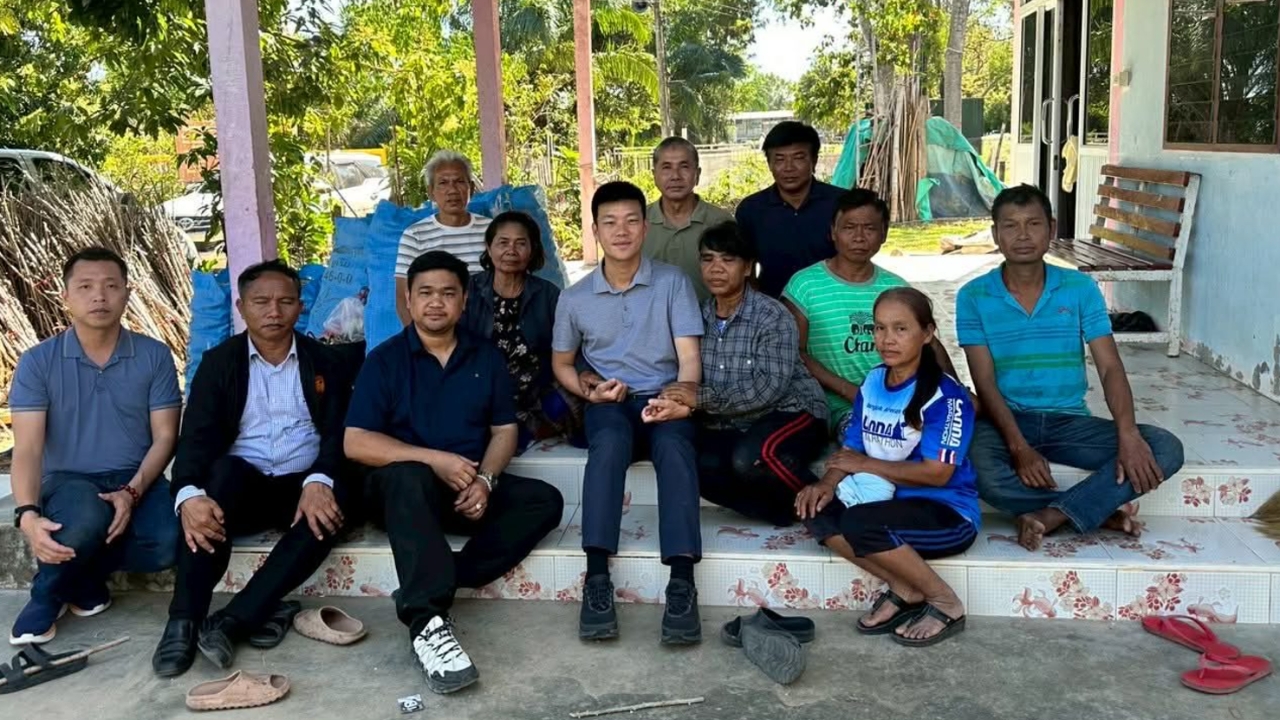
Natthaphong Ruangpanyawut visited and spoke with Private Therdsak's family to offer encouragement. He also toured evacuation centers in Sisaket Province and proposed four points: debt relief, equal compensation for all households, and requested clarity on the payment of allowances to Community Defense Volunteers and local disbursement regulations.
On 22 Dec 2025 GMT+7, Mr. Natthaphong Ruangpanyawut, leader of the People's Party and its top prime ministerial candidate, posted on Facebook images from his visit to the border area. He stated he was visiting the family of Private Therdsak Srilachai, who died at the Prasat Khna battlefield, and the evacuees in three districts of Sisaket Province.
The aunt who has cared for Private Therdsak since he was young, as his parents have passed away, said, "I still miss him and wish he were here." She shared that the military has provided some care and compensation and that they are waiting for Therdsak's older brother to complete his equivalency education at the Non-Formal and Informal Education program up to grade 9. He will then be enlisted to serve and take care of the family in Therdsak's place.
When asked about other government compensations, such as the 10 million baht given to soldiers who died, the family said they are not demanding it because nothing can replace the lost life. They understand the relevant agencies are likely processing it, but they have not yet received that payment.
Natthaphong said he spoke with Private Therdsak's family for 20 minutes and offered his support to the aunt and family. He urged them to think of the grandson's face and stay strong because they are still under stress and, despite taking sleeping pills prescribed by doctors, cannot sleep well due to grief and longing.
In the morning, he visited evacuation centers in three districts of Sisaket Province. Most evacuees have gradually started returning home. Beyond the strong desire to return home felt by everyone at the border, there were several local proposals as follows.
1) Since every family lacks income and nearly everyone has debts, especially village fund debts, which usually require repayments at year-end, and given the multiple conflict outbreaks this year, all families in the affected areas have lost income for months. Durian, rubber, and other crops were damaged because they could not be cared for or harvested. They want a debt moratorium policy, especially for village fund debts, which currently depend on each fund's policy. They want uniform debt relief across all village funds and for the Bank for Agriculture and Agricultural Cooperatives debts as well.
2) The Community Defense Volunteer allowance of 120 baht per day was only recently paid for the previous clashes around July. They want clarity on the payment of allowances for the current round of clashes.
3) Household relief funds are currently paid only to homes that evacuated to shelters. However, local leaders report that about 10% of households chose to remain at home due to necessity and did not evacuate. These homes do not receive relief funds despite all households being affected and unable to work like others. They urge the government to reconsider the criteria to provide universal relief to all households in the evacuation areas.
4) Regarding local disbursement regulations, currently, the destination municipalities or subdistrict administrative organizations that manage the evacuation centers must advance funds first. Regulations allow reimbursement for up to five days, causing these destination local governments to bear expenses for evacuees from other areas. Feedback suggests adjusting regulations to allow budget transfers from the originating municipalities or subdistricts in evacuation areas to support the destination areas, improving management efficiency.
On the urgent but important matter, today there is an ASEAN Ministerial Meeting focusing on a meeting between Thai and Cambodian foreign ministers. They concluded to discuss a ceasefire through the GBC mechanism on 24 December. He hopes for good news soon that border residents want to hear—that is, the chance to "return home."