

The Election Commission is tightening controls on populist campaign policies and preparing to establish a committee to review the funds used and analyze their impacts. Regarding whether parties that win the election will implement their promises, the public must closely follow and assess this.
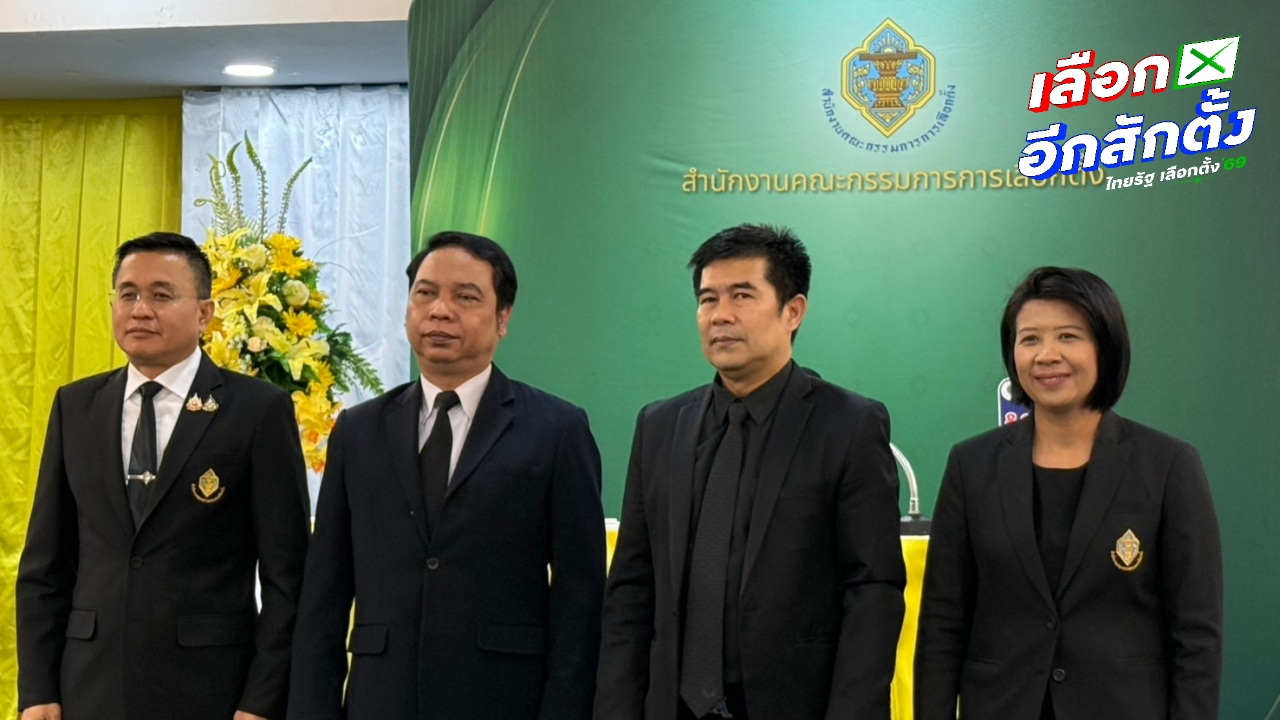
On 23 Dec 2025 at the Election Commission Office, Mr. Kriangkrai Pandokmai, Deputy Secretary-General of the EC, spoke about the formulation of campaign policies or populist policies by political parties for the 2026 general election. He stated that parties must consider input from their branches and provincial representatives. Campaign policies requiring funding must be reported to the EC, including details of the budget amount, funding sources, cost-effectiveness, benefits, impacts, and risks. All this information must be fully provided and submitted to the EC now or at the latest 20 days before the election, around 10 Jan 2026. So far, no party has submitted their policies to the EC.
Once the EC receives parties' policies, a committee will be formed to review them. This committee comprises representatives from eight agencies with expertise in finance and economics: 1. Ministry of Finance, 2. Ministry of Commerce, 3. Budget Bureau, 4. Office of the National Economic and Social Development Council, 5. Bank of Thailand, 6. National Anti-Corruption Commission (NACC), 7. Thailand Development Research Institute (TDRI), and 8. Office of the Auditor General. After reviewing, the committee will present findings to the EC. If any party's submission is incomplete, they will be asked to revise it. In the 2023 election, 743 campaign policies were submitted, and the EC requested corrections from 10 parties, all of whom cooperated.
Mr. Kriangkrai added that this time the oversight will be stricter than before. Parties have already been informed about the procedures and given forms to complete. The EC emphasizes policy review seriously, hence the formation of this committee. Tomorrow, all eight agencies will send their representatives' names to the EC. Once appointed, the committee will convene immediately to establish their working framework.
However, it is important to distinguish between the EC’s legal obligation to review policies according to the law and whether parties actually implement those policies after winning the election. It is the parties' responsibility to fulfill their campaign promises once in government. Whether they do so or not is for the public to monitor and judge, which reflects each party’s awareness and accountability.
Sometimes a party may not be part of the government, which is a different matter. Other times, a party may be in government but, after discussions with coalition partners, certain policies may be dropped. The public must observe whether a party pushes its promised policies forward or tries to negotiate with coalition partners to adopt them. This information helps voters decide whether to elect a particular Member of Parliament.