

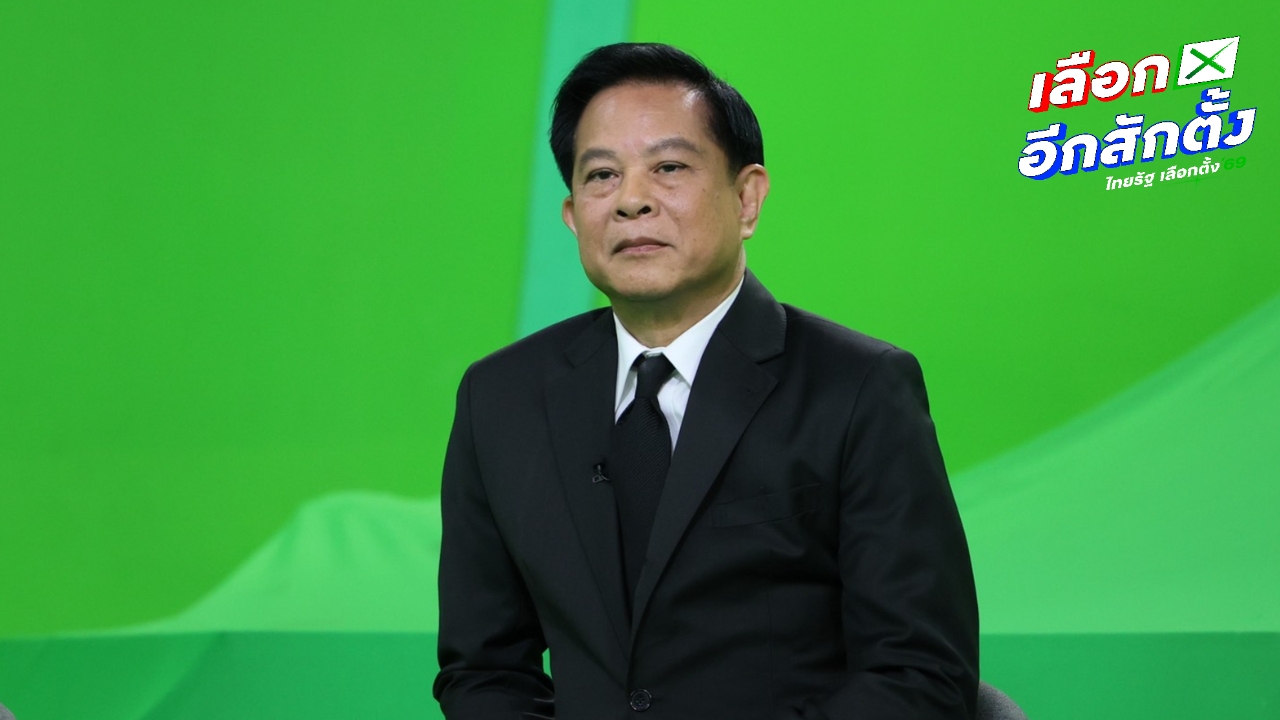
Peerapan Saleerutwipak, Prime Minister candidate from the Ruam Thai Sang Chart Party, showcased his vision in the debate, promoting firm policies to resolve crises and transform the country.
At 17:30 on 23 Dec 2025 GMT+7, Thairath TV began the first debate ahead of the 2026 election, hosted by Kai Pongsakem Satyaprasert. The eight Prime Minister candidates from political parties included Natthapong Ruangpanyawut, leader of the People’s Party; Yotsanan Wongsawat, candidate from the Pheu Thai Party; Abhisit Vejjajiva, leader of the Democrat Party; Teerachai Phuwanatnaranuban, deputy leader and candidate from the Palang Pracharath Party; Peerapan Saleerutwipak, leader of Ruam Thai Sang Chart Party; Suchatvee Suwansawat, leader of the Thai Khao Mai Party; Khunying Sudarat Keyuraphan, leader of the Thai Sang Thai Party; and General Rangsi Kitiyanantap, leader of the Economic Party. Meanwhile, the Kla Tham and Bhumjaithai parties did not have Prime Minister candidates joining the debate.
Peerapan Saleerutwipak, leader of the Ruam Thai Sang Chart Party and Prime Minister candidate, stated that their main policy for the upcoming election is firm: resolving crises and transforming the country. He explained that although the country’s situation changes with circumstances, the nation’s critical crises include national security issues at the Thai-Cambodian border, disputes over offshore energy resources, which remain unresolved.
Other key issues are energy, a vital national resource affecting production costs; the cost of living; social matters; education; agriculture; and the livelihoods of the people, all requiring firm and swift solutions.
He noted that such crises, like the Thai-Cambodian border disputes, are longstanding but have not been decisively addressed. Recently, problems with land reclamation and energy resources have persisted. He has spoken about these issues for some time, attributing the ongoing problems to a lack of seriousness and decisiveness in addressing them.
His focus includes restoring citizens’ lives, tackling the cost of living, social care such as for bedridden patients, the elderly, and people with disabilities. He emphasized transforming the nation’s future through education reform, changing the system so that anyone who wants to study can do so, prioritizing graduation rates over enrollment numbers.
Another point is restructuring the national budget to better meet the needs of the people, rather than having ministries merely dividing the country’s budget among themselves.
He also stressed providing farmers opportunities to reduce production costs, enabling them to improve their livelihoods by introducing direct sales systems for agricultural products.