

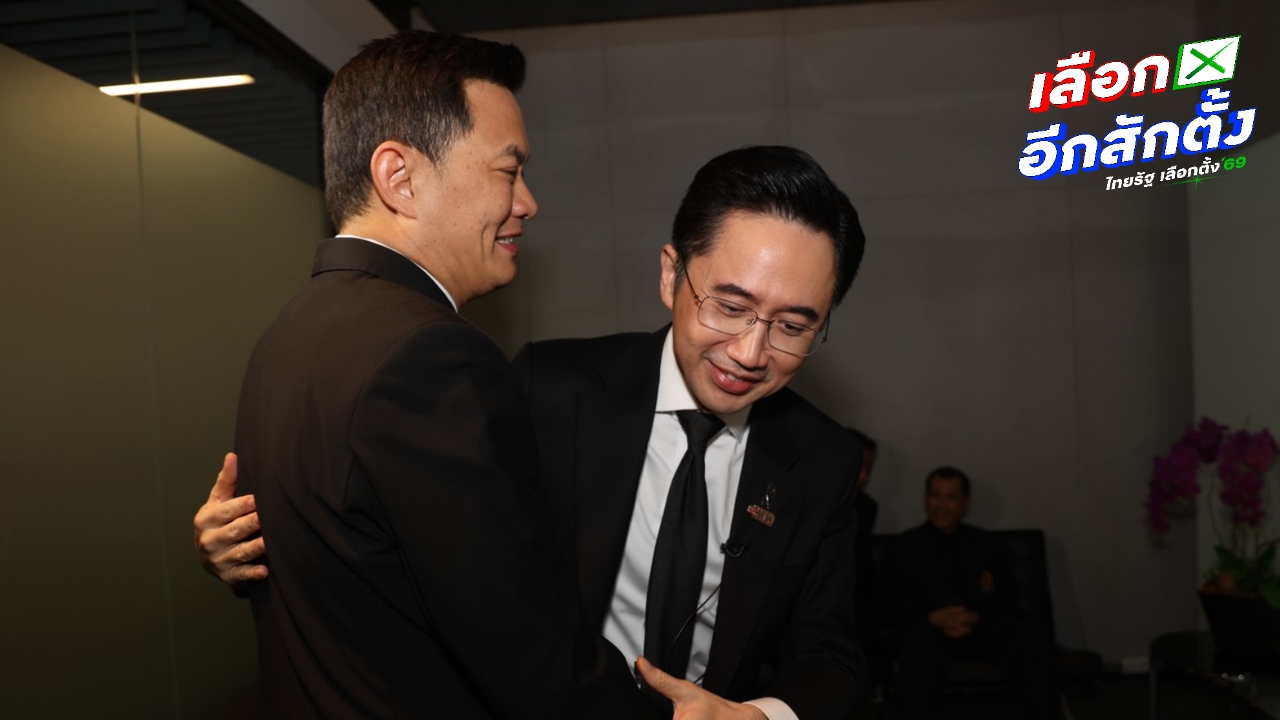
In the debate over legalizing casinos, seven parties strongly opposed the idea. Meanwhile, Yotsanan sought to clarify Pheu Thai’s position, stating their past goal was to attract investment funds but emphasized the need to listen to the public. In response, it was argued that Thailand can attract investment without casinos.
At 19:26 on 23 Dec 2025 GMT+7, Thairath's debate stage posed the question: If you were prime minister, would your party push to legalize casinos? The moderator, Kai Pongsakem Satyaprasert, asked the candidates to raise their hands if their party supported legalizing casinos. No one raised their hand, not even one person. Then, Yotsanan Wongsawat, Pheu Thai’s prime ministerial candidate, said, “This question is quite sensitive for Pheu Thai, so I want to clarify that the topic of casinos within entertainment complexes is one area where we have tried to attract foreign investment. But it is not necessary that every project has to be like this. Everything must listen to the public’s voice and consider the country’s context.
We are confident that the public’s vote will be clear. We are open to listening, and importantly, we can find projects to attract funds that the public can accept. We strive to create new opportunities.”
“I do not want to link this issue to gray or non-gray capital because the most important thing is sensitivity on this matter. People want the best for the country. We listen to the public’s voice, and I believe their voice is clear.” Then, Khunying Sudarat Keyuraphan, leader of Thai Sang Thai Party and prime ministerial candidate, said, “Our existing tourism is already sufficient.” At that point, Yotsanan interjected, “We are not saying we want it. I am being clear that what we want to do is attract investment.” Meanwhile, Abhisit Vejjajiva, leader of the Democrat Party and prime ministerial candidate, said,
“I am confident that Thailand can attract investment without casinos.” At the same time, Theerachai Phuvanatnaranubala, deputy leader of the Palang Pracharath Party and prime ministerial candidate,
emphasized and urged the public to consider that a major problem facing Thailand is money laundering via scammer businesses. Increasing risks should be approached cautiously. The existence of casinos and a central financial law, along with an MOU with the Ministry of Digital Economy and Society, have resulted in Stablecoin emergence. All this, while the country’s regulatory system and governance are not yet fully developed or complete, would increase money laundering risks for scammers. On the other hand, Natthapong Ruangpanyawut, leader of the Prachachon Party and prime ministerial candidate,

said he seeks clarity similar to Theerachai’s concern regarding the central financial policy. He stressed the need for effective law enforcement, seeing financial pathways, dismantling scammer networks, and combating criminal networks. Cooperation with foreign countries is necessary to effectively block financial routes. This requires integrating information beyond bank accounts, capital markets, land, vehicles, and all assets, including exchanges and cryptocurrency. The successful model is Singapore, a financial center with efficient monitoring and law enforcement. It is not about passing laws to unlock restrictions, except certain regulations currently held by the Bank of Thailand and the Stock Exchange. Unlocking these could turn Thailand into a money laundering hub rather than a financial center. Later, Suchatvee Suwanasawat, leader of the Thai Khao Mai Party and prime ministerial candidate,
said he has long stated that Thailand is not ready. Even scammers remain a problem. Legalizing casinos or gambling would harm Thai children’s future. The most important thing now is investing in education and human capital development. He firmly opposes legalizing casinos.
Khunying Sudarat added again that Thai Sang Thai is firmly against it, having opposed it from the start because it would come with legal online gambling. She cited a shocking case where a 15-year-old child was in debt of 500,000 baht from online gambling; the family paid over 200,000 baht, but threats were made against the parents’ lives. The child ultimately died by suicide. As a mother, she cannot accept this. She supports Singapore’s model if applied but is relieved the government changed before such policies were implemented. She warned that these things facilitate Thailand becoming a money laundering hub, harming the economy. Whether white money or gray money comes in, the government has done nothing and remained inactive until now. She also emphasized that fighting corruption must be fearless because those who die are the people and business owners. Meanwhile, General Rangsi Kitiyantrasup, leader of the Economic Party and prime ministerial candidate,
said briefly that casinos come with online gambling and scammers, with call centers embedded in them. Cambodia’s example shows such things should not exist. Lastly, Peerapun Salirathviphak, leader of the Ruam Thai Sang Chart Party and prime ministerial candidate, said the problem is that authorities do not perform their duties or enforce the law but instead collude with wrongdoers. Society is rotten. Such people must be firmly dealt with; punishments must be severe. If laws are not enforced, the situation will persist. Those in power must act correctly, decisively, and hold such people accountable.
