Prachachat Partys 2026 Election Policy Emphasizes “0-10-100” Strategy to Revitalize Economy
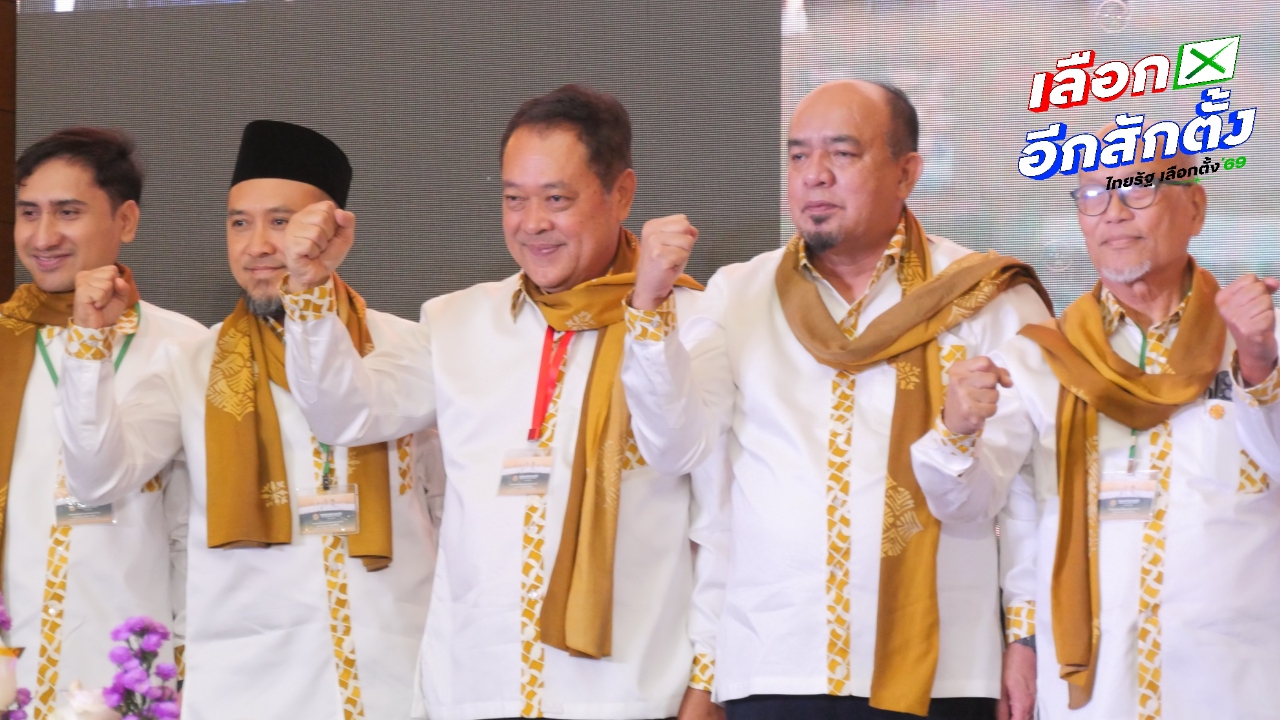
The Prachachat Party has launched its policy pushing the “Nation for Peace and Quality of Life 0-10-100” strategy: reduce corruption to zero, build a strong grassroots economy with 10% GDP growth, and achieve 100% rule of law, rights, freedom, equality, and justice.
On 27 Dec 2025 GMT+7, as the nationwide election drums beat, let's review the political parties' policies before the 8 Feb 2026 GMT+7 election. The Prachachat Party revealed its “Nation for Peace and Quality of Life 0-10-100” strategy and policy.
0% corruption – budgets reaching the people.
- Eliminate corruption completely: enforce laws and crack down on all forms of corruption.
- Eradicate drug dealers completely: suppress and seize assets of drug dealers to deny them a foothold in the southern border provinces. Classify cannabis as a controlled substance only for medical or research use, and kratom as a controlled substance requiring authorized use.
- Reduce educational inequality to zero: develop education quality to a uniform standard, ensuring equal access to opportunities for all, and promote fair resource allocation so every child receives quality education.
- Achieve zero dropout rates (Zero Dropout): establish policies and practices to keep all children and youth continuously in the education system until completion of basic education or at least until they acquire life and vocational skills for self-reliance, with the principle that “Every child has value; the state, community, and society must not allow anyone to drop out.”
10% growth (GDP) – strong grassroots economy.
- “Large-scale investment to transform the three southern border provinces” by developing the entire area of the three provinces and four districts in Songkhla Province, which have been affected by unrest for over 20 years. Measures include income tax exemptions, import-export duty exemptions under Freeport status, exemptions from sales taxes such as VAT and local or special duties under Duty Free, combined with BOI-style investment promotion to revitalize the economy with future potential, creating jobs and careers, and elevating the area into a competitive regional economic hub.
- Push for the establishment of a “Halal Industrial Estate” to be effectively realized with maximum benefits for the country.
- Promote and upgrade local tourist attractions to enhance their potential and distinctiveness, creating jobs, income, and strengthening community economies through cultural soft power. Develop integrated tourism maps connecting attractions, shops, restaurants, accommodations, and operators to circulate money within the community.
- Enhance and support Thai restaurants or "Tom Yum" restaurants in the southern border and neighboring countries that generate income locally, while upgrading local labor and accelerating job creation in neighboring countries.
- Establish “Village Success Funds” in the southern border provinces tailored to the area's context and conflict situation, serving as a tool to build sustainable peace at the community level. The main goal is to increase financial liquidity at the grassroots, giving communities their own revolving funds, reducing capital shortages, stimulating the community economy and job creation, providing revolving capital, and running beneficial community enterprises.
- Erase all student loan (Student Loan Fund) debts through a fair burden-sharing system: borrowers pay only 10% of total debt principal, with the remaining 90% forgiven. This work is considered repayment to the state through labor and public service, with clear state recognition of participant status and rights. The workforce is used for urgent national and community missions, with participants choosing tasks aligned with state and community needs, such as drug prevention, treatment and rehabilitation at village and community levels, community health and preventive care, local development, national security, healthcare, education, and government digital database management. The state provides compensation and protection along with basic welfare throughout the service period.
- Amend cooperative laws to allow “interest-free cooperatives” as a legal cooperative type. Currently, only cooperatives with interest systems exist, conflicting with Islamic principles that prohibit interest. The amendment aims to introduce “interest-free cooperatives.”
- Offer affordable Hajj pilgrimage by reducing travel costs such as airfare, accommodation, and pilgrimage services. The Al-Hajj deposit account project encourages state financial institutions to provide higher top-up returns and more frequent prize draws, such as twice-weekly rewards.
- Support welfare and compensation for religious personnel of all faiths: for Buddhism, including monks and Buddhist organizations; for Islam, including imams, kothib, bilal, mosque Islamic committees, and provincial Islamic committees; and personnel of other religions. Promote interfaith cultural activities to foster mutual learning among religious groups.
100% rule of law – rights, freedom, equality, and justice.
- Provide quality, equal education nationwide with compulsory education extended through upper secondary (grade 12) or vocational certificate (Vocational Certificate Level 3) for all capable Thai citizens wishing to study. Ensure free education through higher education and develop an educational system guaranteeing every child and youth, regardless of birthplace, status, or identity, receives education of the same quality standard, with additional support as needed per area and individual.
- Communities as the center for 100% drug eradication: adopt a comprehensive drug problem-solving approach where the “community” is the core for prevention, correction, and rehabilitation, rather than relying solely on state law enforcement. Restore the community’s role as owner of the problem and solution, with the state supporting to ensure real and sustainable long-term results.
- Conflicts between citizens and the state over land and forests must have “100% rights verification” with fair criteria using empirical historical and cultural community evidence, carried out concretely within two years. Push for amnesty laws for citizens affected by state land and forest policies where mistakes occurred, such as initial forest reserve declarations overlapping with communities, or errors by other state actors—for example, vulnerable citizens prosecuted under forest reclamation policies (NCPO era) without land or livelihood.
Unrest in the southern border provinces.
Address unrest in certain southern border areas by making “peace processes a national agenda” as a political mechanism, including amnesty for transition to peace and stability. Establish a “disaster monitoring center” to protect citizens’ lives and develop in line with local contexts, including:
- Designate peacebuilding as a national agenda with the National Security Council as a permanent national committee to review or repeal emergency decrees and martial law, transitioning to normal law and civilian administration.
- Amend the Southern Border Provinces Administrative Centre Act to include peace processes and legal immunity for dialogue committees and all peace process participants, preventing charges such as incitement. Apply dismissal or suspension measures for those ready to join peace talks, and establish a fair, comprehensive compensation fund covering all target groups.
- Grant criminal, civil, and administrative amnesty to offenders whose acts stem from political expression, ideology, assembly related to culture, language, identity, or political and ideological gatherings.
- Establish efficient “disaster relief centers” for human-made and natural disasters providing rapid, fair, and unified assistance, recovery, and rehabilitation.
Prachachat’s policy embodies moral intent, centers on the people, and pursues politics aimed at creating genuine peace and stability.




