

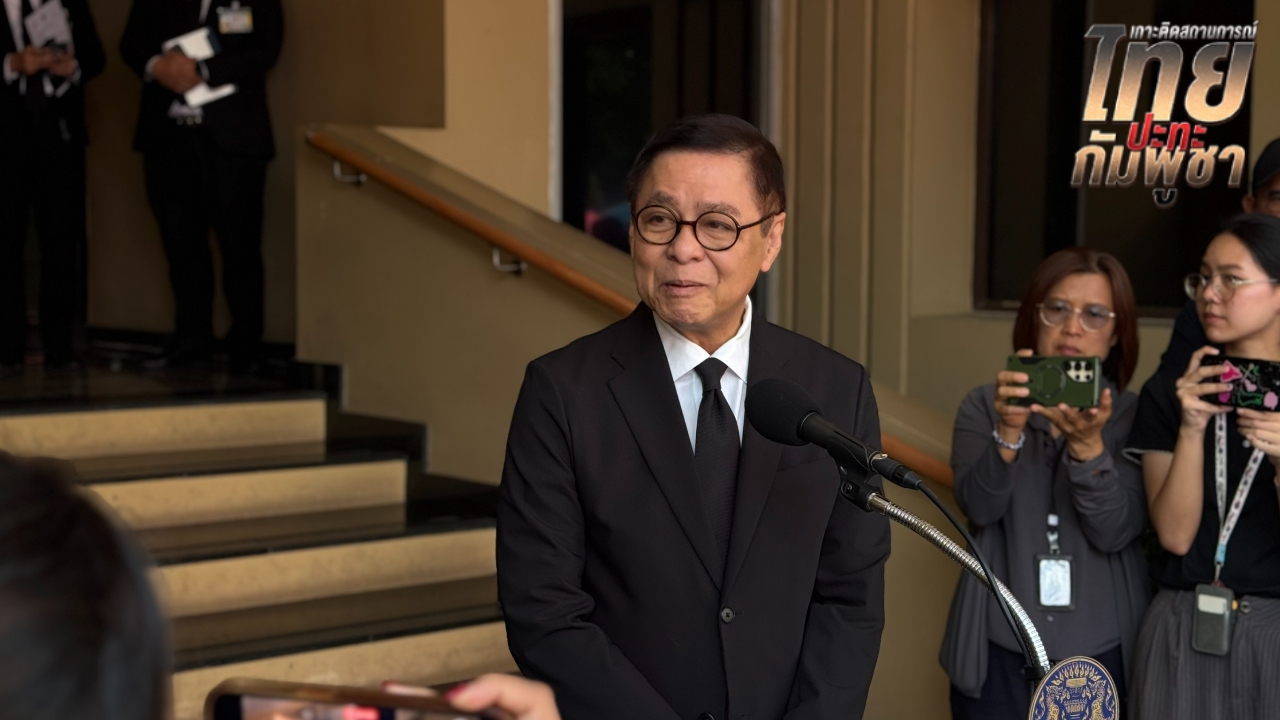
Si Hasak urged Cambodia to keep its promises and avoid provocations to achieve a sustainable ceasefire. He said Thailand is not delaying the JBC meeting but must follow proper procedures and legal frameworks, indicating the meeting might take place under the next government.
On 30 Dec 2025 at 09:45 GMT+7 at the Government House, Mr. Si Hasak Puangketkaew, Foreign Minister, spoke about the tripartite talks among the foreign ministers of Thailand, Cambodia, and China held in Yuxi City, Yunnan Province, China, with China hosting. He emphasized the desire to make the ceasefire agreement sustainable and to build mutual trust. He noted the fragile nature of Thai-Cambodian relations following the recent ceasefire and stressed the need to avoid incidents that could cause misunderstandings or undermine the ceasefire, such as drone flights, provocative language, or statements by leaders. He cited Cambodian Prime Minister Hun Manet’s remarks that the ceasefire did not imply Cambodia's defeat as potentially misleading, arguing that instead of focusing on who requested the ceasefire, both sides should move beyond that to ensure lasting trust and stability.

Regarding the recent detection of 250 drones near the border and the 11th incident of Thai soldiers stepping on anti-personnel mines, Mr. Si Hasak said facts need verification, including whether the mines are old or new. He explained that discussions in the General Border Committee (GBC) include establishing a hotline to quickly clarify incidents and prevent misunderstandings. He also noted Cambodia seems to be pushing for a meeting of the Joint Border Commission (JBC) concerning border demarcation, but that the GBC’s results have yet to be submitted to the Cabinet. He stressed that legal considerations must be reviewed, especially whether the caretaker government must seek authorization from the new government for the JBC meeting, as agreements bind future administrations. He reaffirmed that procedures exist and the meeting cannot be held immediately, emphasizing the need for a safe area for joint fieldwork to demarcate the border. He denied that Thailand is stalling.

Mr. Si Hasak also clarified that the release of 18 Cambodian prisoners of war aligns with the agreed 72-hour ceasefire. He reiterated the importance of respecting the ceasefire and honoring commitments made.
When asked about the diplomatic approach in talks with Cambodia, Mr. Si Hasak said communication is ongoing and that diplomacy is active. He added that military contacts continue as well, emphasizing the necessity of dialogue whenever incidents occur.
Regarding scenarios after the 72-hour ceasefire, Mr. Si Hasak said that if no provocative incidents occur during that period and landmines are cleared, efforts to build mutual trust will proceed.
On whether border demarcation will be problematic given that Cambodian Senate President Hun Sen refuses to accept the Thai-demarcated border, Mr. Si Hasak said the context has changed. The timing of the JBC meeting must consider evolving circumstances and involves formal steps, possibly extending to the next government. The position of the new government and whether it will review Memorandum of Understanding 43 remain uncertain.
“We have a ceasefire to ensure the safety of the people. We want both sides to respect the ceasefire, as both have suffered losses, and their citizens wish to return to their homes. Therefore, it is a mutual benefit to make the agreed ceasefire permanent and sustainable. Other issues should be addressed through neighborly dialogue,” he said.
Meanwhile, General Natthaphon Nakpanich, Minister of Defense, briefly commented on the release of 18 Cambodian prisoners of war, saying the details would be known by noon.