

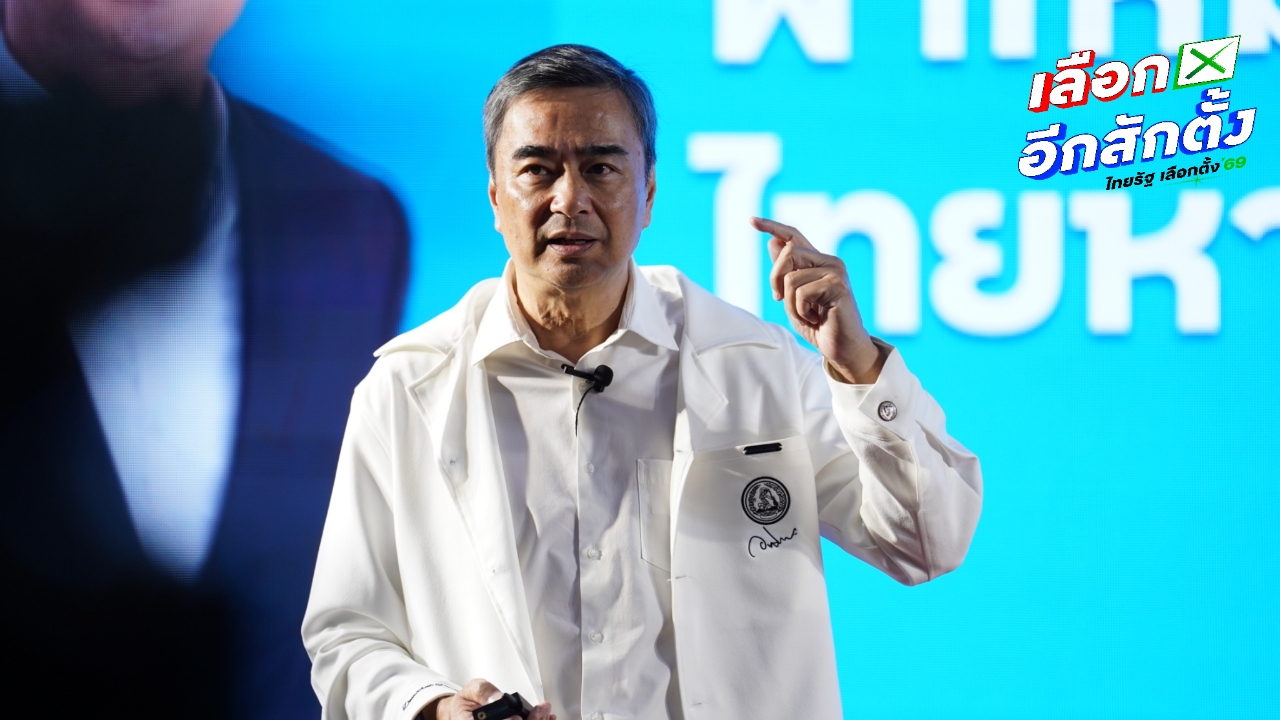
Abhisit warns that the 2026 election will be fiercely contested, emphasizing that if politics does not change, Thailand’s economy will remain stuck for a long time. He acknowledges that populism remains necessary but should not be depended on indefinitely. He aims to increase party-list MPs by several multiples.
On 30 December 2025, Abhisit Vejjajiva, leader of the Democrat Party, spoke about the political landscape in 2026, saying Thailand is starting the new year amid intense election campaigning. Many political parties aim to lead government formation, and some may become political wildcards. This election is especially intense and will be a crucial test of whether the public wants politics to become a turning point, as citizens are increasingly aware of why Thailand’s development lags behind many countries. He stressed that the future demands a strong economy to generate sufficient income for elderly care and to enhance citizens' security in other aspects of life. This election is an opportunity to shift politics toward integrity or remain in a state where parties only discuss vague agreements without clarity on the country's direction.
“If the election results are the same as before, we will remain in the current political and economic situation of the past two to three years. But if there is change, it will be an opportunity for our country to transform and move forward.”
Regarding current political parties repeating old behaviors, especially major parties recruiting MPs to join them, Abhisit said this raises questions. He cited NIDA Poll surveys each quarter showing a continuous increase in people undecided or unwilling to choose any party. He also pointed to the massive influx of "political funding" in this election, questioning where these funds come from, what political colors they represent, and warning that if money is allowed to buy everything, including power and evade laws, it will have long-term negative impacts on the political system and country. He said this is an important moment to decide whether to let politics continue as is or choose a different path for the country.
On the economy and public concerns about livelihoods, Abhisit said he is not against people receiving money if offered. The issue is why people choose as they do. Many have felt good receiving populist projects like the 'Half-Half' scheme because they were entitled and satisfied. But it is different when someone tries to buy the power to determine the country’s future—this is not the same.
“I’m not idealistic but realistic. If we continue like this, everyone will suffer, leaving only a few satisfied with the current state. I can't predict outcomes but say this is a test. I sense growing public desire to challenge current politics, but whether it’s enough will be answered on election day. We must acknowledge many people are dissatisfied with the status quo.”
Abhisit said he clearly stated upon returning as Democrat Party leader that he wants to show Thailand still has alternatives. If no turning point happens this time, he hopes to ignite awareness that the country has choices beyond politics based on agreements or memorandums of understanding (MOU or MOA). When asked if the party’s rising popularity is due to confidence in him or the proposals, he said he does not want focus on himself but on clear, straightforward political ideas he has demonstrated. When things did not go as hoped, he resigned from all political positions to stand by his beliefs. This may be why people seek politicians who do not just say one thing one day and act for short-term gain the next. This difference is visible.
Asked about the Democrat Party’s weaknesses needing closure for the upcoming election, Abhisit admitted that long-established parties have successes and failures, things people like and dislike. Choosing to bring in new members sometimes means less political experience, which can be both strength and weakness. Facing a tight timeline, they must work quickly. With more time, they would be more confident in pushing various initiatives.
On target number of MPs, Abhisit said he can only say the party must increase party-list MPs several times over. Polls suggest they are on the right path, but hard work is still needed to maintain old support and expand further. Historically, they received about 11 million votes, which is hard to achieve in this short period. In the last election, they got only 900,000 votes. By 'several times,' he means they must reach several million votes. In the southern constituencies, he did not specify but noted strong responses when helping flood victims in Hat Yai and other areas, with over 50-60 percent of former Democrat voters seemingly returning and expressing clear support.
Regarding the Bangkok race, Abhisit said he is pleased to see many capable new candidates volunteering with problem-solving perspectives. A possible disadvantage is their lack of political experience. This time, he sees a shift in how people view both candidates and the party. They will try their best to regain old support bases, including in the south where, despite positive reception, voters might still apply different criteria for party-list and constituency votes, which could be challenging. They will strive to show that ultimately, such separation is not feasible.
“Seeing party-list voting as choosing the government and constituency MPs as choosing the prime minister is incorrect. It’s the other way around; who forms government and becomes prime minister depends on the total constituency MPs since they outnumber party-list MPs by four times. If people understand this, I believe party votes will help constituency elections. I affirm the Democrat Party aims to serve people from all regions. Although we have not been strong in the Northeast, it does not mean we ignore it. From my overall assessment, we should gain more party-list votes because I believe the constituency contests will be very intense.”
Abhisit also spoke about campaign policies, saying the Democrat Party must address immediate problems but the main goal is to propose ways to truly “change or transform” the country’s progress, rather than relying on flashy policies every election cycle. He does not believe flashy policies solve the country’s issues; the decision rests with voters. The party thinks about what benefits the country most and tries to communicate that well. He acknowledged populist policies remain necessary for short-term relief, citing the 'Half-Half' project that helped ease hardships during crises. However, such policies cannot be depended on continuously long-term because they burden the state budget. Without developing other economic structures, the government’s capacity will eventually be exhausted. Therefore, balancing short-term aid with laying sustainable foundations is essential to prevent the country from being stuck in a cycle of short-term policies alone.