

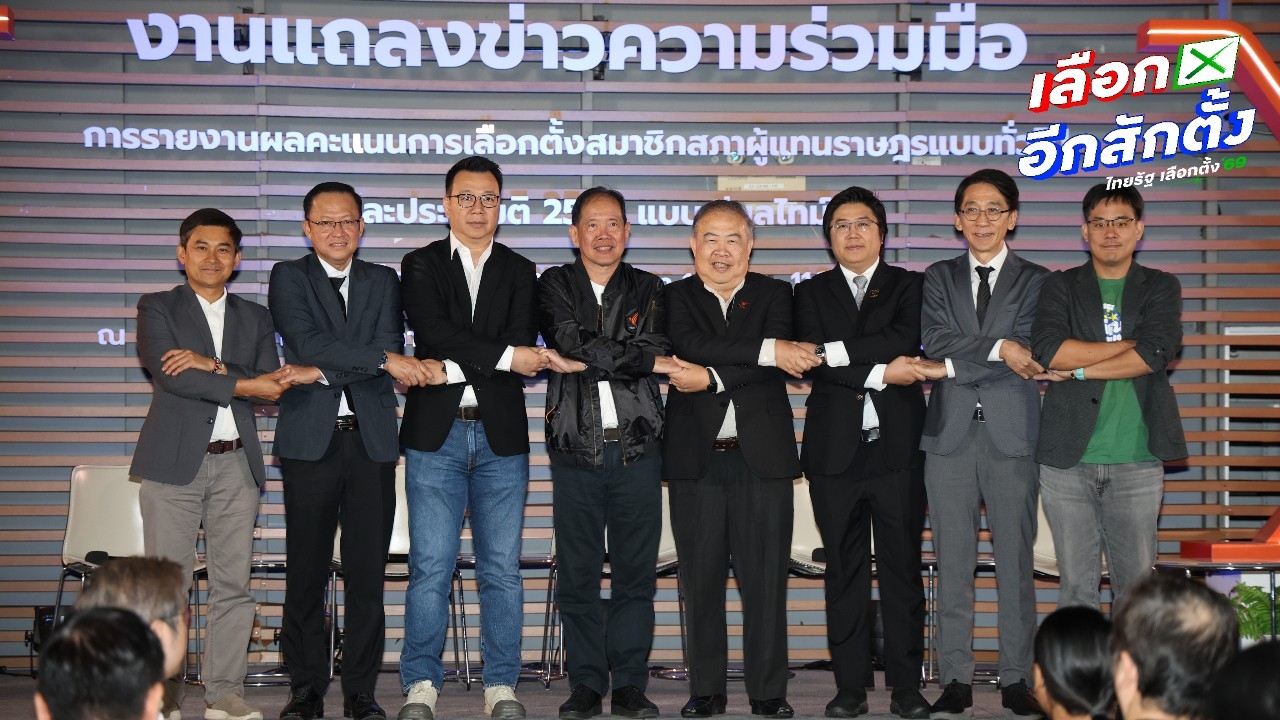
On 8 Feb 2026, digital TV stations, online news producers, the Election Commission, and public-private partners join forces to report the 2026 election results. They will provide real-time, fast, and accurate updates after polls close. Professor Prinya calls on the Election Commission to reconsider reducing identity verification to one time.
On 7 January 2026, reporters covered that the Digital Television Association, together with the Election Commission, the Online News Producers Association, Thai PBS, and the Big Data Institute (BDI), led a coalition of partners to announce their cooperation for real-time reporting of the general election and referendum results in 2026. The announcement emphasized readiness to report on election day, 8 February 2026, with the sole goal of delivering fast and accurate results immediately after the polls close at 17:00. The real-time reporting operation will begin instantly through a network of over 10,000 volunteers distributed nationwide, managed strongly by Thai PBS citizen journalists and Vote62, inviting more volunteer partners to join election result reporting.
Mr. Diao Worattantakul, Secretary of the Digital Television Association (Thailand), expressed confidence that this election will be transparent, accurate, and fast due to the central database developed by the partners. Each media outlet has prepared intensively for their presentations. He emphasized the clear intention that this collaboration aims to ensure accuracy in this election, viewing it as an important mission of digital TV stations and their partners, with the only remaining responsibility resting on the voters going to the polls.


Meanwhile, Lieutenant Colonel Phasakorn Siriphakiyaporn, Deputy Secretary-General of the Election Commission, revealed that this is the first election using three ballots (constituency MPs, party list MPs, and a referendum ballot). He stressed the importance of polling station officials informing voters about the three ballots. Regarding the proposal to verify identity only once, he explained that the requirement to show ID cards differs depending on election registration. As for why the three ballots are not handed out all at once, this is to prevent ballot loss or marking errors. Handling two ballots first, then the referendum ballot later, is more convenient. He accepted the suggestion to consider allowing voters to show their ID only once when receiving ballots.
Today is also the day when candidates for all 400 constituencies are officially announced. Those whose names are not announced can file a petition with the Supreme Court within seven days for review. Additionally, if anyone believes a candidate is unsuitable after approval, citizens have the right to submit complaints to the Election Commission.


Then Mr. Nantasit Nitmethaa, President of the Online News Producers Association, said that this year’s election employs technology to help the public see transparency. Vote counts come directly from the Election Commission, ensuring transparency and verifiability. He encouraged following the online vote counts, which will include timestamps for each report.
Meanwhile, Mr. Wanchai Tantivitayapitak, Director of the Public Broadcasting Organization of Thailand (Thai PBS), disclosed that volunteers and citizen journalists of Thai PBS mark a historic collaboration among media to ensure transparency in this election. Citizen journalists will be stationed in all 400 constituencies nationwide, sending reports directly to headquarters.
Mr. Adisak Limprungpattana-kit, Chairman of Thai PBS Policy Board, stated that citizen journalists were selected for every constituency, gathering those willing to serve as constituency leaders and recruiting volunteers. They have rehearsed reporting methods for approximately 99,000 polling stations, using AI to convert data and consolidate it.
Mr. Kittisak Saad-aem, Director of Data Technology and Information at BDI, revealed readiness to deploy technology supporting the Election Commission and the 2026 election. Data will be processed and distributed securely to various points to prevent system failure, with a three-layer contingency plan ensuring high security and timely election result reporting to the public.


Later, Professor Prinya Thewanaruemitkul of Thammasat University said that the faster unofficial election results come in, the more exciting it is. Official results must await the Election Commission’s announcement, but the benefit is enhanced transparency. If any polling station’s results differ, the photographed data can verify and confirm fairness in the election chosen by the public. This election also includes a referendum. He urged the Election Commission to reconsider reducing voter ID verification from two times to once and to distribute all three ballots to voters simultaneously to facilitate voting.
Mr. Yingcheep Atchanon, Director of iLaw and Vote62, revealed that the 2026 election presents higher challenges with three ballots and three ballot boxes due to the referendum.
He questioned whether the public is aware of the third yellow ballot used for the constitutional amendment referendum. Therefore, they aim to recruit hundreds of thousands of volunteers, averaging three per polling station, to ensure coverage. He expressed concern that the third ballot’s box may be neglected in monitoring vote counting, as attention focuses mostly on the election ballots. If counting errors or marking mistakes occur, objections can be raised. He concluded by comparing the first two ballots to drivers steering the country's direction, while the third ballot is like choosing the map for the path ahead.

