

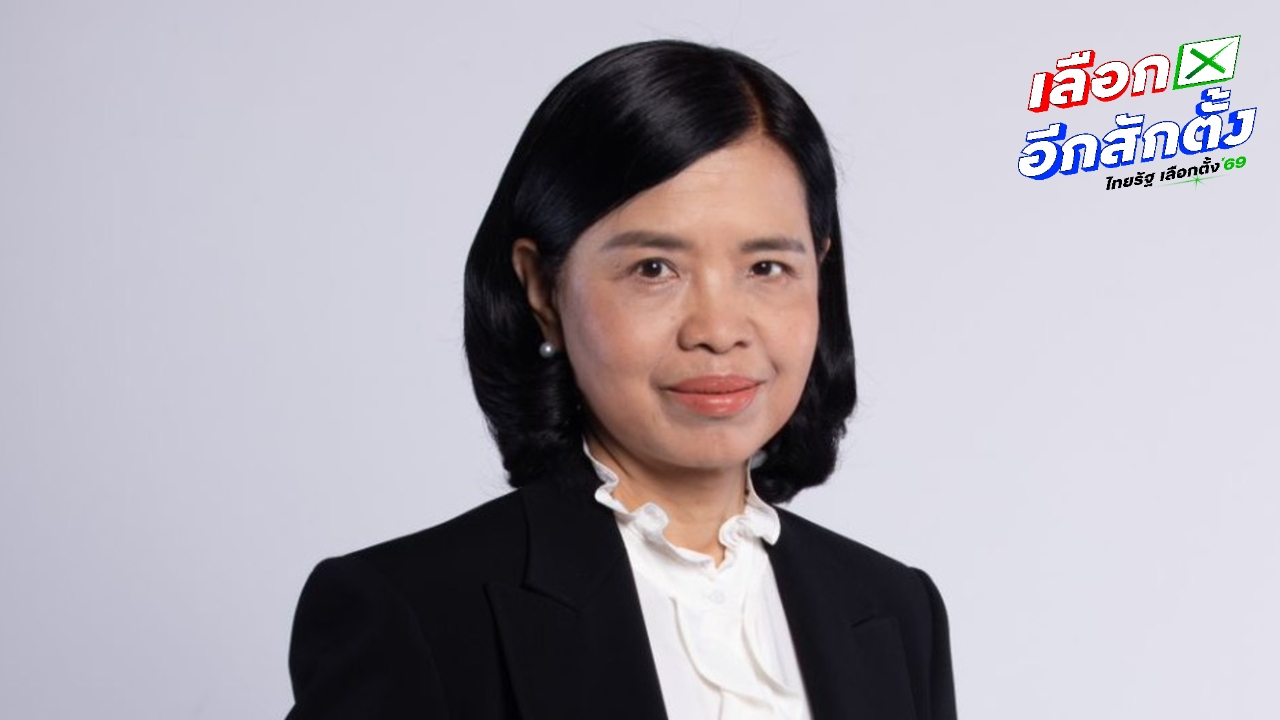
The People's Party introduced "Piangphano Boonklam," a lawyer and businessman, as the fifth member of the People's Government executive team responsible for public sector reform.
On 9 Jan 2026 GMT+7, the People's Party (PChon) announced the fifth executive team member under the 'The Professionals' campaign: Mrs. Piangphano Boonklam, a lawyer and businessman, assigned to public sector reform.
The party described her vision as reforming the public sector and laws through Political Will and Professional Will. Piangphano recently retired from full-time work on 31 Dec 2025 GMT+7, nine months earlier than usual, ending her career with satisfaction about her contributions, especially in developing junior lawyers both at her Law Firm and in a large publicly listed Thai company with global operations.
Her post-retirement plans include more travel, continuing to lecture on Corporate Governance as she has done, holding a course in the Faculty of Law to build practical skills for private-sector lawyers, publishing case studies especially in capital markets, and running a small legal academy focusing on analytical and problem-solving skills. She also expects to serve as a director for two to three listed companies.
All these plans reflect her commitment to using her knowledge and experience to generate the greatest possible public benefit, similar to when, nine years ago, she left a 23-year tenure at a Law Firm to lead the legal team of a major publicly listed company.
Her decision to join the People's Party executive team, if the party forms the government after the 8 Feb election, was the toughest decision she has faced, compared to other major decisions in her life. She made it quickly to avoid prolonged uncertainty and to notify the companies processing her board appointments.
The difficulty arose from awareness that this choice likely entails significant personal costs, especially regarding relationships with many respected colleagues. Some family members wished she would spend more time resting and traveling and disagreed with her choice; however, they fully support and encourage her now, as do many close insiders.
After weighing the likely outcomes, which she must accept regardless, against her intentions if given the opportunity, she decided to accept, sharing similar reasons as others who agreed to join the People's Government management team.
First, like other team members, she wants to leave a better society for future generations. Her 38.5 years of work since 1986 have spanned prosperous times and crises domestically and globally, but never has she felt as deeply that the country's situation is as difficult and dangerous as it is now. Without serious structural reforms, the outlook is very concerning.
Many have forgotten that signs of national decline began before the COVID-19 pandemic, yet no concrete efforts at structural reform have been evident. Meanwhile, external pressures have surged, bringing unprecedented problems, and Thailand's regional competitiveness appears to be steadily declining.
One striking remark came from a Venture Capital executive in Singapore two years ago, asked why their portfolio included no Thai startups despite investments in Indonesia, the Philippines, Vietnam, Malaysia, and Myanmar. He said, "Your country is too complicated." Thailand is too complex and not worth the risk or effort to understand.
Almost all national indicators—corruption perception, Rule of Law Index, competitiveness, education—have worsened every year.
Problems in the public sector have spilled into capital markets with stock manipulation, fraud, corruption, and investor exploitation. The former allure is gone. Legal cases and efforts to recover assets for harmed investors seem insufficient compared to their losses.
Tourism faces safety concerns and issues with scammers from neighboring countries, with Thailand as a key transit point, severely affecting this vital service sector.
Foreign land ownership and businesses suspected of having Thai shareholders acting as nominees operate in prohibited sectors and hold many government contracts. Numerous state buildings, independent agencies, and regulatory organizations have left unfinished or abandoned projects worth over 100 billion baht, meaning taxpayers’ money intended for public benefit has been wasted or lost, especially if demolition is needed.
Law enforcement has long been a major problem in Thailand, undermining confidence; wherever one looks, problems arise.
Second, given Thai life expectancy and modern medicine, she might endure and accept things for another 20 years, but today's children—including her grandchildren—will live another 40 to 70 years in a world where good, meaningful work with fair pay is increasingly scarce, and inequality continues to grow.
Opportunities to change social status through education and hard work have become nearly impossible, unlike the era she grew up in. Those aged 50 to 85, who experienced the 1997 economic crisis, coups, and decades of political division, likely understand this best.
Third, she wishes to contribute to the challenging task of reforming the public sector to be more efficient and productive, focusing on key issues including:
The legal guillotine—Vietnam is the latest Asian example after South Korea. Data from TDRI years ago indicated this could boost GDP by 0.8% and save 130 billion baht.
Revising laws per OECD recommendations, as Thailand is applying for membership.
Passing important laws affecting the economy and quality of life, such as a Startup Act (which should be fast-tracked before the market collapses), enabling the EEC to advance as intended (many investors have already withdrawn), and improving public procurement plagued by operational issues, severely affecting disaster and emergency responses. Civil servants fear liability under Section 157 and hesitate to make decisions (work on this will involve Professor Munin Pongsapan). Also addressing procurement problems causing losses, inefficiencies, unused assets, with the standard claim that procurement complied with the law—this is unsatisfactory. Good governance demands accountability.
She sees that Political Will to tackle these tough problems must be clear and firm, as seen in the People's Party's rules and policies, and demonstrated through eight years of work.
Beyond Political Will, she will bring strong Professional Will as a committed expert.
If given the chance to act, this will be the hardest and most challenging work of her career, requiring the uniting of these two wills and cooperation across government and private sectors—a true One Team for Thailand.
Her nearly 40 years of work involving government agencies, regulators, auditors, private sector, and diverse stakeholders domestically and internationally have revealed problems, obstacles, solutions, and the conclusion that solving such difficult issues requires not only knowledge and experience but also strong determination and courage to decide and act. Importantly, professionalism must guide actions with the public interest foremost, avoiding personal gain, money, possessions, or clinging to power.
Finally, collaboration across ministries and agencies is essential. The party's management team includes many technology and data experts. Achieving all these goals is impossible without comprehensive, quality data, since good governance and corporate governance principles depend on transparent data access and disclosure, and measurable results focusing on substance over form.
Her decision today mirrors that of nine years ago when changing jobs: to use her knowledge, skills, and professional experience to benefit society as much as possible within existing time and constraints.
Ultimately, she respects individual political opinions and party preferences. However, if we accept the reality that structural problems can no longer be ignored, the benefits of addressing them will serve the public, creating a better society for the country and all its people.